Cenacolo Vinciano (The Last Supper)

Cenacolo Vinciano Leonardo Last Supper 1495-1498 Milan refectory Santa Maria delle Grazie tempera UNESCO 1980
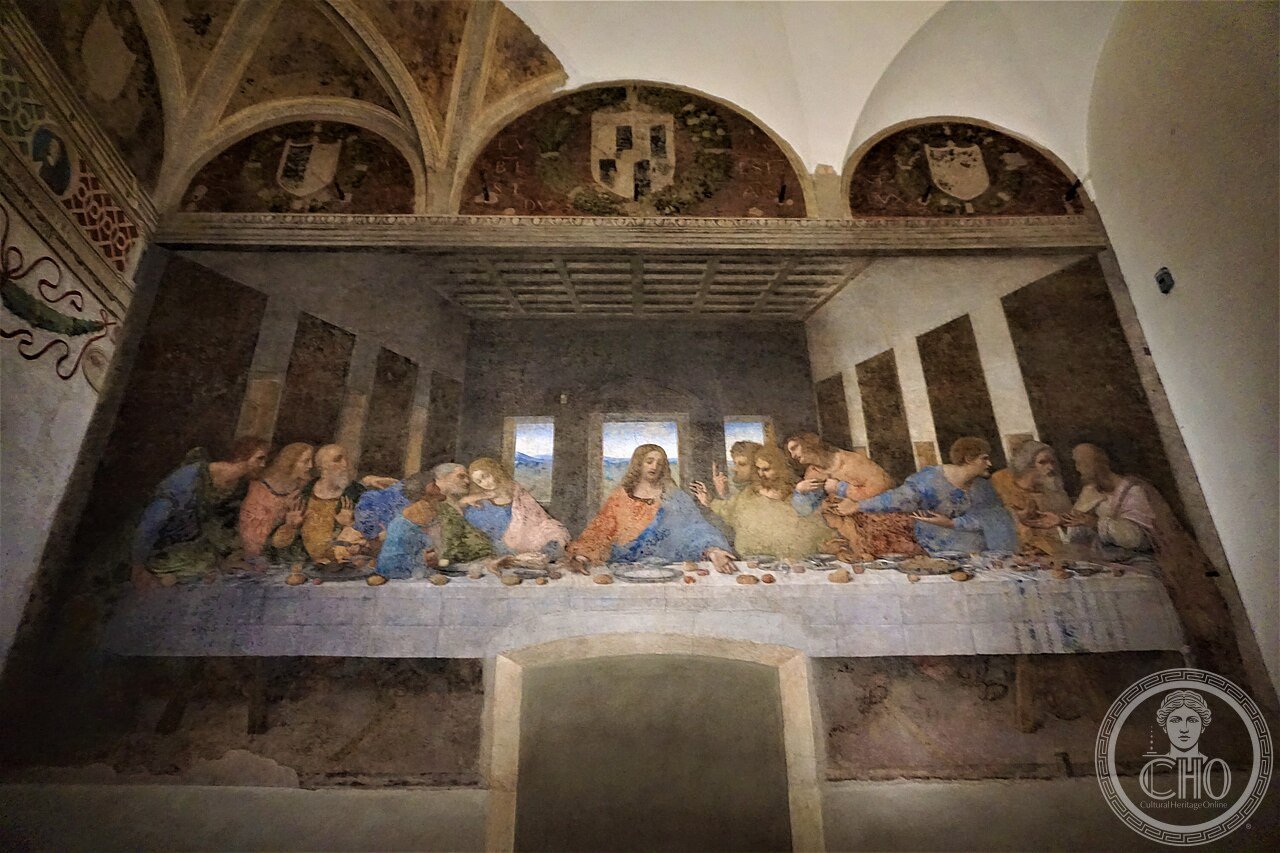
Cenacolo Vinciano (The Last Supper; “L’Ultima Cena”), north refectory wall, Convent of Santa Maria delle Grazie, Via Santa Maria delle Grazie 2, Milano, Lombardia, Italy. The mural painting (460 × 880 cm) by Leonardo da Vinci (1452–1519 CE), painted 1495–1498 CE, shows the moment immediately after Christ announces to the 12 apostles “one of you will betray me” (John 13:21); each apostle reacts differently — a dramatic visualization of a single announcement causing 12 simultaneous but individual emotional responses; the specific technique: Leonardo used tempera on dry plaster (rather than the standard buon fresco (wet plaster) technique), which allowed him to revise and layer the paint but caused the mural to begin deteriorating within 20 years of completion. UNESCO World Heritage Site 1980 (reference 93). Photo via Wikimedia Commons.
Milano, Lombardia, Italy · Leonardo da Vinci 1495–1498 CE; tempera on dry plaster; 460 × 880 cm; Convent of Santa Maria delle Grazie refectory (north wall); Ludovico Sforza patron; Bramante apse; UNESCO WHS 1980 (ref 93)

Cenacolo Vinciano (The Last Supper)

The Cenacolo Vinciano (UNESCO 1980) is the most influential painting in the history of Western art — Leonardo da Vinci’s “Last Supper” (1495–1498 CE) on the north wall of the Santa Maria delle Grazie refectory in Milan, where the 12 apostles respond to Christ’s announcement of betrayal in a dramatic tableau that invented the psychological group portrait and set the compositional standard for every subsequent Last Supper painting in European art.

At a glance

Cenacolo Vinciano (the most precisely CenacoloVinciano single Milano Lombardia Italy 45.4660 N 9.1708 E UNESCO WHS 1980 reference 93: the physical context: the mural (460 × 880 cm; approximately life-size figures; the figures are 2.3–3x actual human height, giving the viewer the impression of being in the same room as the figures); the setting (the north wall of the refectory of the Dominican Convent of Santa Maria delle Grazie; the refectory was the monks’ dining hall; Leonardo painted the refectory wall to give the monks the impression of eating in the same room as Christ at the Last Supper; the trompe-l’œil (the painted room is an architectural extension of the real refectory: the painted ceiling coffers align with the real ceiling; the painted table continues the real refectory floor; the painted windows on the back wall admit painted late-afternoon light consistent with the real western light from the real refectory windows)); the technique (the specific problem: Leonardo wanted to achieve a level of detail and revision impossible with buon fresco (wet plaster, which requires the painter to work section-by-section before the plaster dries and fixes the color permanently); Leonardo used tempera on two layers of dry plaster — this allowed him to revise and glaze repeatedly but meant the paint had no natural adhesion to the wall (buon fresco bonds chemically with the wet plaster as it dries; tempera on dry plaster is mechanical adhesion only); the deterioration began within Leonardo’s own lifetime (the Milanese chronicler Matteo Bandello (c.1480–1562 CE) described the work as “ruined” as early as 1497 CE; Leonardo himself annotated his workshop notebooks with observations about the paint condition)).

Key facts

  • How Leonardo organized the 13 figures into 4 groups of 3 apostles flanking Christ, and why Judas is not isolated on the opposite side of the table: the compositional structure: Christ (center; alone in a triangular compositional frame — the shoulders and hands form the base of the triangle, the head the apex); the 12 apostles (arranged in 4 groups of 3: left of Christ: Bartholomew (far left; rising from his seat in surprise) + James Minor + Andrew; immediately left: Judas (leaning back, his face in shadow, the only figure who retreats from Christ rather than leaning toward him) + Peter (leaning forward aggressively toward Judas, his knife visible behind the table) + John (the youngest figure; leaning away from the group, eyes closed); right of Christ: Thomas (index finger raised in the classical gesture of inquiry) + James Major (arms outstretched in shock) + Philip (pointing at his own chest: “Is it I, Lord?”)); far right: Matthew + Thaddaeus + Simon)); the Judas innovation (in all medieval Last Supper paintings before Leonardo, Judas is isolated on the opposite side of the table from the other apostles — a standard compositional convention that makes him visually identifiable as the traitor; Leonardo abandoned this convention and placed Judas on the same side of the table as the other apostles, making the identification of the traitor a dramatic narrative puzzle — the viewer must read the psychological postures to find Judas (he is the only figure leaning back; his hand is on the table near the bread; he holds the bag of silver (30 pieces); he is in shadow)); the Ludovico Sforza commission (Ludovico il Moro (1452–1508 CE; Duke of Milan (or more properly, regent of the Duchy of Milan for his nephew Giangaleazzo Maria Sforza from 1480 CE, then Regent/de-facto Duke himself from 1494 CE); the specific context: the convent of Santa Maria delle Grazie was the Sforza dynastic church (the Sforza tombs are in the church; Bramante’s apse addition was also a Sforza commission); Leonardo was employed at the Sforza court from 1482 CE (the famous letter of recommendation to Ludovico in which Leonardo lists 10 military engineering skills and adds, almost as an afterthought, that he can also paint))
  • GPS (Santa Maria delle Grazie): 45.4660° N, 9.1708° E

History

From the 1495 commission to the WWII bombing to the 1999 restoration to 1980 UNESCO (the most precisely CenacoloVinciano single history: the commission (Ludovico il Moro commissioned Leonardo in 1494–1495 CE; the convent was already under renovation with Bramante’s addition of the new apse of the church (Bramante was also employed by Ludovico at this period; the Santa Maria delle Grazie project brought the two greatest artists of the 1490s to the same building at the same time)); the deterioration (the paint began to flake within 20 years; by 1517 CE (when Cardinal Luigi of Aragon visited and reported on the work), the paint was already “beginning to be ruined”; the 1652 renovation (the Dominican friars cut a doorway through the lower center of the wall — the doorway destroyed Christ’s feet and the lower third of the tablecloth; the doorway was later filled in but the damage to the lower section is permanent)); the Napoleonic period (Napoleon’s troops used the refectory as a stable and threw stones at the apostles’ faces for sport; this is the most-cited anecdote about the painting’s degradation, but it is probably apocryphal); the WWII bombing (August 16, 1943 CE: the Allied bombing of Milan destroyed most of the refectory buildings; the north wall with the Last Supper survived because the monks had filled the refectory with sandbags around the painting before the bombing; the wall stood free-standing for months before a new roof could be built); the 1978–1999 restoration (the most complete restoration in the painting’s history: conducted by Pinin Brambilla Barcilon over 21 years; the restoration removed 6 previous restoration campaigns and revealed the original Leonardo color (the blue of the tablecloth, the warm tonality of the apostles’ skin)); 1980 CE UNESCO inscription reference 93.

What you see

The Last Supper (north wall), the Bramante apse (church), and the opposite refectory wall (Montorfano crucifixion) (the most precisely CenacoloVinciano single visit (the visit is the most controlled in Italy)): the ticket (admission €15; the mandatory online booking (cenacolovinciano.net or TicketOne): 15 minutes before entry, through a series of antechambers that control humidity and temperature; maximum 30 visitors at one time; strict 15-minute visit limit); the visit: 1) the south wall (the opposite refectory wall: Giovanni Donato da Montorfano’s Crucifixion fresco (1495 CE; buon fresco; the faces of Ludovico il Moro, his wife Beatrice d’Este, and their two sons were painted in tempera onto the fresco by Leonardo in 1497 CE — they are now almost completely lost, but the outlines are visible; this is the only part of the wall that Leonardo painted in the entire building besides the Last Supper)); 2) the Last Supper (the dominant experience; the 13 figures in the composition are approximately 2.3–3× life size; the eye level of the viewer standing at the doorway at the south end of the refectory is exactly at the level of the feet of Christ in the painting — a deliberate compositional calculation by Leonardo to make the seated figures appear to be at the same table level as a standing viewer; the specific viewing time (the 15-minute limit is sufficient to read the main groups but not to study the individual faces; the face of Christ (rendered without a halo, in the 15th-century humanist tradition — the first Last Supper to show an unhallowed Christ) is the last thing most visitors look at, but it should be the first: the expression of foreknowledge, sorrow, and acceptance is the theological center of the entire composition)).

Practical information

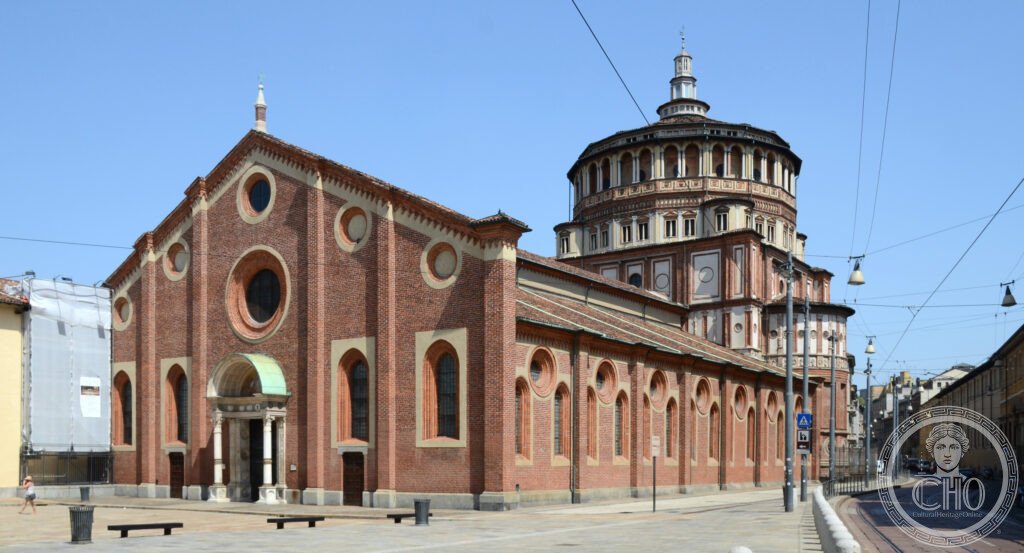
  • Booking the Cenacolo and combining with Bramante’s Santa Maria delle Grazie church and the Leonardo museum circuit: the booking (the most oversubscribed museum booking in Italy; cenacolovinciano.net or TicketOne; the available slots open 3 months in advance; for peak season (April–October), all slots are typically booked within 24–48 hours of the 3-month window opening; practical strategy: set a calendar reminder for 3 months before your travel date; book first thing in the morning (Italian time: 8 AM) on the day the window opens; if you miss the primary booking, check TicketOne at 10 PM (Italian time) each evening for 2–3 days before your visit — tickets occasionally return as other bookings cancel; groups of 25 use about 14% of the daily capacity, so most slots go to individual bookings (2–4 tickets)); after the Cenacolo (the adjacent Santa Maria delle Grazie church: the Bramante apse (1492–1497 CE; the cylindrical drum and hemisphere dome are the first Renaissance centrally-planned apse in Milan; free entry; 10 minutes); the Leonardo museum circuit: the Museo Nazionale della Scienza e della Tecnologia “Leonardo da Vinci” (Via San Vittore 21; €10; the largest science museum in Italy; the Leonardo room has wooden reconstructions of 12 of Leonardo’s mechanical inventions based on his notebook drawings); the Biblioteca Ambrosiana (Piazza Pio XI 2; €15; the Codex Atlanticus: 12 volumes of Leonardo notebook sheets (1478–1519 CE); the largest single Leonardo notebook collection in the world))

Getting there

Metro M2 (green line) to Cadorna or Conciliazione, 10 min walk. Bus 16/94. Tickets: cenacolovinciano.net (book 3 months ahead, slots fill in 48h). Max 30 visitors/15 min, €15. Open Tue-Sun 8:15-19. GPS: 45.4660, 9.1708.

Nearby

  • Castello Sforzesco — 1 km northeast (the Sforza family castle (1450 CE rebuild of a 1360 CE Visconti fortress); the Pinacoteca del Castello (the last Michelangelo: the Rondanini Pietà (c.1555–1564 CE; unfinished at Michelangelo’s death at 89 CE; the most emotionally raw work in Michelangelo’s career); the Leonardo Room (drawings from the Codex Trivulzianus); free on Tuesdays after 14:00 CE)
  • Pinacoteca di Brera — 2.5 km northeast (the most important picture gallery in northern Italy: Raphael’s Sposalizio della Vergine (1504 CE); Mantegna’s Lamentation of Christ (1480 CE; the unprecedented foreshortening perspective from the feet); Caravaggio’s Supper at Emmaus (1606 CE); €15)

Sources

  • Wikipedia, The Last Supper (Leonardo); Santa Maria delle Grazie, Milan; Leonardo da Vinci; Ludovico Sforza, accessed June 2026
  • UNESCO, Church and Dominican Convent of Santa Maria delle Grazie with “The Last Supper” by Leonardo da Vinci, WHS reference 93, inscribed 1980
  • Steinberg, Leo. “Leonardo’s Last Supper.” The Art Quarterly 36, nos. 3–4 (1973): 297–410 (the definitive analysis of the compositional programme)

Hero image: The Last Supper by Leonardo da Vinci, Wikimedia Commons, public domain (pre-1924). Editorial text © Cultural Heritage Online, 2026.

📷 Diventa un fotografo di Cultural Heritage Online

Condividi le tue foto dei luoghi: restano pubblicate con la tua firma come autore. Più vengono viste, più ti fai conoscere — e presto un concorso premierà le foto più apprezzate.

Accedi o registrati gratis per aggiungere una foto
📋 Copy & share on social
Scroll to Top