
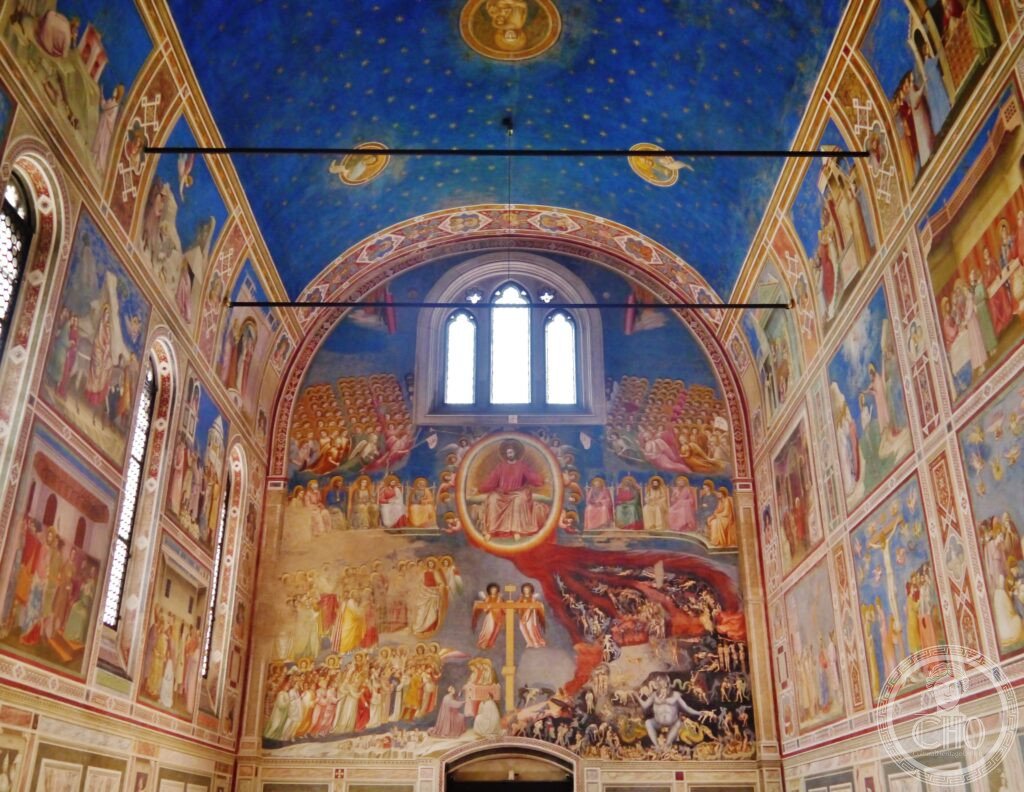
Giotto painted the walls and ceiling of this small chapel in two years, inventing a new visual language for narrative painting. Thirty-eight scenes tell the lives of Mary and Christ beneath a ceiling of lapis-lazuli blue, commissioned by Enrico Scrovegni as an act of atonement for his father’s usury.
At a glance
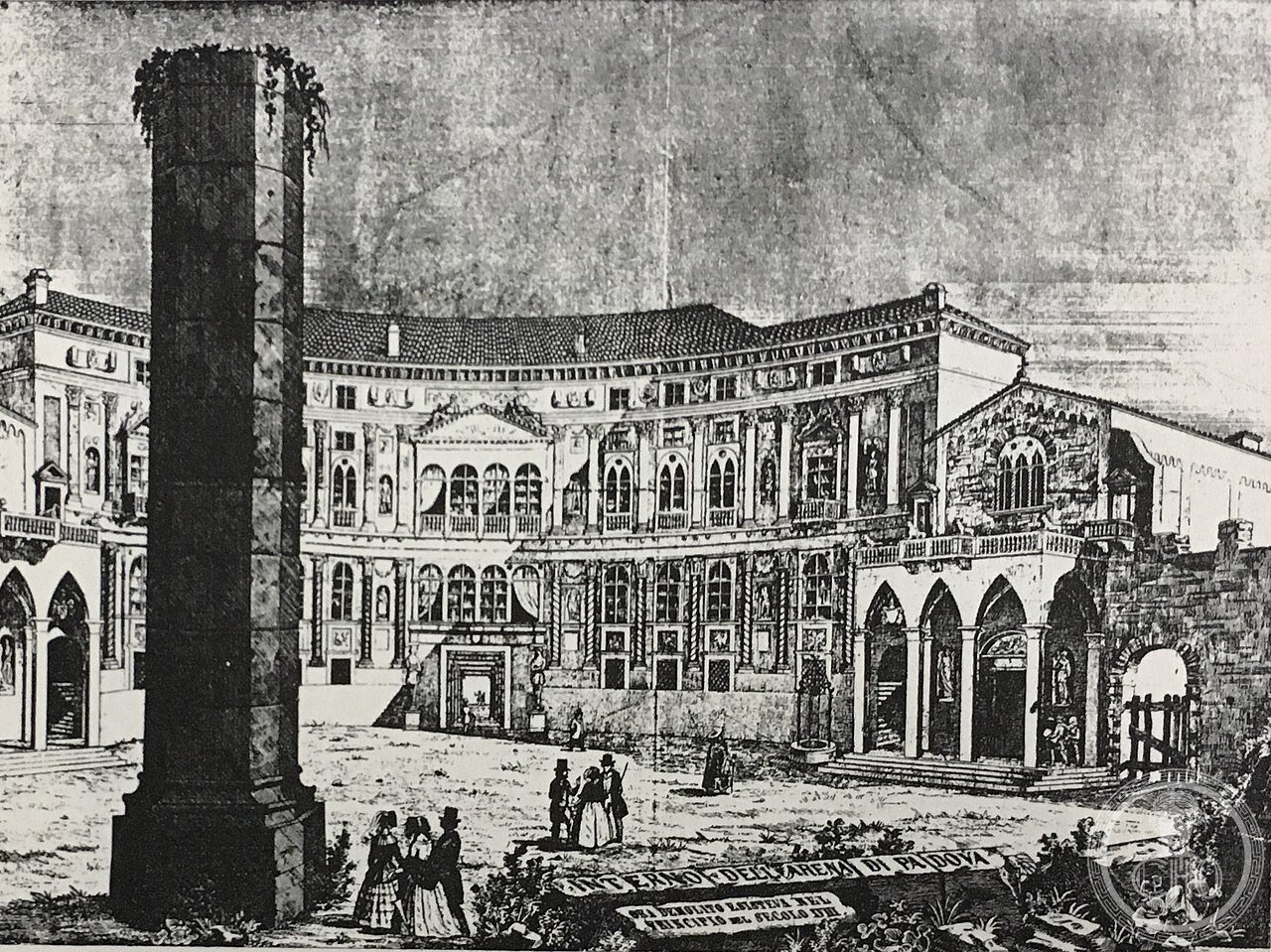
The Cappella degli Scrovegni, formally the Cappella di Santa Maria della Carità, stands on the site of Padua’s Roman amphitheatre, which gives it its other name, the Arena Chapel. The Scrovegni family bought the site in 1300 and built the chapel between 1303 and 1305. It is a single-nave building, a simple rectangular box some thirty metres long with a semicircular apse, deliberately plain in architecture so that the fresco cycle would dominate every surface.
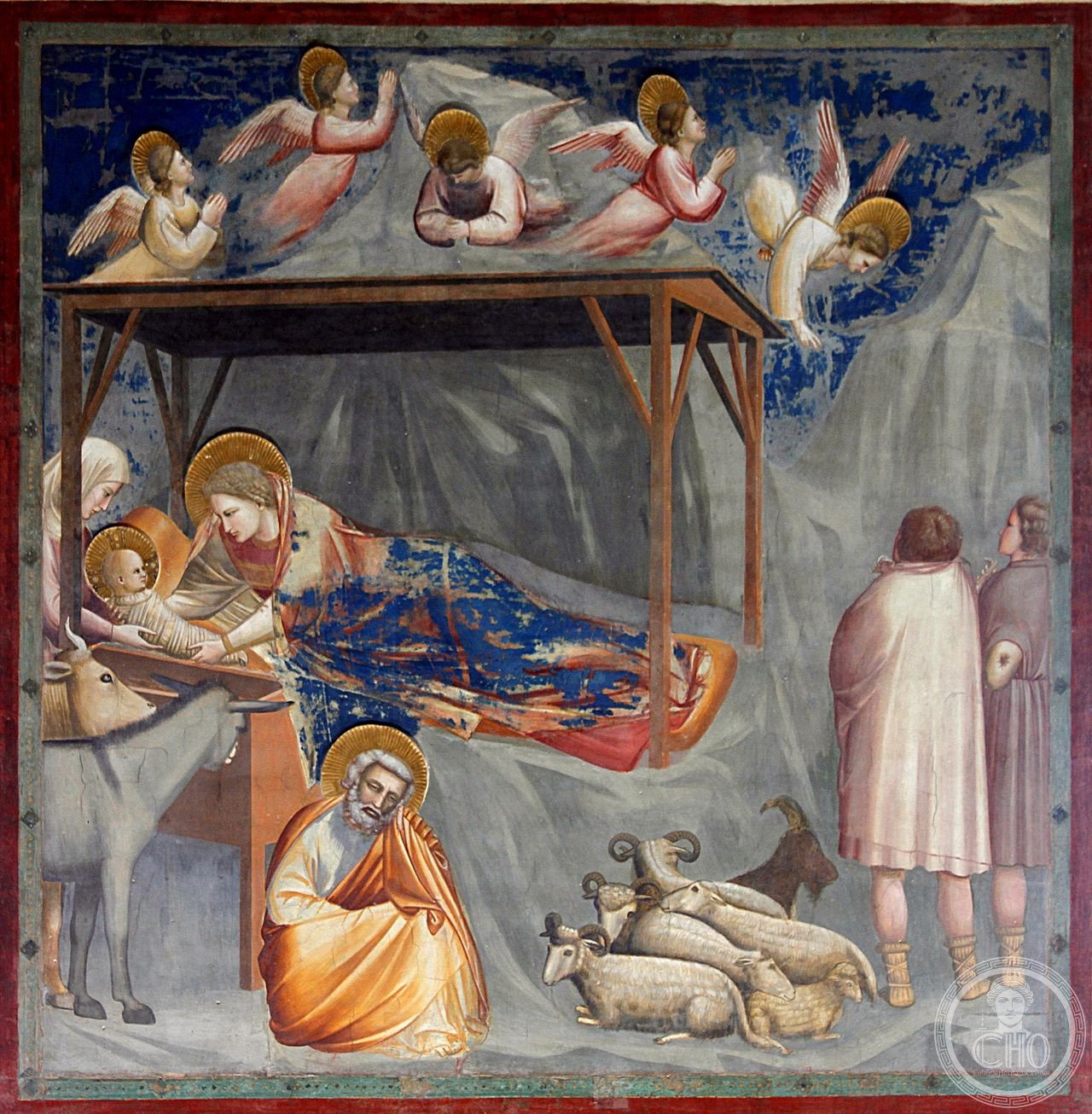
Giotto worked with Enrico Scrovegni from the earliest planning stages, shaping the architecture around the readability of the paintings. The cycle runs across three horizontal bands covering all four walls and the ceiling: the lives of Joachim and Mary at the top, the infancy and Passion of Christ in the middle, and the Passion, Resurrection and a row of painted Virtues and Vices at the bottom.
Key facts
- Artist: Giotto di Bondone, working around 1304–1306
- Commissioned by: Enrico Scrovegni, as atonement for his father Reginaldo’s usury
- Structure: single-nave chapel built 1303–1305 on the site of Padua’s Roman amphitheatre
- Fresco cycle: 38 scenes across three bands, plus the entry wall and ceiling
- Recognition: part of a UNESCO World Heritage inscription from 2021 covering Padua’s fourteenth-century fresco cycles
History
The chapel’s origin lies in shame as much as devotion. Reginaldo Scrovegni, Padua’s wealthiest man through money-lending, was placed by Dante among the usurers in the Inferno, identified there by the family’s coat of arms, a blue sow on a white field, hung around his neck. His son Enrico built the Arena Chapel as an act of atonement, dedicating it to the Annunciation and to Charity as the virtue opposed to the avarice that had made the family’s fortune. The first mass was held on 25 March 1303, the feast of the Annunciation.
Giotto di Bondone, born near Florence and already the leading painter of his generation, took on the Arena Chapel as his first major commission outside his home city. The decade also saw Giovanni Pisano carve his pulpit for Pisa Cathedral; the two artists are thought to have known each other and possibly competed for work, with the Pisa commission eventually going to Pisano. In 2021 the chapel was inscribed by UNESCO as part of a serial listing of Padua’s fourteenth-century fresco cycles, alongside the Salone of the Palazzo della Ragione, the Baptistery of the Cathedral, the Oratorio di San Giorgio and the Oratorio di San Michele.
What you see
The entry wall carries the Last Judgment, the largest single scene in the cycle, in which Enrico Scrovegni is shown offering a model of the chapel to the Virgin. From there the visitor reads the three bands of scenes around the nave, moving left to right and top to bottom. The ceiling is painted deep blue and studded with gold stars, a vault of heaven rendered in the costly natural ultramarine known as blu di Giotto, made from lapis lazuli brought from the Badakhshan mines.
The most studied single scene is the Lamentation of Christ, on the lower band of the north wall, where the Virgin supports the dead weight of her son’s body while John the Apostle throws his arms back in grief and a seated figure, turned away from the viewer, conveys sorrow through posture alone. Fourteen angels fill the sky above, their movement suggested by robes rather than by wings in the conventional position. Elsewhere, the Meeting at the Golden Gate shows Joachim and Anna embracing, and the Adoration of the Magi includes a comet above the stable identified as Halley’s comet, visible at its 1301 apparition. At the base of the walls, painted in grey-white to imitate stone relief, seven Virtues face seven Vices across the nave.
Practical information
- Booking: entry is timed and numbers inside the chapel are limited, with a short wait in a climate-controlled antechamber before entry; booking in advance through the chapel’s official website is strongly advised, particularly in the busier months
- Location: Via Giotto 2, in central Padua, on the site of the former Roman amphitheatre
- Current details: for opening times, admission and booking conditions, consult the chapel’s official site directly, as these are subject to change
Getting there
The chapel stands in central Padua, on Via Giotto, on the footprint of the city’s old Roman arena. It is within walking distance of the historic centre and its other monuments.
Nearby
- Palazzo della Ragione — in central Padua, part of the same UNESCO-listed group of fourteenth-century fresco cycles
- Baptistery of Padua Cathedral — in the historic centre, included in the same serial UNESCO inscription
- Oratorio di San Giorgio — nearby, also part of the fresco-cycle inscription
- Oratorio di San Michele — in Padua, the fourth site named in the same UNESCO listing
Sources
- UNESCO
- Dante Alighieri, Inferno
Gallery
Find it on the map
See this place and what’s around it →📷 Become a Cultural Heritage Online photographer
Share your photos of places: they stay published under your name as the author. The more they're seen, the more you get noticed — and soon a contest will reward the most appreciated photos.
Log in or sign up free to add a photoIs this page about you?
This page is read by travellers and heritage enthusiasts who find it on Google. Tell us how you are connected to this place and we will take it from there.