
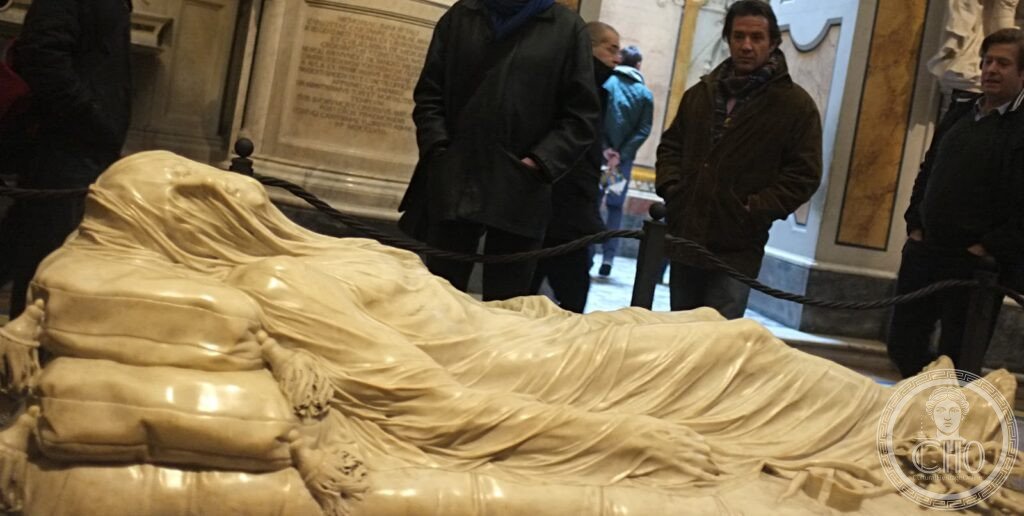
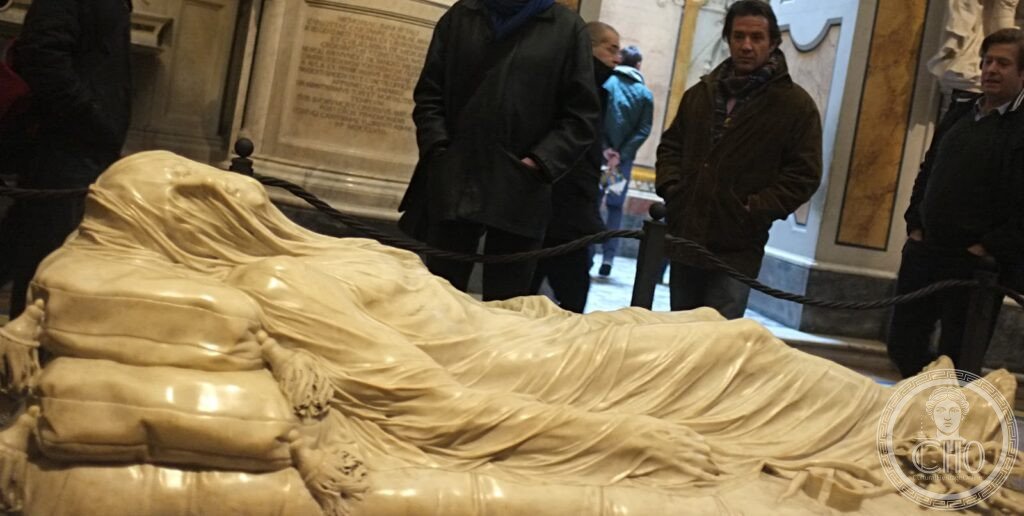
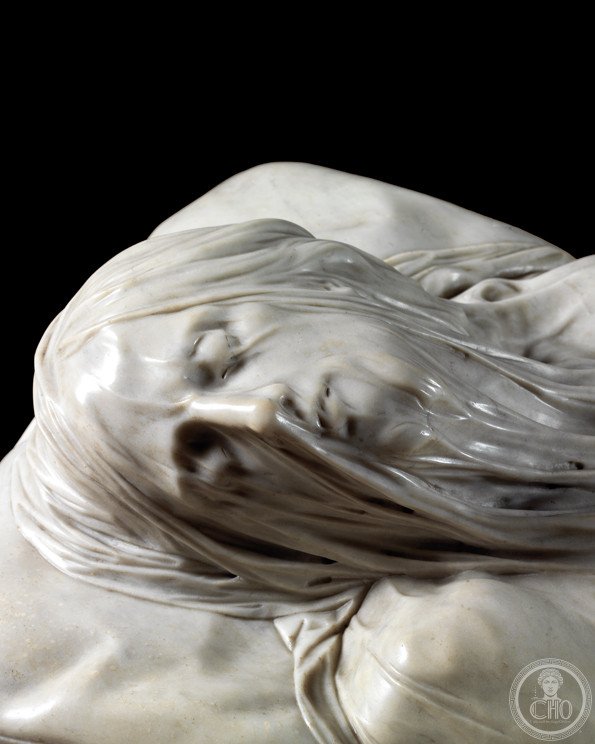
A Baroque funerary chapel that concentrates more technical virtuosity in a single room than almost any other building in Europe — climaxing in the Cristo Velato (1753), Giuseppe Sanmartino’s marble figure of a dead Christ beneath a transparent veil that every visitor is told cannot be marble and yet is.
At a glance
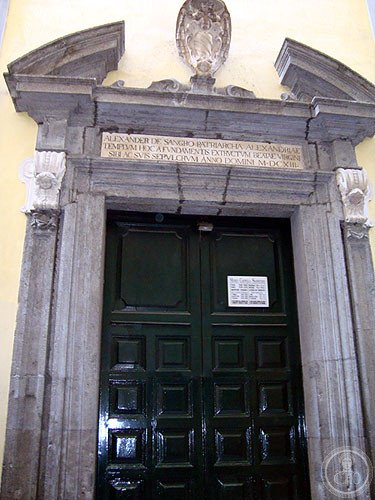
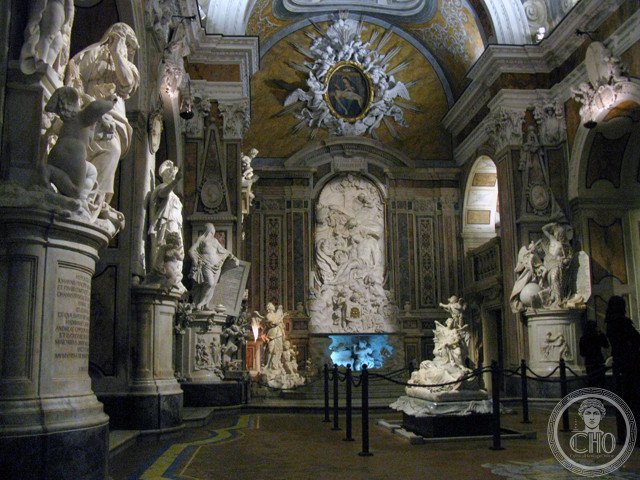
The Cappella Sansevero occupies a narrow street in the heart of Naples’ historic centre, 200 metres from the church of San Domenico Maggiore, inside the UNESCO World Heritage Zone (inscribed 1995, ref. 726). It was built from 1590 as the funerary chapel of the di Sangro family, Princes of Sansevero, and transformed into its current form between 1749 and 1766 by Raimondo di Sangro, seventh Prince of Sansevero, who was simultaneously a Freemason, military engineer, alchemist, and the most energetic patron of sculpture in eighteenth-century Italy. The chapel holds ten major sculptures by different hands, all executed within roughly twenty years, constituting the most concentrated assembly of Baroque marble carving in existence.
Key facts
- Foundation: 1590 as di Sangro family chapel
- Major transformation: 1749–1766 under Raimondo di Sangro (VII Prince of Sansevero)
- Cristo Velato: 1753, Giuseppe Sanmartino; marble, life-scale, single block
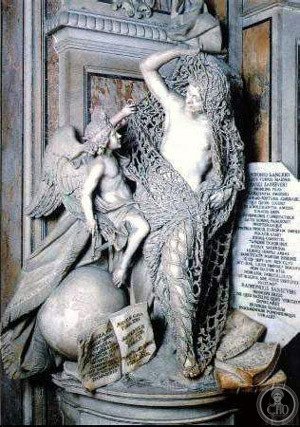
- Other masterworks: Pudicizia (Modesty) by Antonio Corradini, 1752; Disinganno (Disillusion) by Francesco Queirolo, 1754
- UNESCO context: Inside the “Historic Centre of Naples” (1995, ref. 726)
- Address: Via Francesco de Sanctis 19, Napoli
- GPS: 40.8505, 14.2567 — Google Maps
History
Raimondo di Sangro (1710–1771) was the dominant personality in eighteenth-century Neapolitan intellectual life — a figure who combined genuine scientific curiosity with theatricality and occult reputation. He invented an improved printing press, developed a long-lasting colour for textiles, wrote on Freemasonry and was excommunicated for it (then reconciled), and is said to have kept the anatomised veins of two servants preserved in wax in the chapel crypt (the “anatomical machines,” still on display). His direction of the chapel’s sculptural programme was precise: each of the major figures was commissioned with a specific conceptual subject, many of them allegories — Modesty, Disillusion, Self-Control, Religious Zeal — worked in a marble virtuosity programme unprecedented in Italian art.
The Cristo Velato was commissioned from the Neapolitan sculptor Giuseppe Sanmartino (1720–1793). The “veil” — a marble cloth of transparent thinness that reads optically as wet fabric over a human figure — is carved from a single block of marble. Later legend attributed it to a process of “marbleising” a real cloth, invented by Raimondo; physical analysis has confirmed it is pure marble. The chapel was described by Canova as the most beautiful sculpture he had ever seen.
What you see
The interior is a single rectangular hall, roughly 25 by 10 metres, covered by a ceiling fresco of 1749 (Corrado Giaquinto and Francesco Maria Russo) in false perspective. Along the walls, ten sculptures occupy niches and pedestals in strict symmetry. The eye is immediately directed to the Cristo Velato at the centre of the nave floor, behind a railing: a life-scale figure of a dead Christ, lying on a mattress, covered from head to foot in a cloth so fine that the face, ribcage, and knees press through it in clear relief. It is the most technically ambitious marble carving of the eighteenth century and the most photographic object in a city of remarkable objects.
The other sculptures reward attention: Corradini’s Pudicizia (the figure of Cecilia Gaetani, Raimondo’s mother, veiled to the waist) and Queirolo’s Disinganno (a man freeing himself from a net — the net carved open-work in stone) are equally impossible-seeming in their technique. The crypt holds the two “anatomical machines” — preserved human cardiovascular systems in wax, genuinely disturbing and genuinely scientific in their detail.
Gallery
Practical information
- Opening: Daily 9:00–19:00; last entry 18:30. Closed Tuesday and 25 December.
- Admission: ~€10 online, ~€12 at door; no FAI/museum card discount (private management). Book online at museosansevero.it — queues in summer are long.
- Photography: Allowed without flash. The Cristo Velato generates the largest traffic on Italian Instagram art accounts.
- Duration: 30–45 minutes for the chapel itself; 15 minutes for the crypt.
- Capacity limit: Entrance is time-slotted; book in advance in high season.
Getting there
Via Francesco de Sanctis 19, in the Spaccanapoli district of central Naples. On foot: 5 minutes from Piazza del Gesù Nuovo; 10 minutes from Piazza del Plebiscito. Metro: Dante (Line 1) or Montesanto (Lines 1 + Funicolare). Bus: many lines to Piazza del Gesù. The entire surrounding district (Decumani, Via San Gregorio Armeno) is pedestrian in practice though not always technically closed to traffic. From Naples Centrale station: 15 minutes on foot or 10 minutes by taxi.
Nearby
- Piazza San Domenico Maggiore — 3 minutes; the Gothic church with Caravaggio and the monument where Giordano Bruno was condemned
- Via San Gregorio Armeno — 200 m; the street of the presepi (crib-makers) workshops, active year-round
- Museo Nazionale Archeologico di Napoli (MANN) — 1 km north; the world’s greatest collection of Roman finds from Pompeii, Herculaneum, and Stabiae
Sources
- Museo Cappella Sansevero: museosansevero.it
- Wikipedia EN: Cappella Sansevero
- Rotili, Mario: La Cappella Sansevero, Napoli, 1987
- UNESCO Historic Centre of Naples: whc.unesco.org/en/list/726
Gallery
Find it on the map
See this place and what’s around it →📷 Become a Cultural Heritage Online photographer
Share your photos of places: they stay published under your name as the author. The more they're seen, the more you get noticed — and soon a contest will reward the most appreciated photos.
Log in or sign up free to add a photoIs this page about you?
This page is read by travellers and heritage enthusiasts who find it on Google. Tell us how you are connected to this place and we will take it from there.