

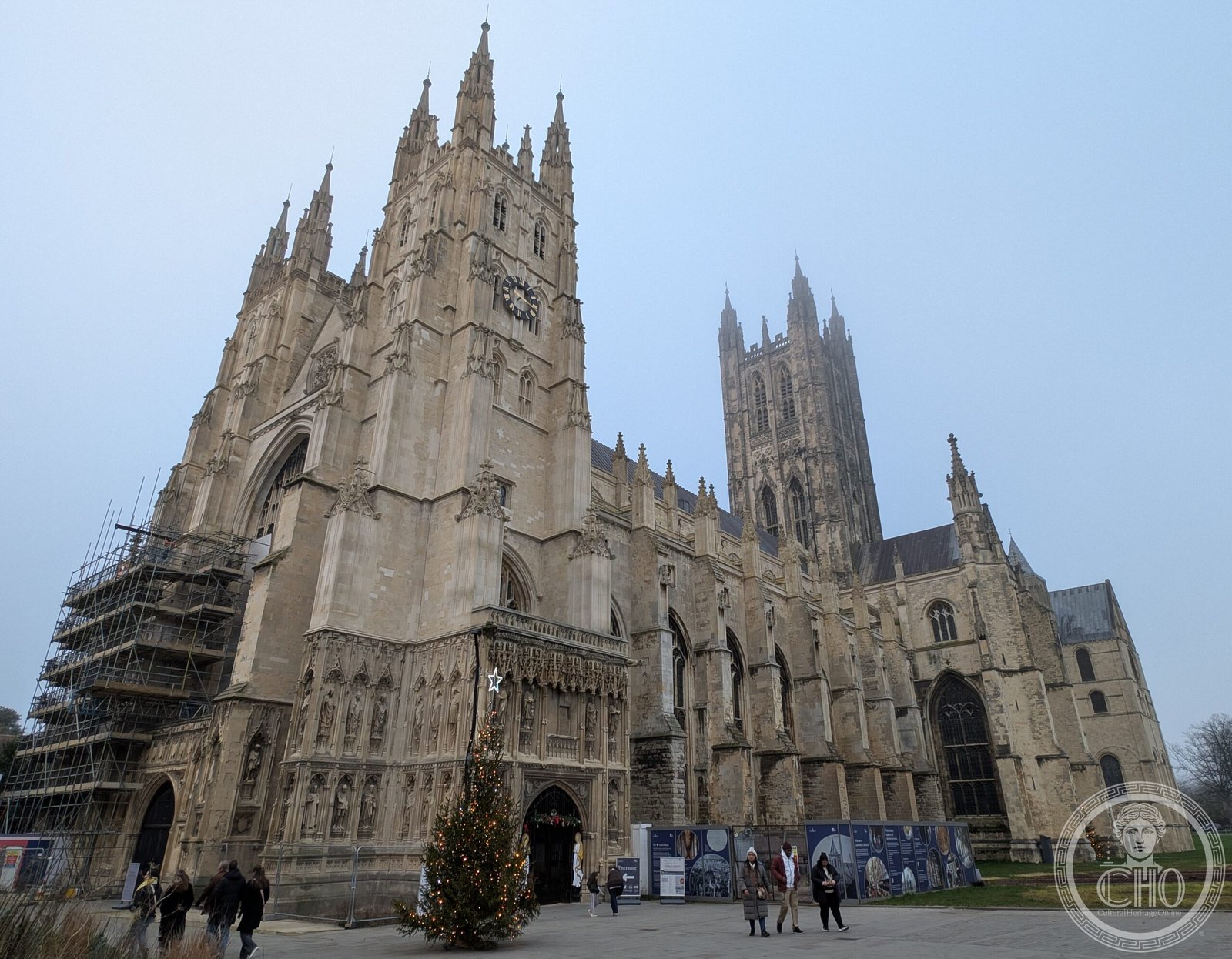
The seat of the Archbishop of Canterbury and spiritual heart of the Church of England, this cathedral rose from tragedy and pilgrimage to become one of medieval Europe’s most revered destinations.
At a glance
Canterbury Cathedral is the mother church of the worldwide Anglican Communion and home to England’s senior bishop. Built on the site of one of the country’s oldest Christian structures, the cathedral dominates the historic walled city of Canterbury in Kent and forms part of a UNESCO World Heritage Site.
History
Christianity arrived at Canterbury in 597, when the first cathedral was established. The present structure began in 1070 and was substantially complete by 1077, marking the Norman conquest’s architectural ambitions.
The cathedral’s identity crystallized after the 1170 murder of Archbishop Thomas Becket within its walls. His shrine became one of medieval Christendom’s supreme pilgrimage destinations, celebrated in Chaucer’s Canterbury Tales. Between 1174 and the late 14th century, the cathedral was rebuilt and repeatedly enlarged to manage the crush of devotees. The Norman nave and transepts gave way to soaring Gothic structures that extended dramatically eastward to accommodate the flow of pilgrims.
Before the English Reformation, the cathedral functioned as the center of a Benedictine monastic community known as the Priory of Christ Church, Canterbury.
What you see
The cathedral’s architectural story is written in stone across centuries. The 12th-century east end was dramatically enlarged in the Gothic style following the devastating fire of 1174, creating soaring vaults and intricate tracery characteristic of late medieval English design. The architectural campaigns that followed prioritized eastward expansion, fundamentally reshaping the cathedral’s proportions to serve its pilgrimage function.
Cultural significance
Canterbury Cathedral stands at the intersection of religious authority, pilgrimage culture, and English identity. It remains the residence and principal church of the Archbishop of Canterbury, the symbolic leader of the Anglican Communion’s 85 million members worldwide. The cathedral’s role in medieval pilgrimage inspired Geoffrey Chaucer and continues to shape how the West understands sacred journeys and religious narrative.
Key facts
- Country: United Kingdom
- City: Canterbury, Kent
- Coordinates: 51.2797, 1.0831
- Founded: 597
- Rebuilt: 1070–1077
- Major fire and Gothic rebuilding: 1174 onwards
- UNESCO World Heritage Site
Practical information & getting there
Canterbury Cathedral is located in the center of Canterbury, a cathedral city 55 miles southeast of London. The city is accessible by rail and road. The cathedral remains an active place of worship as well as a major cultural monument open to visitors. For current opening hours and visiting information, consult the cathedral’s official website.
Sources & resources
Find it on the map
See this place and what’s around it →

Historical events at this place (1)
📷 Become a Cultural Heritage Online photographer
Share your photos of places: they stay published under your name as the author. The more they're seen, the more you get noticed — and soon a contest will reward the most appreciated photos.
Log in or sign up free to add a photoIs this page about you?
This page is read by travellers and heritage enthusiasts who find it on Google. Tell us how you are connected to this place and we will take it from there.