
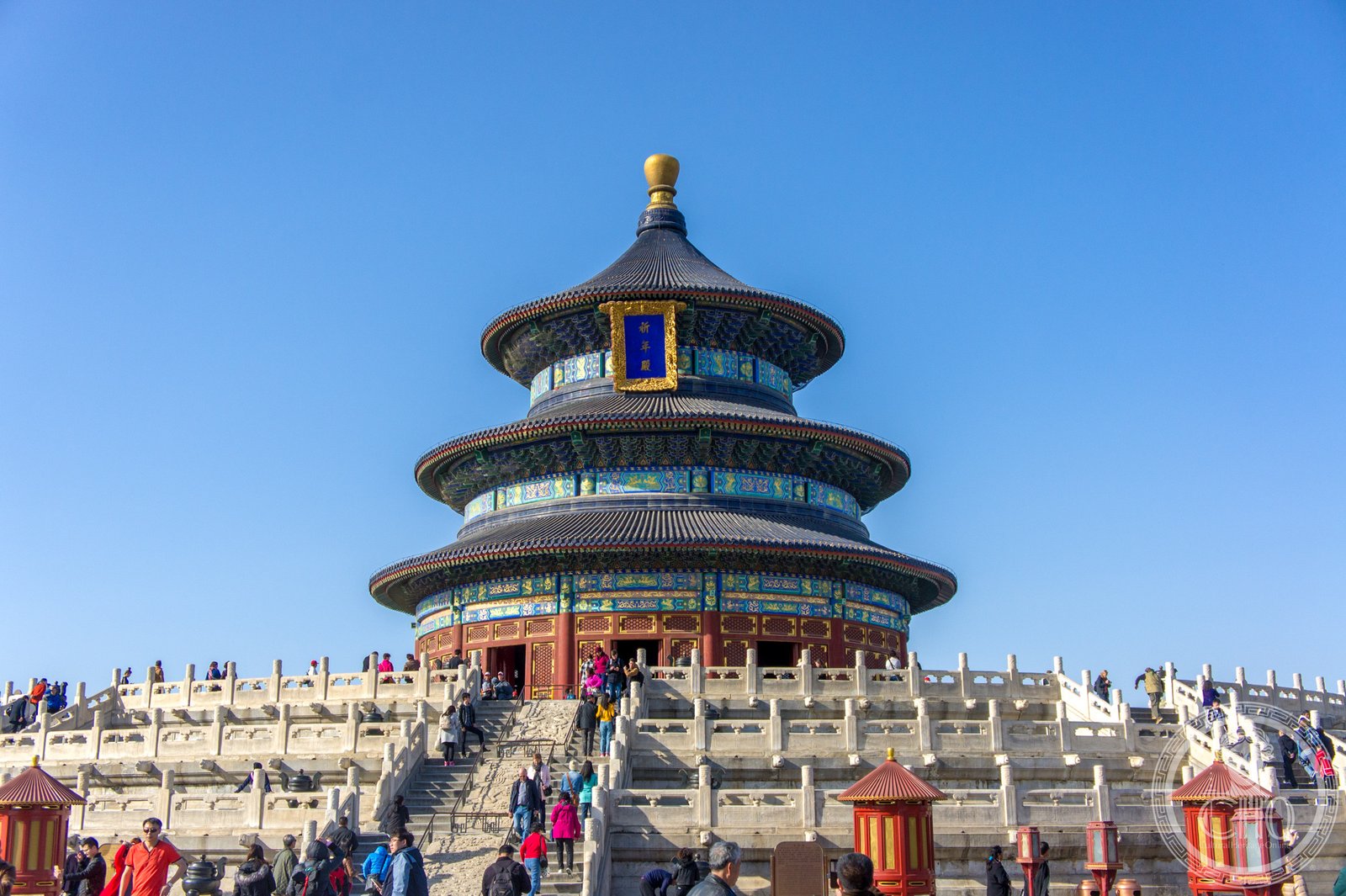
An imperial complex of Confucian religious buildings where Ming and Qing emperors performed annual ceremonies to petition Heaven for harvest and prosperity. Its cosmological design profoundly shaped Far Eastern architecture for centuries.
At a glance
The Temple of Heaven occupies the southeastern part of central Beijing. This UNESCO World Heritage site represents a masterpiece of architectural and landscape design, articulating cosmological principles central to Chinese civilization through its symbolic spatial arrangement.
History
Built during the Ming dynasty, the complex later underwent restoration by the Qing emperors, who maintained its role as the empire’s most sacred ceremonial site. Emperors conducted annual rites here to commune with Heaven—petitioning for favorable harvests and performing seasonal observances integral to imperial duty and Confucian philosophy.
What you see
The complex showcases imperial Confucian religious architecture arranged according to cosmological principles. The symbolic layout and design graphically illustrates the worldview that governed one of civilization’s greatest empires, with spatial relationships and orientations encoding spiritual and philosophical meaning into the landscape itself.
Cultural significance
UNESCO recognized the Temple of Heaven as a masterpiece that shaped architectural practice and urban planning throughout the Far East for many centuries. The site embodies the relationship between architecture, landscape design, and cosmology that defined imperial Chinese culture and influenced regional traditions across Asia.
Key facts
- Location: Southeastern Beijing, China
- Coordinates: 39.8822°N, 116.4066°E
- UNESCO World Heritage Site: Inscribed 1998
- Dynasties: Ming and Qing
Practical information & getting there
The Temple of Heaven is accessible in central Beijing. Check opening hours and entry requirements before your visit. For current visitor information and directions, consult local tourism resources or the site directly.
Sources & resources
Find it on the map
See this place and what’s around it →📷 Become a Cultural Heritage Online photographer
Share your photos of places: they stay published under your name as the author. The more they're seen, the more you get noticed — and soon a contest will reward the most appreciated photos.
Log in or sign up free to add a photoIs this page about you?
This page is read by travellers and heritage enthusiasts who find it on Google. Tell us how you are connected to this place and we will take it from there.