
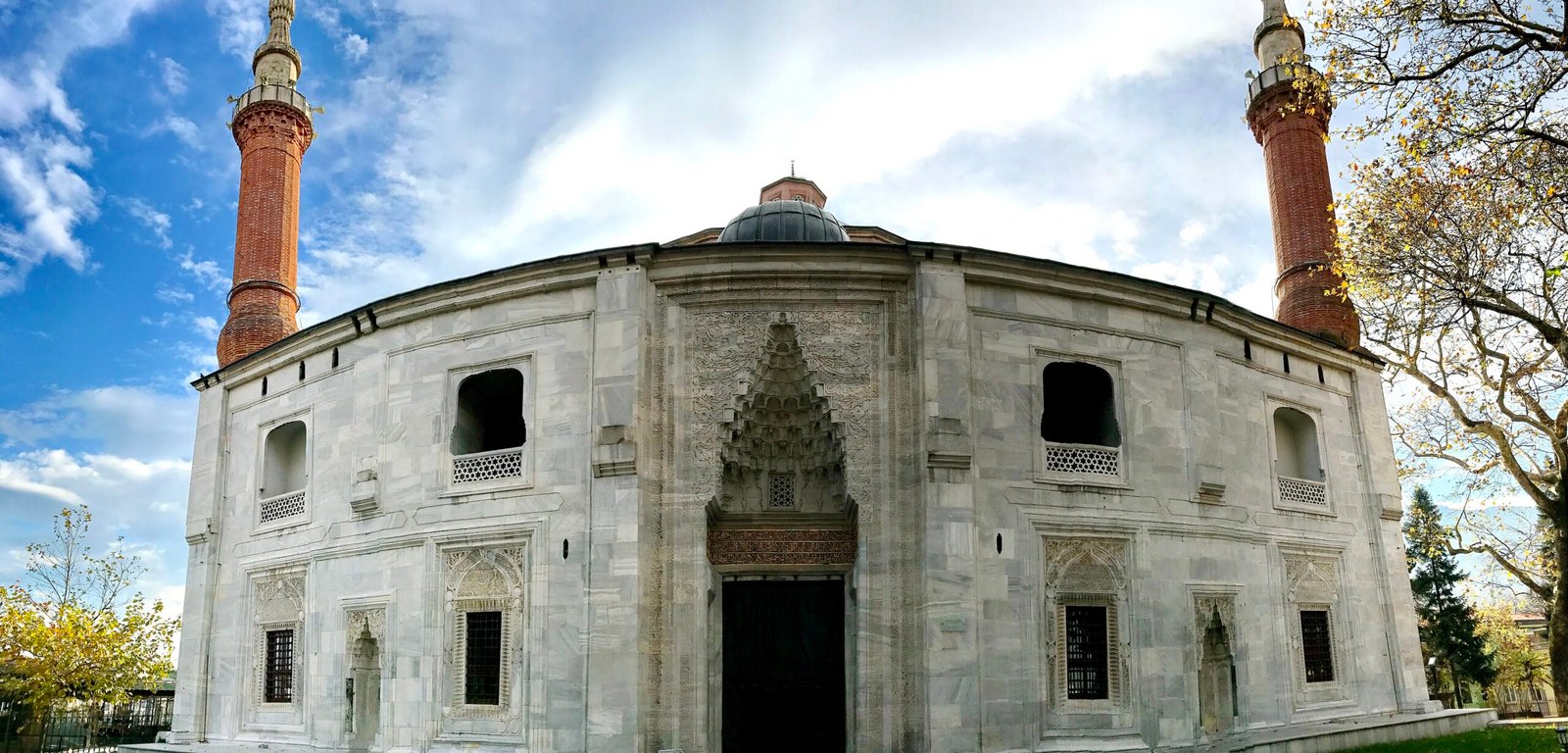
Where an empire was born: Bursa was the first Ottoman capital, and the city still holds the tombs of the founding sultans, mosques whose turquoise tile interiors have never been matched, and a silk market that once connected China to Europe. Seven kilometres away, the village of Cumalikizik preserves the Ottoman world as it was in the 14th century.
At a glance
Bursa and Cumalikizik: the Birth of the Ottoman Empire was inscribed as a UNESCO World Heritage Site in 2014. The property encompasses the city of Bursa in northwestern Turkey — the first capital of the Ottoman state after its conquest by Orhan Gazi in 1326 CE — and the village of Cumalikizik, 7 km to the east, which preserves the fabric of a 14th-century Ottoman rural settlement almost intact.
Bursa sits at the foot of Uludag (the ancient Mount Olympus of Bithynia), a 2,543-metre peak that provides a dramatic backdrop to the city. The modern city of Bursa has a population of approximately 3.1 million and is one of the largest cities in Turkey, but its historic core contains an extraordinary concentration of early Ottoman monuments from the 14th and 15th centuries that have no parallel anywhere in the Ottoman world.
Key facts
- UNESCO inscription: 2014, “Bursa and Cumalikizik: the Birth of the Ottoman Empire”
- First Ottoman capital: 1326 CE, captured from the Byzantine Empire by Orhan Gazi
- Green Mosque (Yesil Cami): 1424, commissioned by Sultan Mehmed I; renowned for its turquoise Iznik tile interior
- Green Tomb (Yesil Turbe): 1421, mausoleum of Sultan Mehmed I, entirely clad in turquoise tiles
- Grand Mosque (Ulu Cami): 1399–1400, built by Sultan Bayezid I after the Battle of Nicopolis; largest mosque in Bursa with 20 domes
- Muradiye Complex: 1426, with 12 royal tombs and exceptional painted tile work
- Silk trade: Bursa was the world centre of the silk trade (Chinese silk via the Silk Road to European markets) in the 14th–16th centuries
- Cumalikizik: 14th-century Ottoman village with approximately 270 original timber-framed houses still inhabited
- Coordinates: 40.1826°N, 29.0665°E
History
The area around modern Bursa has been inhabited since prehistoric times, but the city came to prominence in the ancient period as Prusa ad Olympum — founded according to tradition by the Bithynian king Prusias I in the 3rd century BCE. The Romans and Byzantines developed it as a regional centre, valued for its thermal springs at nearby Cekirge and its position at the foot of the great mountain.
The pivotal moment came in April 1326, when Orhan Gazi — son of Osman I, the founder of the Ottoman dynasty — captured the city after a decade-long siege of the Byzantine garrison. Bursa became the first capital of what would eventually become one of the longest-lived empires in history. For the next several decades, as the Ottomans expanded rapidly into Thrace and the Balkans, Bursa served as the imperial centre and the burial place of the early sultans.
The capital moved to Edirne after 1365 CE, and then to Constantinople (Istanbul) after the great conquest of 1453. But Bursa retained a special sacred and sentimental status: it was the place where the Ottoman state had been born, and the great sultans continued to build here. The 14th and 15th centuries saw the construction of the masterworks that define the city today: the Grand Mosque of Bayezid I (1400), the Green Mosque and Green Tomb of Mehmed I (1421–1424) and the Muradiye Complex of Murad II (1426).
Bursa was also the western terminus of the Chinese silk trade for two centuries. Silk caravans arriving from Central Asia via the Silk Road ended their journey here, and the great covered markets of Bursa — the Kapali Carsi and the Koza Han (Cocoon Inn) — became the main wholesale market for raw silk in the Mediterranean world. Merchants from Venice, Genoa and the great trading cities paid fortunes for Bursa-processed silk.
The village of Cumalikizik was established in the early 14th century as one of the first settlements of the new Ottoman state and has been continuously inhabited ever since. Its 270 original timber-frame houses, cobbled lanes and communal fountain survive because the village was too small to attract the investment and development that transformed Bursa itself.
What you see
The Green Mosque (Yesil Cami, 1424) is the supreme achievement of early Ottoman architecture. The exterior is faced in pale stone with a carved marble portal; the interior is entirely clad in handmade Iznik tiles in shades of turquoise, cobalt blue and green — a colour palette that defined Ottoman aesthetic sensibility for the next two centuries. The sultan’s private loge above the entrance is the most elaborately tiled space in the building. The mosque is named for the green-tinted tiles on the exterior minaret rather than the interior, which is predominantly turquoise.
The Green Tomb (Yesil Turbe, 1421), visible on the hill above the mosque, contains the sarcophagus of Sultan Mehmed I decorated entirely in turquoise hexagonal tiles. Eight other sarcophagi in the mausoleum hold members of the sultan’s family. The octagonal plan and the dome are among the finest examples of early Ottoman funerary architecture.
The Grand Mosque (Ulu Cami, 1399–1400) is the largest mosque in Bursa: a massive rectangular building with 20 domes supported on 12 piers, built by Sultan Bayezid I to fulfil a vow made before the Battle of Nicopolis (1396 CE). The central fountain for ritual ablution inside the prayer hall is unusual in Ottoman mosque design. The calligraphic inscriptions are among the finest in Turkey.
The Muradiye Complex (1426) is a külliye — a mosque surrounded by dependent buildings including a medrese, imaret and royal tombs. The 12 domed mausoleums in the garden contain some of the most exceptional painted tile work in the Ottoman world, including the tomb of Cem Sultan (youngest son of Mehmed II) with extraordinary Iznik tile panels.
In Cumalikizik, the village retains its medieval urban form: a single main street lined with 14th-century timber-frame houses whose upper floors overhang the lane. The ground floors were traditionally used as stables and storage; the living quarters were above. Many houses are still inhabited; a few operate as small cafes. The communal fountain and the plane tree in the village square are meeting points unchanged for centuries.
Practical information
- Green Mosque and Green Tomb: Open daily; free entry to both; located in the Yesil district east of the city centre.
- Grand Mosque (Ulu Cami): Open daily; free entry; located in the city centre near the Covered Bazaar.
- Covered Bazaar (Kapali Carsi): Weekdays and Saturday; historically the silk market, now general goods and souvenirs.
- Muradiye Complex: Open daily; small fee for the tombs; located northwest of the city centre.
- Cumalikizik village: Open year-round; free to walk the village; weekend morning market. Reachable by dolmus (shared minibus) from Bursa.
- Best time: Spring (April–May) and autumn (September–October) for pleasant temperatures; Bursa is one of the few Turkish cities that receives regular snow in winter, which makes it picturesque but cold.
- Duration: A full day for Bursa historic centre; add half a day for Cumalikizik.
Getting there
Bursa does not have its own commercial airport. The nearest airports are Istanbul Ataturk (ISL) and Istanbul Sabiha Gokcen (SAW), both approximately 90–120 minutes away by combined bus and ferry or road. From Istanbul, the fastest route is via ferry from Yenikapı to Bursa Port (approximately 2.5 hours total including city transit). Buses from Istanbul take 3–4 hours depending on traffic.
Within Bursa, the main heritage sites are spread across the historic centre. The BursaRay metro line connects the bus terminal to the city centre; taxis are widely available. Cumalikizik is served by frequent dolmus from Bursa city centre (approximately 20 minutes).
Nearby
- Uludag National Park — immediately south of Bursa; ski resort in winter, hiking in summer; cable car from the city. The ancient Greeks called this mountain Olympos of Bithynia.
- Iznik (ancient Nicaea) — approximately 80 km east; site of the two great Councils of Nicaea (325 CE and 787 CE) that defined Christian doctrine; Ottoman-era city walls, Hagia Sophia church ruins, and the birthplace of Iznik tile production.
- Kizkalesi and the Bithynian coast — approximately 80 km north on the Sea of Marmara; Ottoman-era harbour fortifications and Byzantine coastal sites.
- Troy (Truva) — approximately 300 km southwest; the Bronze Age city immortalised by Homer, with 4,000 years of continuous occupation visible in the excavated layers.
Sources
- UNESCO World Heritage List: Bursa and Cumalikizik: the Birth of the Ottoman Empire (2014). whc.unesco.org
- Necipoğlu, Gulru. The Age of Sinan: Architectural Culture in the Ottoman Empire. Princeton: Princeton University Press, 2005. (Background on early Ottoman architectural tradition.)
- Goodwin, Godfrey. A History of Ottoman Architecture. London: Thames and Hudson, 1971.
- Wikipedia: “Bursa” and “Green Mosque, Bursa” — factual cross-check only.
Find it on the map
See this place and what’s around it →📷 Become a Cultural Heritage Online photographer
Share your photos of places: they stay published under your name as the author. The more they're seen, the more you get noticed — and soon a contest will reward the most appreciated photos.
Log in or sign up free to add a photo