
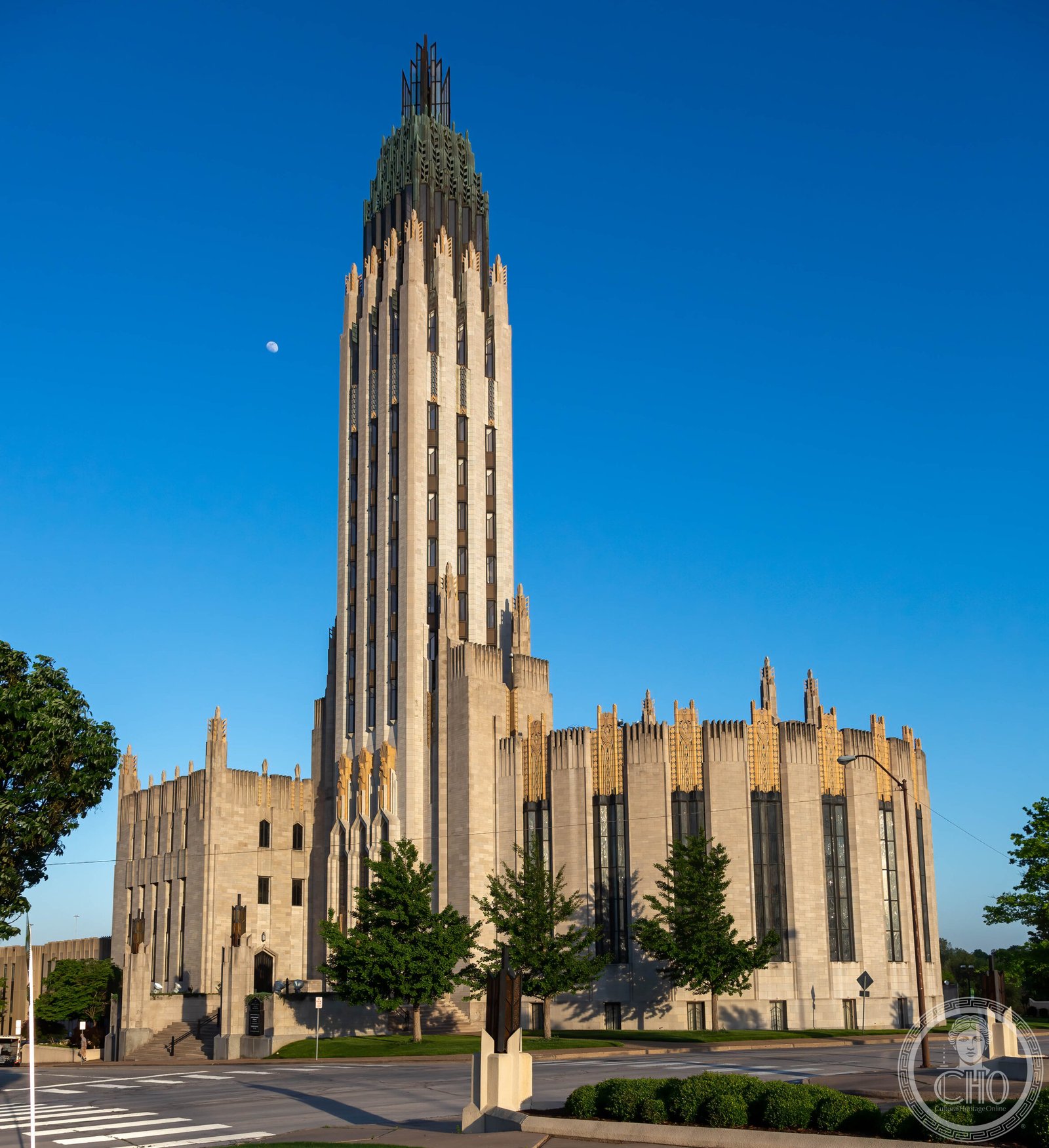
Oklahoma’s most celebrated Art Déco building: a 225-foot tower of terracotta and faith, where geometric wheat-sheaves and stylised flames translate Methodist symbolism into Jazz Age ornament.
At a glance
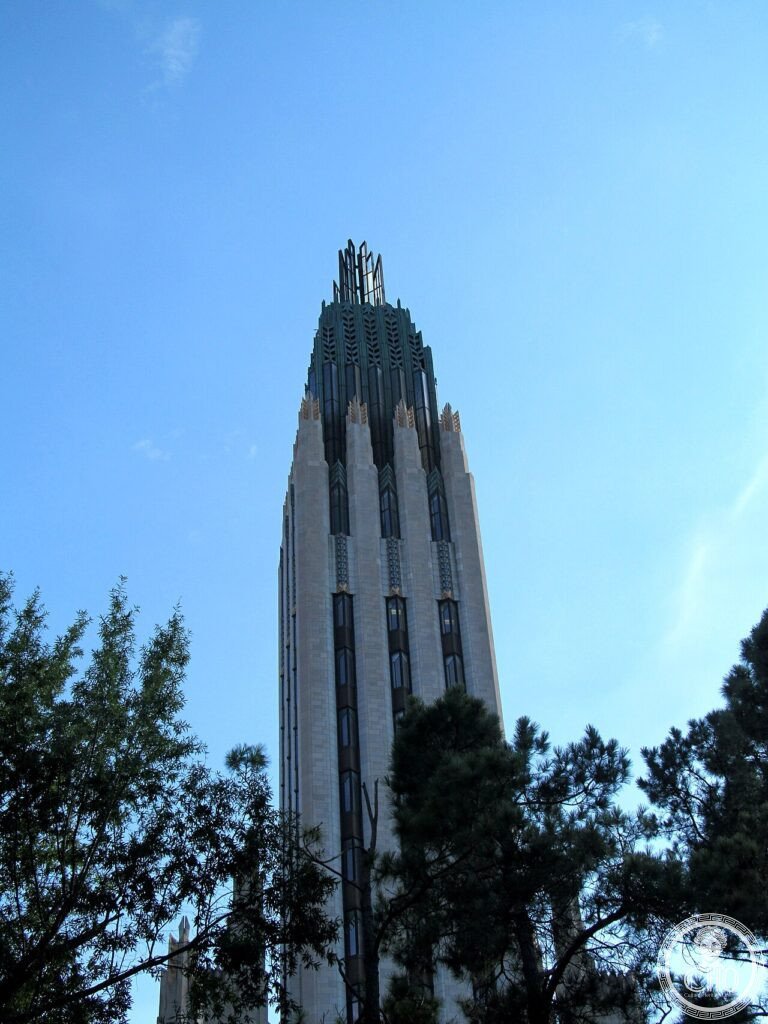
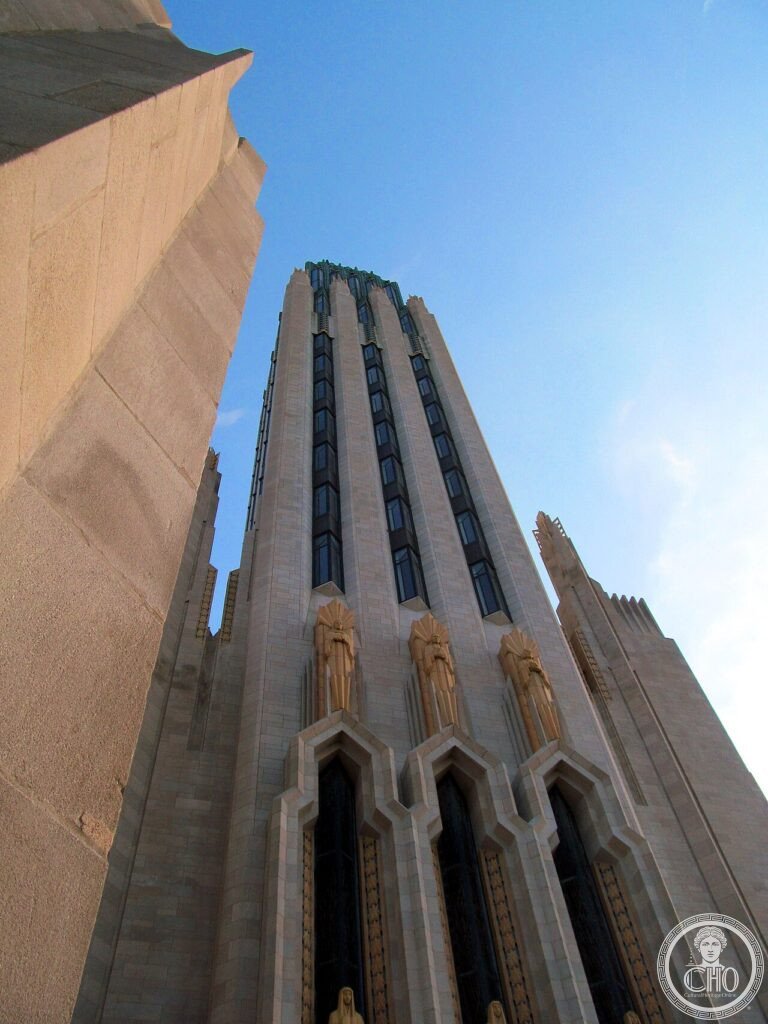
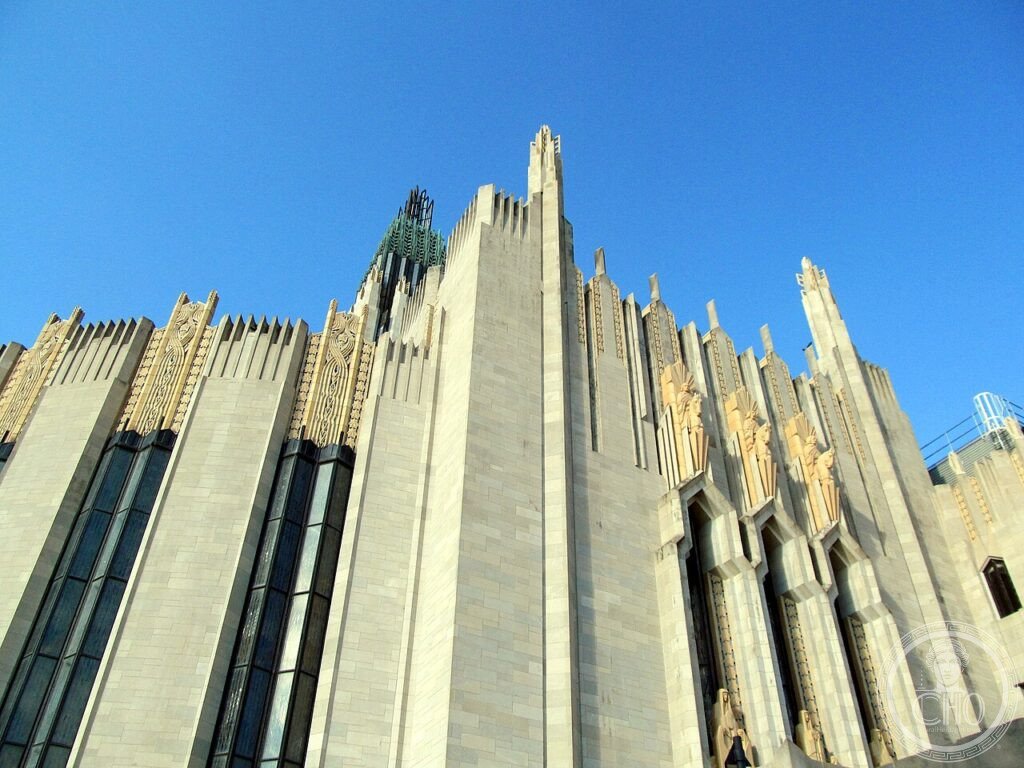
The Boston Avenue Methodist Church rises 225 feet (69 m) above Tulsa’s midtown, its terracotta tower an unmistakable landmark of the city’s 1920s oil-boom prosperity. Completed in 1929, the building synthesises Art Déco geometry with Gothic verticality, its stepped crown detailed with numerous stylised human and plant-form reliefs. The sanctuary holds 2,000, and the complex covers an entire city block. It was declared a National Historic Landmark in 1999.
Key facts
- Design concept: Adah Robinson, artist and educator
- Architects of record: Rush, Endacott & Rush; Bruce Goff (drawings)
- Completed: 1929
- Height: 225 ft (69 m)
- Cladding: Terracotta, Indiana limestone
- Style: Art Déco with Gothic verticality
- NRHP: 1978 · National Historic Landmark: 1999
- Address: 1301 S. Boston Ave., Tulsa, OK 74119
History
Tulsa in the 1920s was flush with oil wealth and civic ambition. The Boston Avenue Methodist congregation commissioned a new sanctuary befitting the city’s aspirations, turning to Rush, Endacott & Rush — a local firm whose draftsman Bruce Goff (born 1904, age 22 at contract signing) would translate the design vision into construction drawings. The conceptual programme, however, belongs to Adah Robinson (1882–1962), an art teacher at the University of Tulsa who had been exploring geometric ornamental systems inspired by native Oklahoma botanicals — wheat, sunflowers, and prairie grasses — rendered in strictly rectilinear Art Déco idiom.
Construction ran from 1927 to 1929, just as the Great Crash arrived. The congregation pressed on. The tower was complete by early 1929 and the first service was held in June 1929. Its attribution has been debated for decades: the National Register recognised the building under Goff’s name in 1966, but subsequent architectural historians reassigned principal credit to Robinson. The current National Historic Landmark nomination (1999) cites Robinson as primary designer.
Goff went on to a prolific independent career; the attribution between Robinson and Goff remains a subject of architectural scholarship. The church remains in active use.
What you see
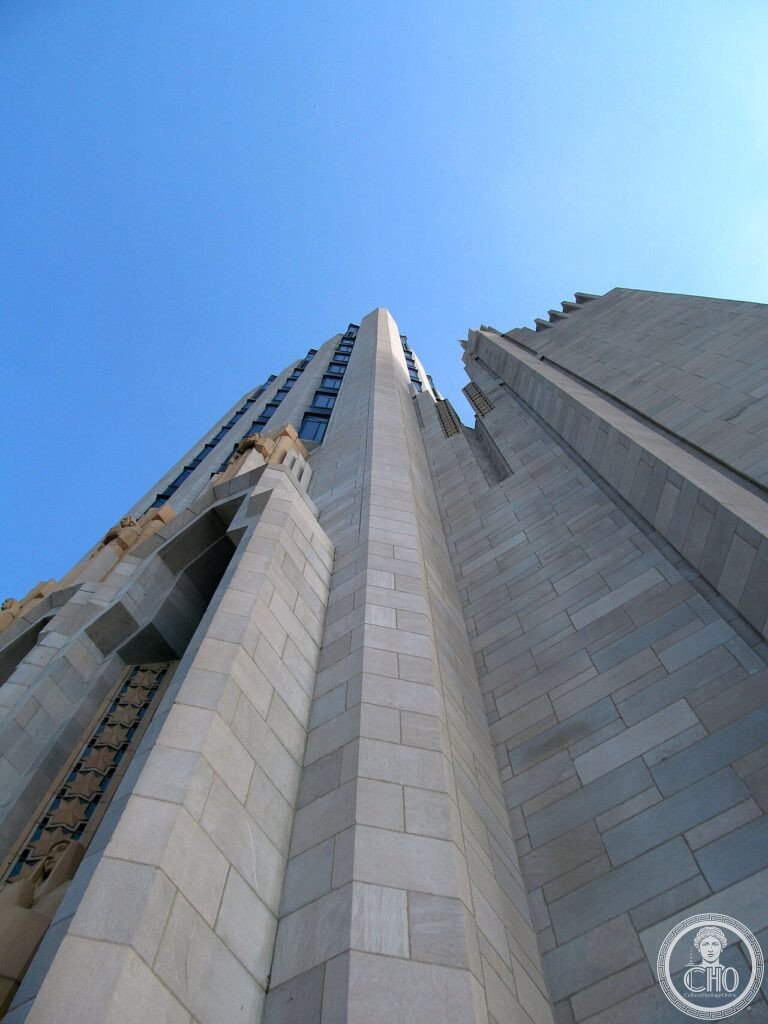
The exterior is sheathed in buff brick and pale terracotta, with the tower’s upper tiers articulated in receding setbacks — each face richly textured with reliefs that Robinson designed as a visual theology. Flame forms represent the Holy Spirit; stylised wheat sheaves stand for harvest and the Eucharist; humanoid praying figures appear at the corners. The treatment is not decorative in any superficial sense: every motif carries a programmatic meaning, making the building one of the few Art Déco structures where ornament functions as explicit iconography.
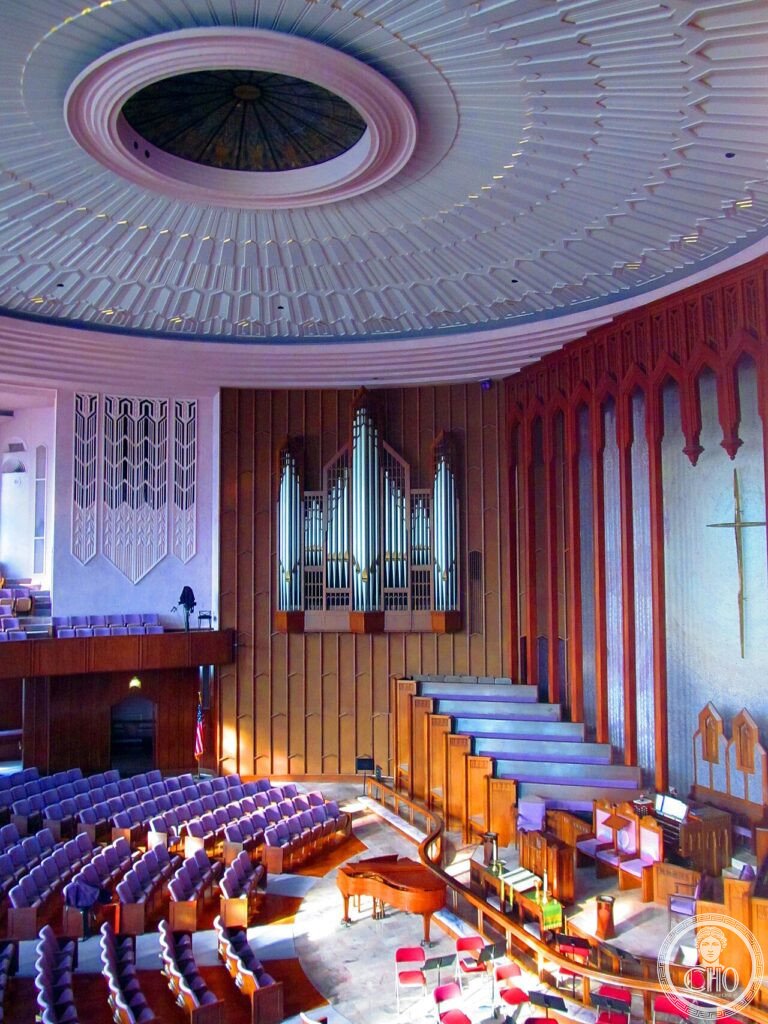
Inside, the sanctuary is bathed in amber and gold through original art-glass windows whose geometric patterning echoes the exterior reliefs. The balcony’s curved profile, the coffered ceiling, and the broad central nave give the space a civic scale unusual for a neighbourhood church. The building’s bronze entrance doors carry further relief work; the lobby floor is polished terrazzo with compass-point inlay.
Practical information
- Address: 1301 S. Boston Avenue, Tulsa, OK 74119
- GPS: 36.143889, -95.984444
- Visits: Open for Sunday services; guided architectural tours available by appointment
- Time needed: 45–60 minutes for exterior and lobby; 90 min with guided tour
- Admission: Free (donations welcome)
- Tulsa Art Déco District: 15-minute walk north to Philtower, Philcade, and Mid-Continent Tower
Getting there
The church stands on South Boston Avenue between 12th and 13th Streets, approximately one mile south of Tulsa’s central Art Déco district. By car: 5 minutes from downtown Tulsa; parking on adjacent streets or in the church lot. Tulsa International Airport is 8 miles northeast; the drive takes roughly 20 minutes. No direct public transit stops at the door, but Tulsa Transit Route 12 serves South Boston Avenue.
Nearby
- Philtower (1928) — Art Déco Gothic skyscraper, 15 min walk north
- Philcade Building (1931) — Waite Phillips retail arcade, adjacent to Philtower
- Mid-Continent Tower — Tulsa’s tallest building with 1984 Art Déco crown
Photo gallery
Sources
- National Park Service, National Historic Landmark nomination — Boston Avenue Methodist Church (1999)
- Wikidata entity Q4947741 — GPS, identifier, architectural data
- Wikipedia EN — Boston Avenue Methodist Church
- Tulsa Preservation Commission — Tulsa Art Deco Historic District documentation
- University of Tulsa Libraries — Adah Robinson papers
Find it on the map
See this place and what’s around it →📷 Become a Cultural Heritage Online photographer
Share your photos of places: they stay published under your name as the author. The more they're seen, the more you get noticed — and soon a contest will reward the most appreciated photos.
Log in or sign up free to add a photoIs this page about you?
This page is read by travellers and heritage enthusiasts who find it on Google. Tell us how you are connected to this place and we will take it from there.