

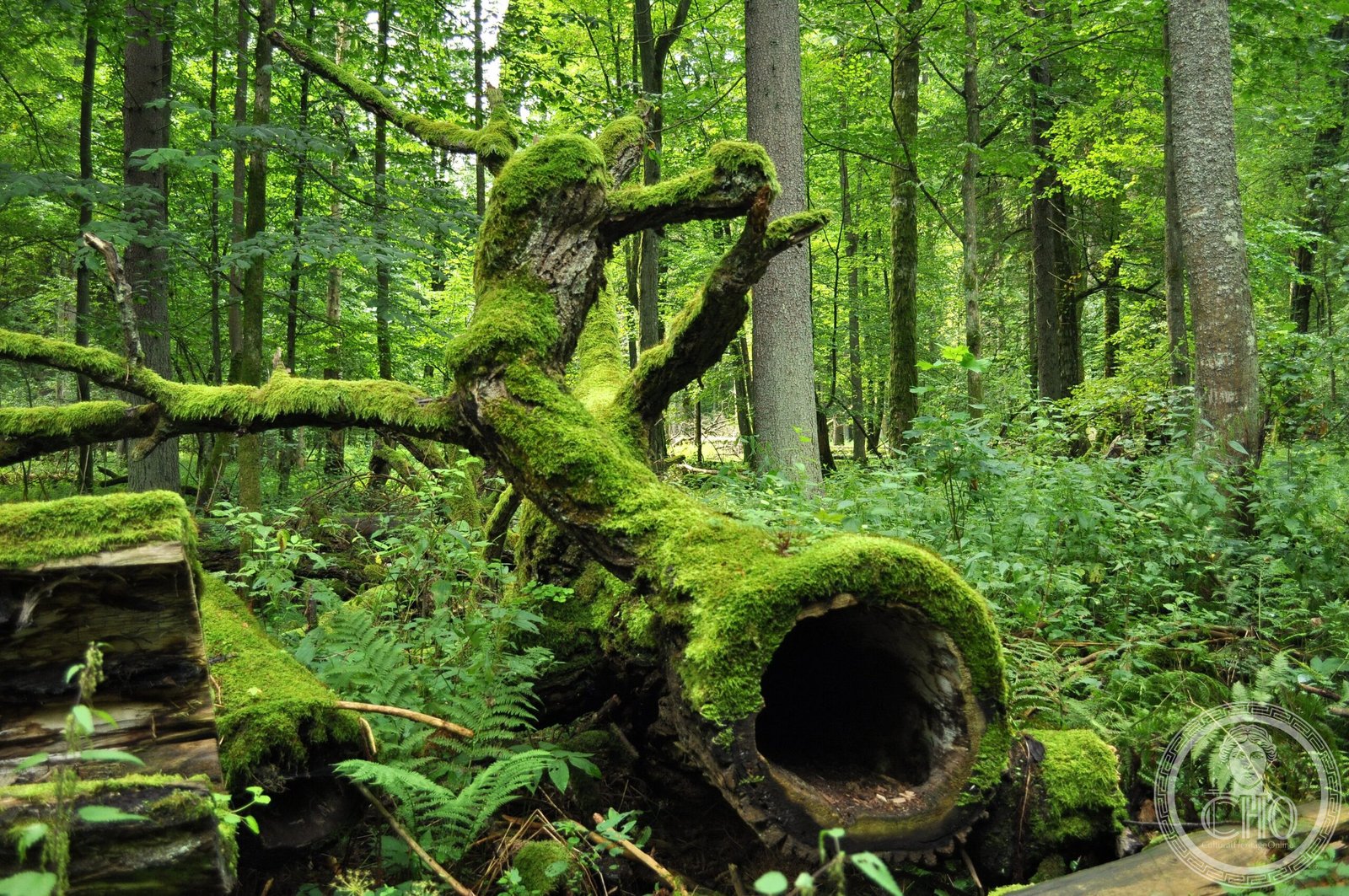
Europe’s last temperate primeval forest, straddling the Polish-Belarusian border, harbors the continent’s largest population of European bison and ranks among the continent’s most ecologically significant wilderness areas.
At a glance
Białowieża National Park protects 105.2 square kilometres of old-growth forest in eastern Poland, 62 km southeast of Białystok. A UNESCO World Heritage Site and biosphere reserve, it represents Europe’s finest surviving fragment of primeval temperate woodland—landscape that once extended across the European Plain.
History
The Białowieża Forest has endured as Europe’s last unbroken primeval woodland, surviving centuries of land clearance across the continent. The forest boundary coincides with the Polish-Belarusian border; the adjacent Belovezhskaya Pushcha National Park protects the Belarusian portion. A hiking and cycling border crossing allows visitors to traverse both sides.
What you see
Białowieża presents intact old-growth forest with mature hardwoods and complex understory ecosystems characteristic of European primeval woodland. Its biological diversity defines its character—no single architectural feature, but rather the accumulated layering of centuries-old natural architecture.
Cultural significance
The park stands as Poland’s sole natural World Heritage Site and anchors the Białowieża Forest Biosphere Reserve. It serves as a living laboratory for understanding European temperate forests before human transformation. The European bison—the continent’s heaviest land animal—finds refuge here in unprecedented numbers. Annual tourism generates approximately 72 million zloty in revenue.
Key facts
- Country: Poland
- Region: Podlaskie Voivodeship
- Area: 105.2 km² (40.6 sq mi)
- Coordinates: 52.75°N, 23.88°E
- UNESCO World Heritage Site
- World’s largest population of European bison
- Home to wild boar, Eurasian elk, wolf, and lynx
Practical information & getting there
Located 62 km (39 mi) southeast of Białystok in northeastern Poland. A marked hiking and cycling route crosses the international border within the forest, offering access to the Belarusian side. The park’s primary value lies in observation and study of natural forest ecosystems rather than cultural infrastructure.
Sources & resources
- Białowieża National Park – Wikipedia
- Cultural Heritage Online
Find it on the map
See this place and what’s around it →
📷 Become a Cultural Heritage Online photographer
Share your photos of places: they stay published under your name as the author. The more they're seen, the more you get noticed — and soon a contest will reward the most appreciated photos.
Log in or sign up free to add a photo