
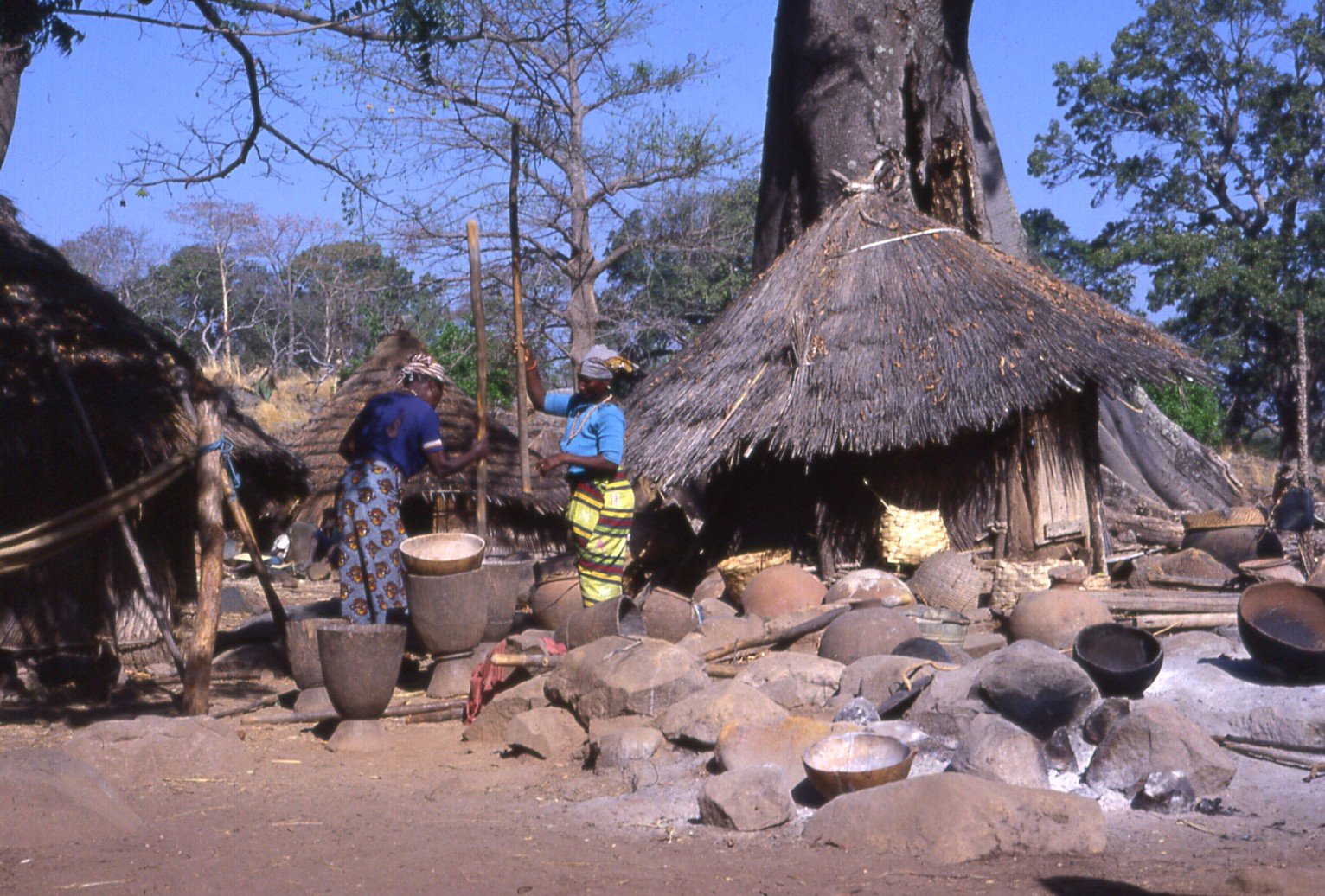
In the remote southeastern corner of Senegal, three distinct peoples — the Bassari, the Fula, and the Bedik — have maintained ways of life that have remained remarkably resilient against outside influence for centuries. Their terraced fields, sacred forests, initiation grounds, and round-thatched villages form a living cultural landscape that UNESCO inscribed as a World Heritage Site in 2012.
At a glance
Bassari Country encompasses a multicultural landscape in the Kedougou Region of southeastern Senegal, extending into adjacent Guinea. Three geographically overlapping communities — the animist Bassari and Bedik peoples, and the largely Muslim Fula (Fulani) — occupy a landscape of steep valleys, forested hillsides, and the foothills of the Fouta Djallon plateau. What makes the site exceptional is that the Bassari and Bedik largely resisted the adoption of Islam (which arrived in the region centuries ago) and maintained pre-Islamic West African ceremonial and agricultural traditions. The inscribed area aggregates three geographical zones: Bassari-Salemata, Bedik-Bandafassi, and Fula Fouta Djallon.
Key facts
- UNESCO inscription: 2012, Criteria iii, v, vi
- Country: Senegal (and adjacent Guinea)
- Peoples: Bassari (animist), Bedik (animist), Fula (Muslim)
- Intangible heritage: Bassari Oreki initiation ceremony — UNESCO ICH list
- Heritage type: Living cultural landscape, not purely archaeological
- Traditional settlement documented from: at least 15th century CE
- Location: Kedougou Region, southeastern Senegal
- Coordinates: 12.5000 N, 12.5833 W
History
The Bassari and Bedik peoples of the Fouta Djallon foothills have occupied their current territories for at least 500 years, according to oral traditions and early colonial accounts. Unlike many West African peoples who adopted Islam during the 15th–18th century Sahel-wide conversions, the Bassari and Bedik largely resisted, preserving a continuous chain of pre-Islamic agricultural ceremonies, mask traditions, and multi-year male initiation cycles (the Oreki) that are today recognised as UNESCO Intangible Cultural Heritage. The Fula people, who arrived more recently and are predominantly Muslim, occupy adjacent territories and have developed their own distinctive pastoral cultural landscape on the plateau.
French colonial rule reached the area in the early 20th century, but the remoteness of the Kedougou Region meant that transformative external pressures were slower to arrive here than elsewhere in Senegal. In the post-independence era, Senegal has maintained a strong commitment to protecting the area’s cultural integrity; the UNESCO inscription in 2012 formalised international recognition of its outstanding universal value.
What you see
The Bedik villages are among the most visually distinctive in West Africa: clusters of round, thatched-roof houses with conical tops, built on steep hillside sites for defensive purposes. The interiors are compact and dark, the exterior walls decorated with painted geometric patterns during ceremonies. Bassari villages are lower and more scattered across valley floors, with granaries and ceremonial spaces arranged around open gathering areas. Sacred forests — areas where initiation rites and mask ceremonies are performed — punctuate the landscape and are off-limits to outsiders during ritual periods.
The terraced fields on the steep hillsides are themselves a cultural artefact: generations of careful stonework maintaining the agricultural productivity of otherwise difficult terrain. Fula settlements, by contrast, tend to be more dispersed, with cattle-herding enclosures and mosques marking a distinctive pastoral-Muslim cultural geography that contrasts vividly with the animist villages of the Bassari and Bedik.
Practical information
- Access point: Kedougou town — the main base for visiting the area
- From Dakar: approximately 700 km by road; bus services and domestic flights to Kedougou available
- Local guides: Strongly recommended; required for access to sacred sites and during ceremonial periods
- Best season: November–April (dry); roads can be impassable July–September
- Currency: West African CFA franc (XOF)
- Photography: Always ask permission; sacred sites and ceremonies are restricted
Getting there
Kedougou town is the gateway to Bassari Country. From Dakar, bush taxis and buses serve the Trans-Gambia highway route (approximately 12–16 hours). Air Senegal and other carriers offer occasional domestic flights to Kedougou. From Kedougou, 4WD vehicles and local guides are needed to reach Bassari and Bedik villages on the plateau tracks.
Nearby
- Niokolo-Koba National Park — UNESCO Biosphere Reserve and World Heritage Site (natural); one of West Africa’s largest national parks, approximately 70 km north
- Fouta Djallon Highlands (Guinea) — the plateau extending south into Guinea, home to additional Fula cultural landscapes and spectacular waterfalls
- Kedougou gold mining district — artisanal gold mining has been part of the regional economy for centuries, continuing today in the Faleme River basin
Sources
- UNESCO World Heritage List — Bassari Country: Bassari, Fula and Bedik Cultural Landscapes, 2012
- UNESCO Intangible Cultural Heritage — Bassari initiation rite Oreki
- Direction du Patrimoine Culturel, Senegal
- Wikipedia — “Bassari Country”
Find it on the map
See this place and what’s around it →📷 Become a Cultural Heritage Online photographer
Share your photos of places: they stay published under your name as the author. The more they're seen, the more you get noticed — and soon a contest will reward the most appreciated photos.
Log in or sign up free to add a photo