

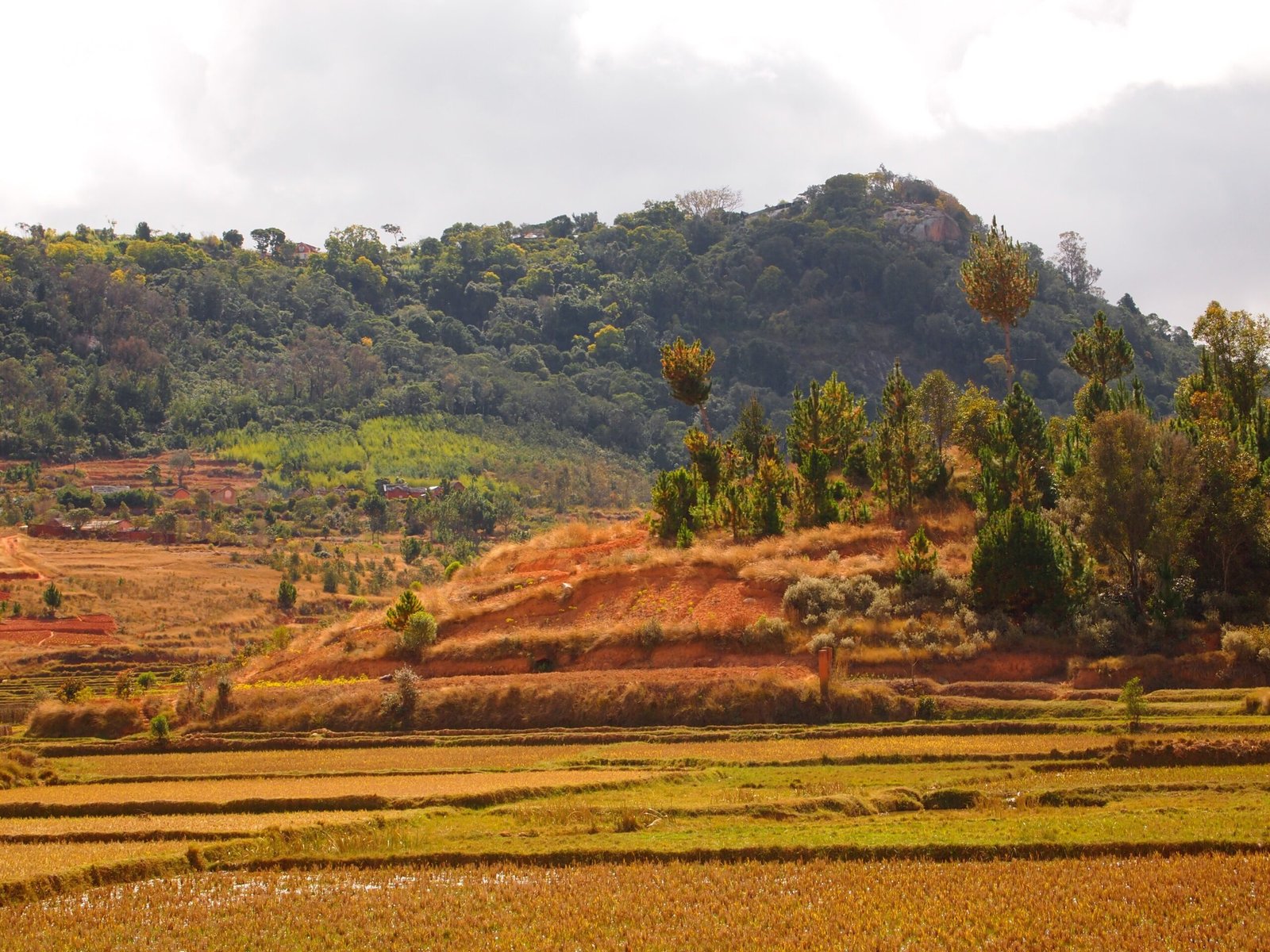
The most sacred place in Madagascar: a forested hilltop 24 km north of Antananarivo where successive Merina kings held court, where commoners were once put to death for entering uninvited, and where crowds still gather weekly to commune with royal ancestors through the ceremony of Famadihana.
At a glance
Ambohimanga (meaning Blue Hill or Hill of Beauty in Malagasy) is a forested hilltop 24 km north of Antananarivo, the capital of Madagascar. From the 18th century until French colonial forces occupied it in 1897, it served as the seat of the Merina Kingdom and the sacred residence of Merina kings. UNESCO inscribed it in 2001 as a Place of Memory and National Identity, recognising both its physical integrity and its continued spiritual significance to the Malagasy people. The royal compound (Rova) contains the house of King Andrianampoinimerina, built from seven interlocking rosewood trunks and still furnished with original objects. The surrounding sacred forest shelters rare endemic species. The site is the most-visited cultural heritage destination in Madagascar.
Key facts
- UNESCO inscription: 2001 (cultural landscape)
- Location: 24 km north of Antananarivo, Analamanga Region, Madagascar
- Period: 18th-19th century CE as royal capital; sacred site to present day
- Key ruler: King Andrianampoinimerina (c. 1745-1810), unifier of the Merina Kingdom
- French occupation: 1897 CE (end of Merina Kingdom)
- Access history: Closed to commoners (death penalty); closed to foreigners 1810-1897
- Key ceremony: Famadihana (turning of the bones) – periodic reburial of royal ancestors
- Most visited: Most-visited cultural heritage site in Madagascar
History
Ambohimanga became a royal seat in the early 18th century when the Merina people began consolidating political power in the central highlands of Madagascar. The hill was chosen for both its natural defensibility and its spiritual significance: in Malagasy cosmology, high places are associated with ancestral power (Hasina), and Ambohimanga was considered the spiritual heart of the Merina nation. Successive kings built their residences here, creating a compound that grew over generations.
The hill reached its greatest political importance under King Andrianampoinimerina (reigned c. 1787-1810), who unified the fragmented Merina chiefdoms into a single kingdom and laid the foundations for what would become the Kingdom of Madagascar. His son Radama I (1810-1828) moved the royal capital to Antananarivo but kept Ambohimanga as the sacred ancestral seat; from 1810 to 1897, the hill was closed entirely to foreigners by royal decree, preserving it from colonial interference.
French forces occupied Ambohimanga in 1897 as part of the conquest of Madagascar, ending the Merina Kingdom. The colonial administration partially dismantled the royal compound, though the core structures survived. Madagascar gained independence in 1960; the site was restored and opened as a national monument. UNESCO inscription in 2001 recognised it not merely as a historical monument but as a living spiritual landscape where ancestral veneration continues actively.
What you see
The approach to Ambohimanga passes through a series of historic gateways, the most dramatic of which is a massive stone disc (the Ampiantamotse) that was rolled each night to seal the entrance. Once inside, the royal compound (Rova) reveals a collection of structures that survived colonial occupation. The centrepiece is the royal house of Andrianampoinimerina: a single-storey building constructed from seven interlocking rosewood (palissandre) tree trunks, still standing after two centuries without nails. Inside, the original royal bed, silver spears, and cattle symbols are preserved.
The compound also contains the royal bath (used for sacred purification ceremonies), sacred trees believed to embody ancestral spirits, a cattle enclosure representing royal power, and the burial sites of the royal family. The surrounding sacred forest is home to rare Malagasy endemic species including chameleons and birds. Views across the central plateau to Antananarivo are exceptional, making clear why this elevated position was chosen for the royal seat.
Living sacred landscape
What makes Ambohimanga exceptional among UNESCO World Heritage Sites is that it is not a ruin or an archaeologically reconstructed past: it is an actively venerated sacred landscape. Crowds gather here weekly for ceremonies of Famadihana (the turning of the bones), the distinctively Malagasy tradition of periodically exhuming, rewrapping in fresh silk, and reburying deceased family members. At Ambohimanga this practice focuses on the royal ancestors, whose spirits (Razana) are believed to intercede between the living and the divine. The ceremonies involve music, dancing, and communal feasting and can last several days. UNESCO cited this continuity of spiritual significance, not merely the physical structures, as the primary basis for inscription.
Practical information
- Location: Ambohimanga commune, 24 km north of Antananarivo
- Getting there: Taxi-brousse (shared taxi) or private taxi from Antananarivo city (approx. 45-60 min)
- Opening hours: Daily 08:00-17:00; guided tours available in French and Malagasy
- Admission: Entry fee applies; guided tour recommended for context
- Dress code: Modest clothing required; remove shoes before entering royal house
- Famadihana: Ceremonies typically July-September; visitors may attend with respectful behaviour
Getting there
From Antananarivo (Tana), shared taxis (taxi-brousse) depart from the northern station (Ampasampito) towards Ambohimanga in approximately 45-60 minutes. Private taxis are available from central Antananarivo. The site is best visited as a half-day trip from Tana, combined with the Rova of Antananarivo palace complex in the capital. Road quality is generally good as far as the site entrance.
Nearby
- Rova of Antananarivo – 24 km south: Merina royal palace complex in the capital
- Lemurs Park, Antananarivo – 21 km SW: sanctuary for rescued Madagascar lemurs
- Tsimbazaza Park, Antananarivo – 24 km south: zoo and natural history museum with endemic fauna
- Andasibe-Mantadia National Park – 140 km east: primary rainforest with Indri lemurs
Sources
- UNESCO World Heritage Centre, Royal Hill of Ambohimanga, whc.unesco.org/en/list/950
- Fee, Sarah (2000). Cloth and Customs: Malagasy Textile Arts and Ritual. Textile Society of America.
- Campbell, G. (2005). An Economic History of Imperial Madagascar, 1750-1895. Cambridge University Press.
Find it on the map
See this place and what’s around it →📷 Become a Cultural Heritage Online photographer
Share your photos of places: they stay published under your name as the author. The more they're seen, the more you get noticed — and soon a contest will reward the most appreciated photos.
Log in or sign up free to add a photo