Russia has 33 UNESCO World Heritage Sites, spanning the fresco-filled monasteries of the European north, the geothermal wilderness of Kamchatka, the world’s deepest lake, and Upper Palaeolithic cave paintings that predate written history by tens of thousands of years. The range is almost unreasonably wide — from Byzantine church interiors surviving in Siberian towns to volcanic archipelagos above the Arctic Circle. From Cultural Heritage Online.
Why Russia’s list looks the way it does
Russia joined the World Heritage Convention in 1988 and made its first inscriptions in 1990, entering three sites simultaneously. The country’s sheer geographic scale — eleven time zones, from the Baltic coast to the Pacific — explains why the list divides sharply between the monastic and urban heritage of European Russia and the natural superlatives of Siberia and the Far East. Cultural sites account for 21 of the 33, reflecting centuries of Orthodox ecclesiastical building, imperial urban planning, and vernacular craftsmanship that accumulated in the western third of the country.
The natural sites, numbering eleven, concentrate in the east and include some of the planet’s most isolated ecosystems. One site carries a mixed designation: the Curonian Spit, a narrow sand dune peninsula shared with Lithuania, where human management over centuries shaped a landscape that is simultaneously ecological and cultural. A further 32 properties sit on Russia’s tentative list, suggesting the country’s engagement with the programme remains active.
The first inscriptions
Three sites were inscribed together in 1990, the year Russia formally entered the Convention:
- Historic Centre of Saint Petersburg and Related Groups of Monuments
- Kizhi Pogost
- Kremlin and Red Square, Moscow
The 1990 trio set a pattern that persisted — a balance of imperial grandeur, medieval ecclesiastical craft, and vernacular timber tradition. Kizhi Pogost, on an island in Lake Ladoga, is an ensemble of eighteenth-century log churches built without iron nails, their twenty-two onion domes stacked in a silhouette that has defined the imagery of Russian wooden architecture ever since. The Saint Petersburg inscription, the largest by area, encompasses more than a dozen distinct monument groups spread across the city and its surrounding palaces and parks.
The most visited — and the alternatives
The Kremlin, Red Square, and the Saint Petersburg historic centre draw millions of visitors each year and are well documented. Slightly less pressured, though no less remarkable, are several inscribed sites that reward the detour:
- Ferapontov Monastery (inscribed 2000) — a remote ensemble in the Vologda region whose Cathedral of the Nativity of the Virgin retains a virtually complete cycle of frescos painted by Dionisius in 1502, among the finest surviving examples of late medieval Russian painting.
- Churches of the Pskov School of Architecture (inscribed 2019) — ten churches across the city of Pskov where Byzantine and Novgorodian traditions fused with local vernacular invention, producing a distinctive compact form that influenced building across northern Russia.
- Assumption Cathedral and Monastery of Sviyazhsk (inscribed 2017) — a sixteenth-century island monastery near Kazan whose frescos blend Orthodox iconography with Tatar ornamental traditions in a way found almost nowhere else.
- Rock Paintings of Shulgan-Tash Cave (inscribed 2025) — Russia’s most recent inscription, a cave in the southern Urals containing Upper Palaeolithic images of mammoths and other Ice Age fauna painted in red ochre, making it one of the easternmost sites of this type in Europe.
Natural and shared sites
Russia’s natural World Heritage Sites represent some of the largest intact wilderness areas on earth. Lake Baikal, inscribed in 1996, holds roughly one-fifth of the world’s unfrozen surface fresh water and harbours more than 1,700 endemic species. The Volcanoes of Kamchatka cluster, covering some 3.7 million hectares on the Pacific peninsula, protects an active volcanic landscape of global geological importance. The Putorana Plateau in central Siberia, inscribed in 2010, is a basalt tableland roughly the size of the United Kingdom, nearly uninhabited and reachable only by helicopter. The Lena Pillars Nature Park safeguards extraordinary Cambrian-age rock columns rising up to 150 metres from the banks of the Lena River.
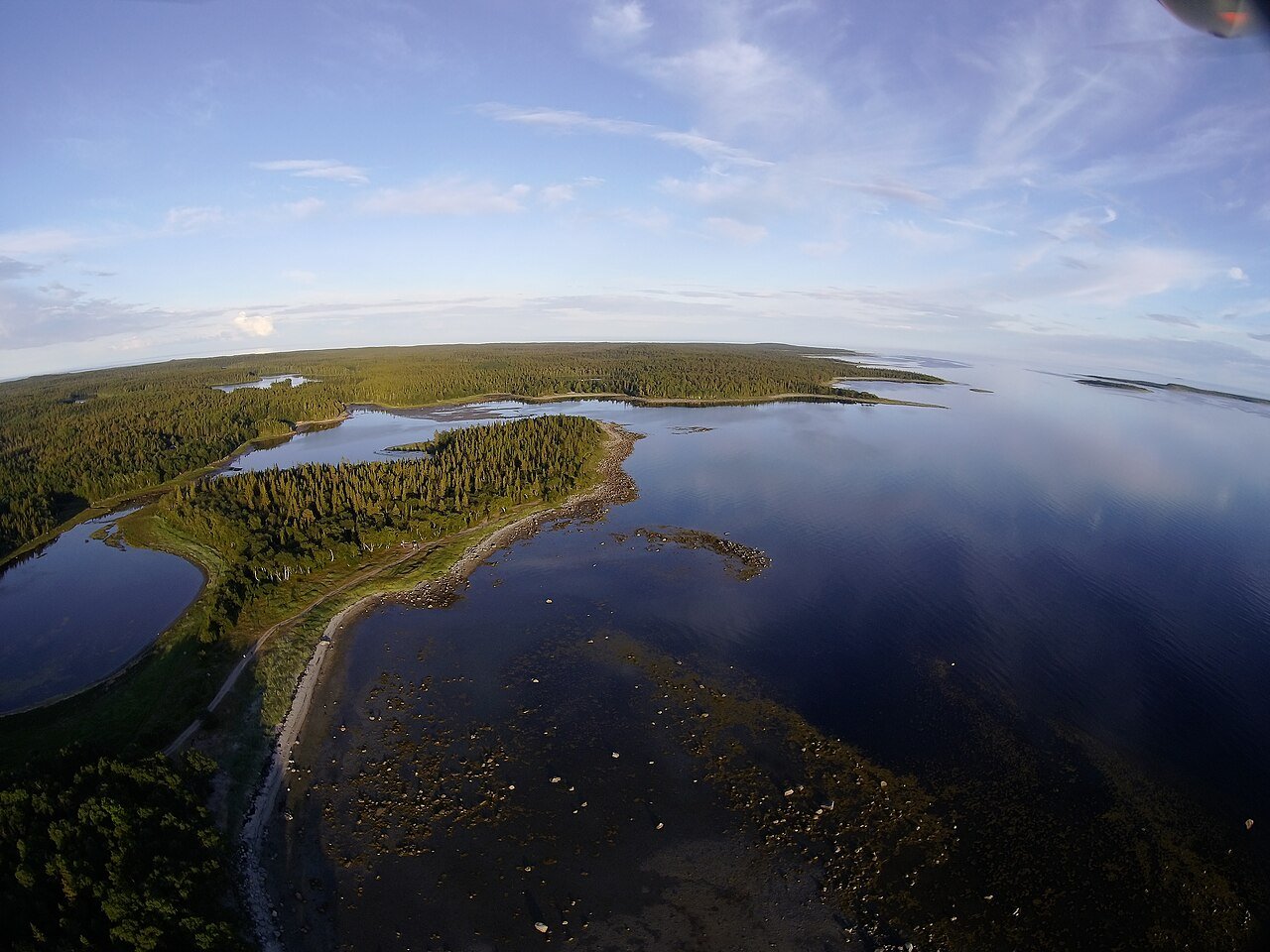
Russia shares four sites with neighbouring countries. The Curonian Spit is jointly listed with Lithuania. The Uvs Nuur Basin and the Landscapes of Dauria are shared with Mongolia, the latter protecting the Daurian steppe ecosystem across the Russia-Mongolia-China borderlands. The Struve Geodetic Arc, a chain of survey triangulation points stretching from the Arctic Ocean to the Black Sea, is shared with nine other European countries — a scientific and engineering monument spanning a continent.
How to find them
Russia’s World Heritage sites sit alongside thousands of other places on CHO’s interactive map, with GPS and sourced editorial history for each. See also our guides to Italy’s and France’s UNESCO sites, and our piece on cultural travel beyond mass tourism.
Frequently Asked Questions
How many UNESCO World Heritage Sites does Russia have?
As of 2025, Russia has 33 UNESCO World Heritage Sites: 21 cultural, 11 natural, and 1 mixed. A further 32 properties appear on Russia’s tentative list, nominated for future consideration.
What was Russia’s first UNESCO World Heritage Site?
Russia made three simultaneous first inscriptions in 1990: the Historic Centre of Saint Petersburg and Related Groups of Monuments, Kizhi Pogost, and the Kremlin and Red Square in Moscow. All three were recognised when Russia formally ratified the World Heritage Convention.
What is Russia’s most recently inscribed World Heritage Site?
The Rock Paintings of Shulgan-Tash Cave, inscribed in 2025, is Russia’s most recent addition. The cave in the southern Urals contains Upper Palaeolithic images painted in red ochre — among the easternmost examples of Ice Age cave art known in the world.
Does Russia have any transnational UNESCO World Heritage Sites?
Russia shares four World Heritage Sites with other countries: the Curonian Spit with Lithuania, the Uvs Nuur Basin and Landscapes of Dauria with Mongolia, and the Struve Geodetic Arc with nine European nations stretching from Norway to Ukraine.
Sources used in this article
- UNESCO — State Party Russia — World Heritage list.
- UNESCO — Russia: World Heritage Sites.
- CHO magazine — What is a World Heritage Site?
- CHO — Interactive map of heritage sites.
Sources
- S1 — Riasanovsky, Nicholas V., and Mark D. Steinberg. A History of Russia. Oxford University Press, 2011. ISBN 978-0-19-534197-3.
- S2 — Brumfield, William Craft. A History of Russian Architecture. University of Washington Press, 2004. ISBN 978-0-295-98394-3.
Spotted an error? Write to editorial@culturalheritageonline.com and we correct it the same day.