Finland has 7 UNESCO World Heritage Sites, ranging from a sea fortress built by Swedish colonial ambition to a lone Bronze Age cairn field on a granite ridge, from a preserved mill village that time forgot to a coastline still rising from the sea after the last Ice Age. From Cultural Heritage Online.
Why Finland’s list looks the way it does
Seven inscriptions across a country the size of Germany might seem modest, but the Finnish list is unusually coherent. Each site represents a distinct layer of the country’s identity: prehistoric ritual landscape, medieval town fabric, vernacular religious architecture, industrial heritage, military engineering, geodetic science, and the raw geological process of isostatic rebound. There is almost no overlap in theme or period, which makes the list read less like a catalogue and more like a carefully edited anthology.
Finland joined the World Heritage Convention in 1987 and submitted its first nominations almost immediately. The pace of inscription was brisk through the 1990s and early 2000s, then slowed considerably. The most recent addition — the Struve Geodetic Arc, a transnational serial property — was inscribed in 2005, and Finland has not added a new site since. Two properties entered the country’s tentative list in 2021, so future additions remain possible.
The first inscriptions
Finland’s World Heritage story began in 1991, when two sites were inscribed simultaneously at the 15th session of the World Heritage Committee, held in Carthage. Both entries were for cultural properties, and both remain the country’s most internationally recognised sites today:
- Old Rauma — a medieval trading port on the west coast, now home to one of the largest surviving concentrations of wooden urban architecture in the Nordic countries
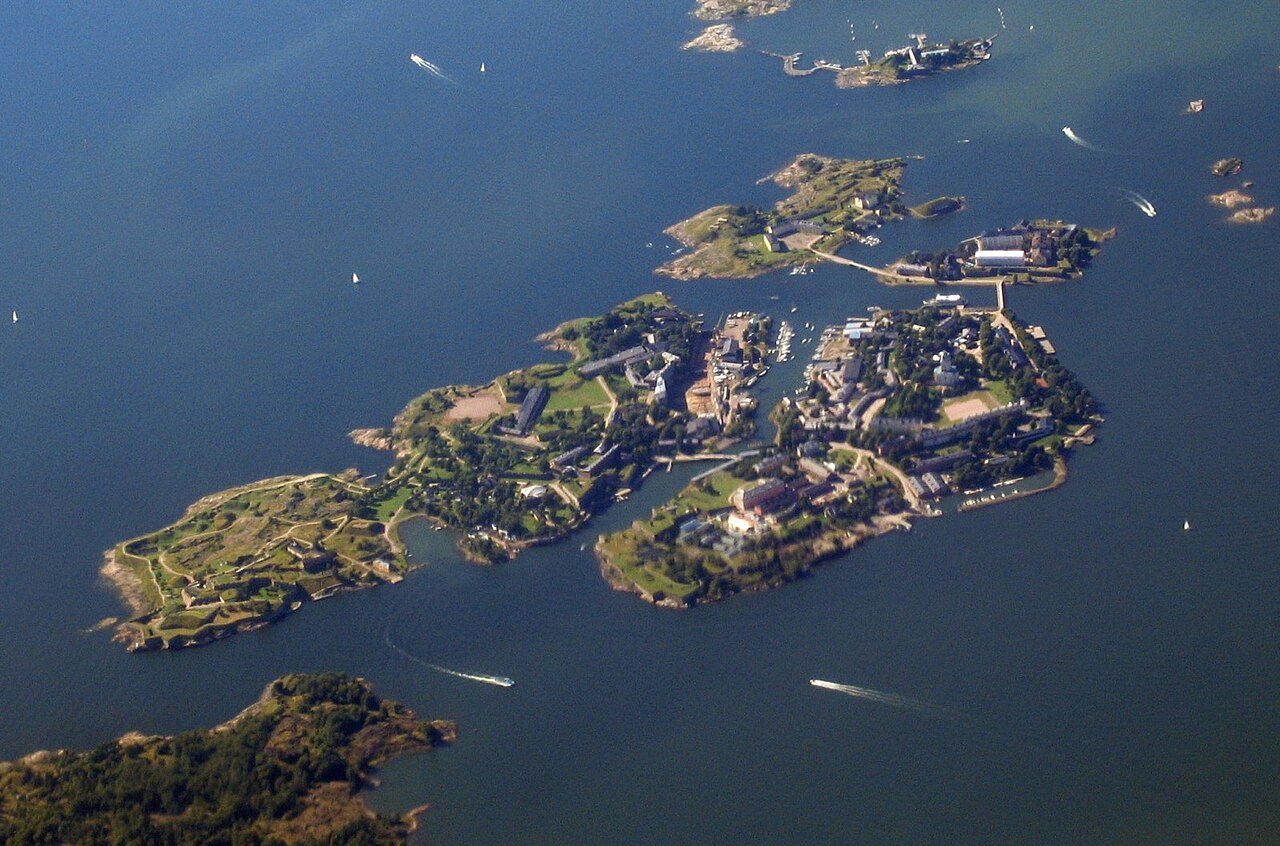
- Fortress of Suomenlinna — an eighteenth-century sea fortress built on a cluster of islands off Helsinki, originally constructed under Swedish rule and later used by Russia and Finland
The pairing was significant. One site was intimate and civic, the other monumental and martial. Together they signalled the range Finland intended to bring to the World Heritage system: not grand palaces or cathedral cities, but the particular textures of northern European life — timber, granite, sea, and pragmatic ingenuity.
The most visited — and the alternatives
Suomenlinna draws the bulk of international attention, partly because it is a twenty-minute ferry ride from Helsinki’s market square and partly because the scale of the fortifications is genuinely arresting. Old Rauma, with its painted wooden houses and cobbled lanes, is less frequented by foreign visitors but beloved inside Finland. Both deserve their reputations and are accessible without specialist planning.
The remaining cultural sites reward more deliberate travel. Petäjävesi Old Church (inscribed 1994), a seventeenth-century log structure in central Finland, blends Renaissance proportions with Gothic detailing in a way that is unusual for vernacular architecture anywhere in Europe — it was abandoned when a new church was built nearby and survived essentially intact as a result. Verla Groundwood and Board Mill (1996) is a complete nineteenth-century industrial village in the lake district, where the machinery, workers’ housing, and management buildings still stand together in a way that has almost entirely vanished elsewhere. Sammallahdenmäki (1999), a Bronze Age burial site on the southwestern coast, consists of 33 granite cairns — some covering chamber tombs — arranged across a ridgeline in a configuration linked to solar orientation traditions that spread across Scandinavia during the second millennium BCE.
Natural and shared sites
Finland has one natural World Heritage Site: the High Coast / Kvarken Archipelago, inscribed as a transnational serial property shared with Sweden. The Finnish component, the Kvarken Archipelago, was added in 2006, extending an inscription that Sweden had held since 2000. The outstanding universal value here is post-glacial isostatic rebound — the land is still rising from the sea at roughly eight millimetres per year as the Earth’s crust recovers from the weight of the last ice sheet, creating new islands and reshaping coastlines in near-real time. It is one of the few World Heritage properties where the defining geological process is visibly ongoing.
The other shared site is the Struve Geodetic Arc (2005), a serial cultural inscription spread across ten countries from Norway to the Black Sea. It comprises a chain of survey triangulation points established between 1816 and 1855 to calculate the precise size and shape of the Earth. Finland contributes several of the arc’s 34 recognised stations, marked by bolts drilled into bedrock or by small stone monuments in otherwise unremarkable terrain. The Arc is one of the more conceptually demanding World Heritage properties — less a place to visit than a distributed scientific instrument — but it represents an important moment in the history of geodesy.
How to find them
Finland’s seven sites are geographically spread, from the southwestern archipelago to the lake district to the northern shore of the Gulf of Bothnia. None is remote by any serious definition, but travelling between them requires planning. Old Rauma and Sammallahdenmäki are close enough on the western coast to combine in a single day. Petäjävesi and Verla sit within a few hours of each other in central and southeastern Finland respectively. Suomenlinna is the easiest, reachable by public ferry from Helsinki year-round. The Kvarken Archipelago is best visited from Vaasa, where boat tours into the outermost islands operate in summer.
Finland’s World Heritage sites sit alongside thousands of other places on CHO’s interactive map, with GPS and sourced editorial history for each. See also our guides to Italy’s and France’s UNESCO sites, and our piece on cultural travel beyond mass tourism.
Frequently Asked Questions
How many UNESCO World Heritage Sites does Finland have?
Finland has 7 UNESCO World Heritage Sites: 6 cultural and 1 natural. The list has not changed since 2006, when the Kvarken Archipelago was added as an extension to the existing High Coast / Kvarken transnational natural site shared with Sweden.
What was Finland’s first UNESCO World Heritage Site?
Finland’s first inscriptions came in 1991, when two sites were added simultaneously: Old Rauma, a medieval wooden town on the western coast, and the Fortress of Suomenlinna, a sea fortress on islands off Helsinki. Both were inscribed at the 15th session of the World Heritage Committee in Carthage.
Does Finland have any natural UNESCO World Heritage Sites?
Yes, one: the Kvarken Archipelago, which forms part of the transnational High Coast / Kvarken Archipelago site shared with Sweden. It was inscribed in 2006 for its outstanding demonstration of post-glacial isostatic rebound, the process by which land continues to rise after the retreat of ice sheets thousands of years ago.
Which Finnish UNESCO site is shared with other countries?
Finland participates in two transnational inscriptions. The High Coast / Kvarken Archipelago is shared with Sweden, and the Struve Geodetic Arc — a chain of nineteenth-century survey points used to measure the Earth — is shared with nine other countries stretching from Norway to the Black Sea.
Sources used in this article
- UNESCO — State Party Finland — World Heritage list.
- UNESCO — Finland: World Heritage Sites.
- CHO magazine — What is a World Heritage Site?
- CHO — Interactive map of heritage sites.
Sources
- S1 — Singleton, Fred. A Short History of Finland. Cambridge University Press, 1998. ISBN 978-0-521-64701-4.
- S2 — Jutikkala, Eino, and Kauko Pirinen. A History of Finland. WSOY, 1996. ISBN 978-0-88033-972-8.
Spotted an error? Write to editorial@culturalheritageonline.com and we correct it the same day.