Estonia has 2 UNESCO World Heritage Sites — a compact list for a country whose built and natural record stretches across Baltic trading centuries, Cold War erasures, and a landscape shaped by retreating glaciers. Both inscriptions are cultural designations, one of them a remarkable piece of transnational scientific infrastructure spanning a continent. From Cultural Heritage Online.
Why Estonia’s list looks the way it does
Estonia gained independence from the Soviet Union in 1991 and submitted its first World Heritage nominations within a few years, moving quickly to anchor its cultural identity in international recognition. The country’s relatively brief inscribed list — two sites, both cultural — reflects the UNESCO process rather than any scarcity of heritage. Estonia’s national patrimony includes medieval fortresses, manor landscapes, and a biodiversity-rich coastal geography that remains largely unrecognised by the World Heritage Committee at the level of inscription.
The absence of a natural designation is notable given the Baltic klint limestone escarpment and the ancient wooded meadow systems the country has placed on its tentative list. Both have been under consideration since 2004 without advancing to nomination. UNESCO evaluations for natural sites require extensive ecological documentation, and small states often face longer timelines to meet those technical thresholds. Estonia’s list may yet grow.
The first inscriptions
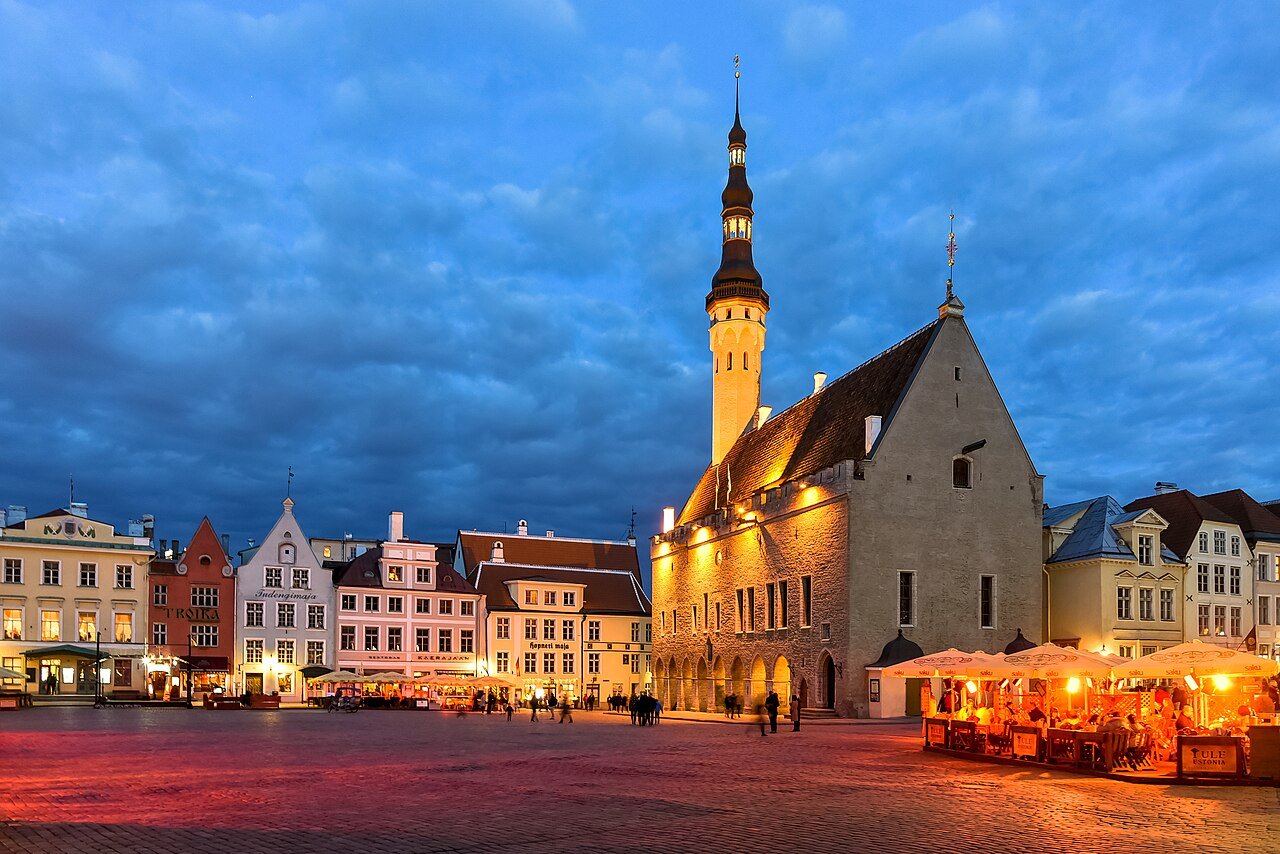
Estonia’s inaugural — and, for several years, sole — World Heritage inscription came in 1997. The site was recognised as an outstanding example of a medieval northern European trading city, with its layout and skyline surviving largely intact despite the turbulence of the twentieth century.
- Historic Centre (Old Town) of Tallinn — inscribed 1997 as a cultural site
- Struve Geodetic Arc — inscribed 2005 as a transnational cultural site, shared with nine other countries
The Struve Arc inscription represented a different kind of heritage recognition: not a place in the conventional sense, but a scientific survey conducted between 1816 and 1855 that produced the first precise measurement of a meridian arc across Europe. Estonia holds several of the chain’s triangulation points, physical markers of an Enlightenment-era scientific collaboration that crossed empires and borders still shifting at the time of the survey.
The most visited — and the alternatives
The Historic Centre of Tallinn draws the majority of Estonia’s heritage tourism. Its medieval street plan, guild halls, Toompea hill fortifications, and intact town wall give it a coherence rare among Baltic cities. The Gothic Town Hall on Raekoja plats dates to the fifteenth century; the nearby towers of Viru Gate mark one of the last surviving sections of the fourteenth-century city wall. The site is well-served by guides, signage, and an established tourism infrastructure.
For travellers willing to go beyond the capital, Estonia’s tentative list points toward sites with their own distinct character. Kuressaare Fortress on the island of Saaremaa is a Late Gothic episcopal castle first documented in 1381, largely intact and set within a moat — one of the best-preserved medieval fortifications in the Baltic region. The Baltic Klint, a limestone escarpment running along Estonia’s northern coast, exposes sedimentary rock laid down up to 500 million years ago and forms dramatic sea-facing cliffs at places such as Ontika. Estonia’s wooded meadows — eight representative sites across the country — are a semi-natural habitat maintained for millennia by traditional grazing, supporting plant diversity comparable to Central European alpine meadows.
Natural and shared sites
Estonia has no inscribed natural World Heritage Sites as of 2026. The Baltic Klint and the wooded meadow systems have been on the tentative list since 2004, but neither has yet advanced to formal nomination. The klint formation extends across Latvia, Lithuania, and other Baltic states, which raises the possibility of a future transnational natural nomination — though no formal coordination has been publicly announced.
The Struve Geodetic Arc is Estonia’s only shared inscription, and it spans an exceptional geographic range. The full arc runs from Hammerfest in northern Norway to the Black Sea coast of Ukraine, crossing ten countries. Estonia’s contribution includes several original triangulation pillars, some still visible in rural landscapes. The arc was accepted as a World Heritage Site under UNESCO’s criteria for human creative genius and the exchange of human values — acknowledging science as a form of cultural heritage in its own right.
How to find them
Both inscribed sites are accessible without specialist equipment or long detours. Tallinn’s Old Town is walkable from the city centre and well-connected by ferry from Helsinki and Riga. The Struve Arc points in Estonia are distributed across rural areas and require more planning, but several are reachable by car with GPS coordinates available through the national heritage register.
Estonia’s World Heritage sites sit alongside thousands of other places on CHO’s interactive map, with GPS and sourced editorial history for each. See also our guides to Italy’s and France’s UNESCO sites, and our piece on cultural travel beyond mass tourism.
Frequently Asked Questions
How many UNESCO World Heritage Sites does Estonia have?
Estonia has 2 inscribed UNESCO World Heritage Sites as of 2026, both classified as cultural properties. These are the Historic Centre of Tallinn, inscribed in 1997, and the Struve Geodetic Arc, a transnational site inscribed in 2005. Estonia also maintains three properties on its tentative list.
What was Estonia’s first UNESCO World Heritage Site?
Estonia’s first UNESCO World Heritage inscription was the Historic Centre (Old Town) of Tallinn, recognised in 1997. It was designated as an outstanding example of a medieval northern European trading city, with a remarkably well-preserved street plan and skyline. The site includes the medieval town wall, Toompea hill, and the Gothic Town Hall on Raekoja plats.
Is the Struve Geodetic Arc entirely in Estonia?
No — the Struve Geodetic Arc is a transnational World Heritage Site shared across ten countries, running from northern Norway to Ukraine. Estonia holds several of the original triangulation pillars from the nineteenth-century survey, which produced the first precise measurement of a meridian arc across Europe. The full arc stretches approximately 2,820 kilometres.
Does Estonia have any natural UNESCO World Heritage Sites?
Estonia has no inscribed natural World Heritage Sites as of 2026. Two natural candidates — the Baltic Klint limestone escarpment and the country’s ancient wooded meadow habitats — have been on the tentative list since 2004 but have not yet advanced to formal nomination. Both are considered significant for their geological and ecological value.
Sources used in this article
- UNESCO — State Party Estonia — World Heritage list.
- UNESCO — Estonia: World Heritage Sites.
- CHO magazine — What is a World Heritage Site?
- CHO — Interactive map of heritage sites.