Costa Rica has 4 UNESCO World Heritage Sites, a compact but ecologically and archaeologically significant list that spans the ancient rainforests of the Talamanca highlands, a remote oceanic island, the regenerating dry forests of the Pacific northwest, and a silent Pre-Columbian landscape of stone spheres whose makers left no written record. Each site reflects a different dimension of what this small country has contributed to the planet’s heritage — and together they form one of the most distinctive national rosters in the Americas. From Cultural Heritage Online.
Why Costa Rica’s list looks the way it does
Costa Rica covers less than 0.03 percent of the earth’s surface yet contains an estimated five percent of global biodiversity. That ecological richness explains why three of the country’s four World Heritage Sites carry natural status — the country’s forests, coastlines, and island ecosystems represent outstanding universal value in their own right, independent of any built heritage. The list is not large, but it is precise: each entry was inscribed on the basis of specific integrity criteria rather than as a broad sweep of landscape.
The single cultural inscription, added as recently as 2014, shows how the list has evolved as archaeological investigation deepened understanding of pre-Columbian societies. Costa Rica entered the World Heritage programme in 1983, one of the earlier Central American countries to do so, and has since maintained a cautious approach to nominations — quality over volume.
The first inscriptions
Costa Rica’s debut on the World Heritage List came in 1983, when UNESCO inscribed what remains the country’s most ecologically complex site. The original listing covered territory that would later grow into a binational designation spanning both Costa Rica and Panama.
- Talamanca Range–La Amistad Reserves / La Amistad National Park (1983, extended 1990) — The Talamanca mountain range anchors one of the most botanically rich areas in the Western Hemisphere, with roughly 10,000 flowering plant species recorded across its elevational gradients. La Amistad became a transnational site in 1990 when the designation was expanded across the border into Panama, making it one of the region’s most important shared conservation areas and a rare example of bilateral World Heritage management in the Americas.
The most visited — and the alternatives
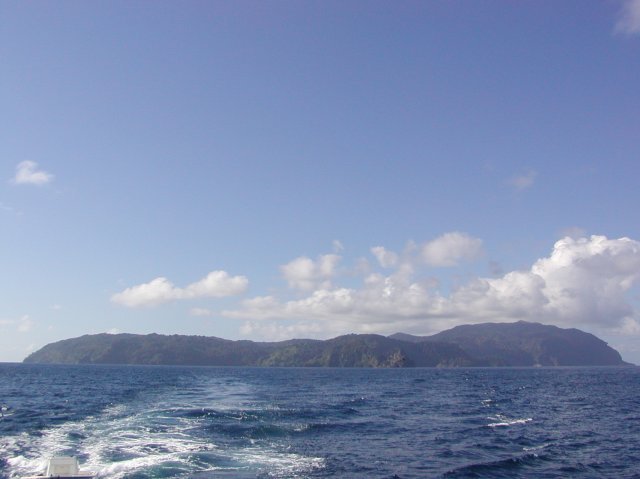
Cocos Island is by far the most internationally recognisable Costa Rican World Heritage Site, though reaching it requires a thirty-six-hour boat crossing from the Pacific port of Puntarenas. Located roughly 550 kilometres offshore, this isolated volcanic island carries exceptional significance for pelagic marine life — whale sharks, hammerhead sharks, manta rays, and dolphins converge in the waters around it in numbers rarely found elsewhere. Its remoteness has been its principal protection.
Less discussed in general travel coverage, the Area de Conservación Guanacaste (1999) deserves attention as an example of active ecological restoration. This Pacific-facing conservation corridor has been deliberately repopulated with species that had been locally extirpated, demonstrating that tropical dry forest — one of the world’s most endangered biomes — can be rebuilt within a generation. It shelters more than 500 bird species and connects habitat from the Pacific coast to the Caribbean watershed. The Precolumbian Chiefdom Settlements with Stone Spheres of the Diquís (2014), the country’s only cultural site, centres on four archaeological zones in the Diquís Delta where hundreds of granite spheres — some exceeding 2.5 metres in diameter — were produced by pre-Columbian societies between roughly 500 and 1500 CE. Who made them, and precisely what purpose they served, remains a subject of ongoing research.
Natural and shared sites
All three of Costa Rica’s natural World Heritage Sites address different conservation priorities. La Amistad represents montane and high-altitude biodiversity. Cocos Island focuses on marine ecology and oceanic island endemism. Guanacaste addresses the restoration and long-term viability of tropical dry forest, a habitat that had been cleared across most of its original Central American range. Taken together, the three cover a meaningful range of the country’s threatened environments.
La Amistad’s binational status with Panama gives it an additional dimension: it is governed under a framework that requires coordination between two national park systems, two governments, and Indigenous communities on both sides of the border, including the Bribri, Cabécar, and Ngäbe peoples whose territories overlap with the protected area. The Guanacaste site was most recently extended in 2004 to incorporate additional forest and coastal zones, reflecting a management philosophy that treats conservation boundaries as provisional rather than fixed.
How to find them
Three of Costa Rica’s four World Heritage Sites are protected areas managed by SINAC (Sistema Nacional de Áreas de Conservación), and public access varies considerably. Guanacaste has conventional park infrastructure and is reachable by road from Liberia. La Amistad’s interior is accessible only on foot via remote ranger stations. Cocos Island requires a liveaboard dive expedition and a permit. The Diquís stone spheres are distributed across four archaeological zones in the southern Brunca region, some on museum display and others accessible at the Finca 6 archaeological site, which functions as the primary visitor point.
Costa Rica’s World Heritage sites sit alongside thousands of other places on CHO’s interactive map, with GPS and sourced editorial history for each. See also our guides to Italy’s and France’s UNESCO sites, and our piece on cultural travel beyond mass tourism.
Frequently Asked Questions
How many UNESCO World Heritage Sites does Costa Rica have?
Costa Rica has 4 UNESCO World Heritage Sites, inscribed between 1983 and 2014. Three carry natural status — La Amistad, Cocos Island, and the Area de Conservación Guanacaste — and one, the Precolumbian Chiefdom Settlements with Stone Spheres of the Diquís, is cultural.
What was Costa Rica’s first UNESCO World Heritage Site?
The Talamanca Range–La Amistad Reserves / La Amistad National Park was inscribed in 1983, making it Costa Rica’s inaugural World Heritage Site. The designation was later extended in 1990 to include adjacent territory in Panama, creating a transnational natural site shared by both countries.
Is Cocos Island accessible to the public?
Yes, but access is restricted and logistically demanding. Visitors must travel by liveaboard vessel from Puntarenas — roughly 36 hours each way — and obtain a permit from Costa Rica’s national park system. The site is principally visited by scuba divers, drawn by some of the highest concentrations of pelagic shark species recorded anywhere in the world.
What are the Diquís stone spheres and where can visitors see them?
The stone spheres are granite objects produced by pre-Columbian societies in the Diquís Delta of southern Costa Rica between approximately 500 and 1500 CE, ranging from a few centimetres to over 2.5 metres in diameter. The primary visitor site is Finca 6, one of four archaeological zones within the World Heritage property, where spheres remain in or near their original positions.
Sources used in this article
- UNESCO — State Party Costa Rica — World Heritage list.
- UNESCO — Costa Rica: World Heritage Sites.
- CHO magazine — What is a World Heritage Site?
- CHO — Interactive map of heritage sites.