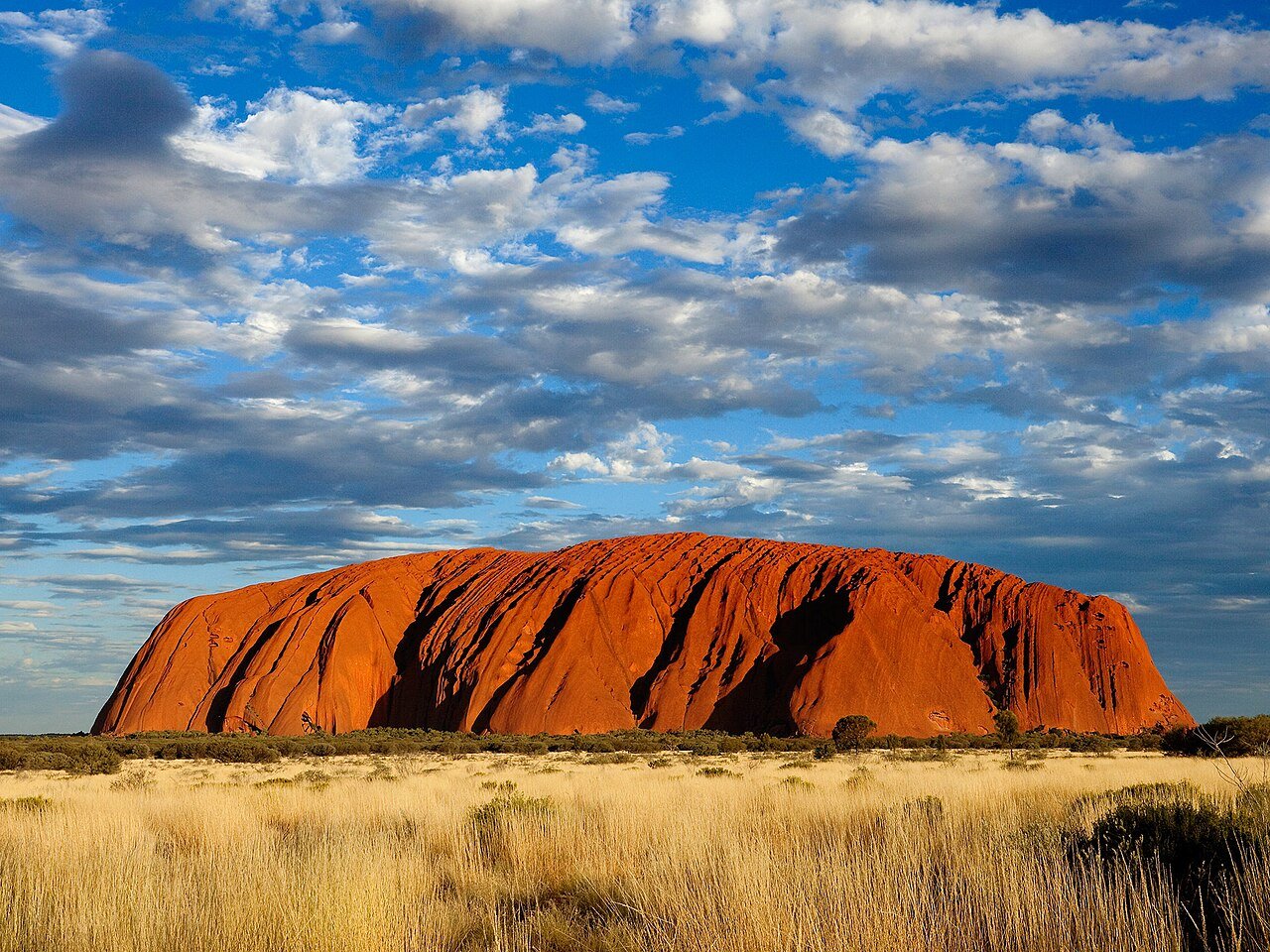
Australia has 21 UNESCO World Heritage Sites, a roster that stretches from tropical reef systems and ancient rainforests to sacred Aboriginal landscapes and the architectural landmarks of a young colonial nation. The continent’s sheer geographic range — and the depth of its Indigenous cultural record — gives this list a character found nowhere else on earth. From Cultural Heritage Online.
Why Australia’s list looks the way it does
Of the 21 sites inscribed as of 2025, 12 are recognised for their natural values, four are mixed cultural and natural inscriptions, and five are purely cultural. That imbalance is not accidental. Australia holds some of the planet’s most intact ecosystems — remnants of Gondwana, uninterrupted reef systems, sub-Antarctic island chains — and UNESCO’s criteria have consistently rewarded outstanding universal natural value. The continent’s biological isolation over 50 million years produced species assemblages that exist nowhere else, making site after site a plausible candidate.
The cultural entries arrived more slowly, reflecting both Australia’s relatively recent engagement with UNESCO processes and a wider reckoning with how to represent First Nations heritage on an international stage. The five cultural inscriptions span convict-era colonial architecture, a Federation-period exhibition building, the Sydney Opera House, and two Aboriginal cultural landscapes shaped over tens of thousands of years — a range that maps, imperfectly but meaningfully, the country’s layered human history.
The first inscriptions
Australia joined the World Heritage Convention in 1974, but its first inscriptions came in 1981, when three sites were added simultaneously:
- Great Barrier Reef — the world’s largest coral reef system, stretching more than 2,300 kilometres along the Queensland coast
- Kakadu National Park — a mixed site in the Northern Territory encompassing wetlands, escarpments, and one of the most significant concentrations of Aboriginal rock art on the continent
- Willandra Lakes Region — an arid landscape in New South Wales where human remains dated to around 40,000 years ago were discovered, among the oldest found outside Africa
A fourth site, Tasmanian Wilderness, followed in 1982, and Uluru-Kata Tjuta National Park received its first inscription in 1987, later extended in 1994 to include its cultural values under the stewardship of the Anangu people. These early decisions set the tone for what Australian nominations would look like: places where deep time — geological, ecological, human — is the central argument.
The most visited — and the alternatives
Uluru-Kata Tjuta and the Great Barrier Reef draw the largest international audiences, and their inscription is straightforward to understand: one is a sandstone monolith sacred to the Anangu for tens of thousands of years, the other an ecosystem visible from space. Kakadu, likewise, is well-travelled, its floodplains and rock-art galleries attracting visitors from Darwin year-round. For travellers who want to move beyond these anchors, the list offers several less-trafficked inscriptions with genuine distinction.
- Budj Bim Cultural Landscape (2019, Victoria) — a volcanic landscape engineered by the Gunditjmara people to create one of the world’s oldest aquaculture systems, channelling eels through stone channels estimated to be 6,600 years old
- Purnululu National Park (2003, Western Australia) — the Bungle Bungle Range, a formation of beehive-shaped sandstone towers striped in orange and black, largely unknown outside Australia until an aerial survey in 1983
- Macquarie Island (1997, Tasmania) — a remote sub-Antarctic island and the only place on earth where rocks from the planet’s mantle are actively exposed above sea level, hosting large colonies of southern elephant seals and four penguin species
- Australian Convict Sites (2010) — a serial inscription spanning eleven locations across multiple states and Norfolk Island, preserving the physical record of Britain’s transportation system, from Hyde Park Barracks in Sydney to Port Arthur in Tasmania
Natural and shared sites
Australia’s natural sites cover an extraordinary range of environments. The Gondwana Rainforests of Australia, inscribed in 1986 and extended in 1994, protect ancient subtropical and warm-temperate rainforest in New South Wales and Queensland — living fragments of the supercontinent that covered much of the southern hemisphere 180 million years ago. Shark Bay in Western Australia, listed in 1991, holds the world’s largest seagrass beds and a population of stromatolites, microbial mats that are among the oldest life forms on earth. Ningaloo Coast, added in 2011, brings together a fringing coral reef accessible directly from shore and open-ocean habitat for whale sharks.
The four mixed sites — Kakadu, Tasmanian Wilderness, Uluru-Kata Tjuta, and Willandra Lakes Region — carry both natural and cultural criteria, a recognition that in Australia these two categories are rarely cleanly separable. Indigenous land management has shaped ecosystems for millennia, and the landscapes that appear “natural” to outside observers are often the product of sustained human stewardship. The 2025 inscription of Murujuga Cultural Landscape in Western Australia, recognised for containing more than one million petroglyphs in one of the densest concentrations of rock art in the world, continued this conversation about where nature ends and culture begins.
How to find them
Australia’s 21 World Heritage sites span a continent of nearly 7.7 million square kilometres, and the distances between them are real. The Heard and McDonald Islands sit closer to Antarctica than to the Australian mainland; K’gari (formerly Fraser Island), inscribed in 1992, lies just off the Queensland coast. Planning a route that links more than two or three requires attention to logistics that most itinerary tools do not handle well.
Australia’s World Heritage sites sit alongside thousands of other places on CHO’s interactive map, with GPS and sourced editorial history for each. See also our guides to Italy’s and France’s UNESCO sites, and our piece on cultural travel beyond mass tourism.
Frequently Asked Questions
How many UNESCO World Heritage Sites does Australia have?
Australia has 21 UNESCO World Heritage Sites as of 2025. The total includes 12 natural sites, 4 mixed cultural and natural sites, and 5 cultural sites, spread across the mainland, Tasmania, and several remote island territories.
What was Australia’s first UNESCO World Heritage Site?
Australia received its first three World Heritage inscriptions simultaneously in 1981: the Great Barrier Reef, Kakadu National Park, and the Willandra Lakes Region. All three remain on the list today and are among the country’s most significant inscribed properties.
What is Australia’s most recently inscribed World Heritage Site?
The Murujuga Cultural Landscape in Western Australia was inscribed in July 2025. The site is recognised for containing more than one million petroglyphs, making it one of the densest concentrations of rock art anywhere in the world.
Does Australia have any mixed cultural and natural World Heritage Sites?
Australia has four mixed sites — Kakadu National Park, Tasmanian Wilderness, Uluru-Kata Tjuta National Park, and Willandra Lakes Region — each recognised under both cultural and natural criteria. This reflects the long history of Aboriginal land management, which has shaped Australian landscapes over thousands of generations.
Sources used in this article
- UNESCO — State Party Australia — World Heritage list.
- UNESCO — Australia: World Heritage Sites.
- CHO magazine — What is a World Heritage Site?
- CHO — Interactive map of heritage sites.
Sources
- S1 — Mulvaney, John, and Johan Kamminga. Prehistory of Australia. Allen & Unwin, 1999. ISBN 978-1-86448-950-7.
- S2 — Macintyre, Stuart. A Concise History of Australia. Cambridge University Press, 2009. ISBN 978-0-521-51608-2.
Spotted an error? Write to editorial@culturalheritageonline.com and we correct it the same day.