Nigeria has 2 UNESCO World Heritage Sites, each safeguarding a layer of the country’s long cultural history — one a mountain-top landscape shaped by centuries of Higi settlement, the other a sacred forest where Yoruba devotion to the river goddess Osun remains a living practice. West Africa’s most populous nation holds a modest tally on paper, yet both inscriptions carry exceptional weight in the global heritage register. From Cultural Heritage Online.
Why Nigeria’s list looks the way it does
Nigeria ratified the World Heritage Convention in 1974, among the earliest African signatories, and nominated its first site only in the late 1990s. The gap reflects a practical reality: the nomination process demands extensive documentation, management plans, and state-party capacity that many countries built up gradually. Nigeria has served on the World Heritage Committee four times since 1976, giving its delegation deep familiarity with the process even as its own inscribed list remained short.
Both inscribed sites are cultural, meaning they meet UNESCO’s criteria for outstanding universal value through human creation or the interaction between people and landscape. Nigeria’s tentative list — the holding register maintained by the state party — includes several natural candidates such as the Niger Delta mangroves and Gashaka Gumti National Park, but none has yet completed the full nomination cycle. As of 2023, the country’s ratio of two cultural sites and zero natural or mixed sites is therefore a function of nomination sequencing, not of environmental poverty.
The first inscriptions
Nigeria’s opening entry on the World Heritage list came in 1999, more than two decades after the country joined the Convention. The site inscribed that year established the pattern: a cultural landscape rooted in community identity rather than monumental architecture.
- Sukur Cultural Landscape (1999) — Located on the Mandara Mountains in Adamawa State, Sukur is a terraced hilltop settlement that documents an Iron Age chieftaincy still partly intact. The landscape includes the chief’s palace, terraced fields, and iron-smelting sites that together illustrate the Higi people’s organisation of both agriculture and industry across a challenging terrain.
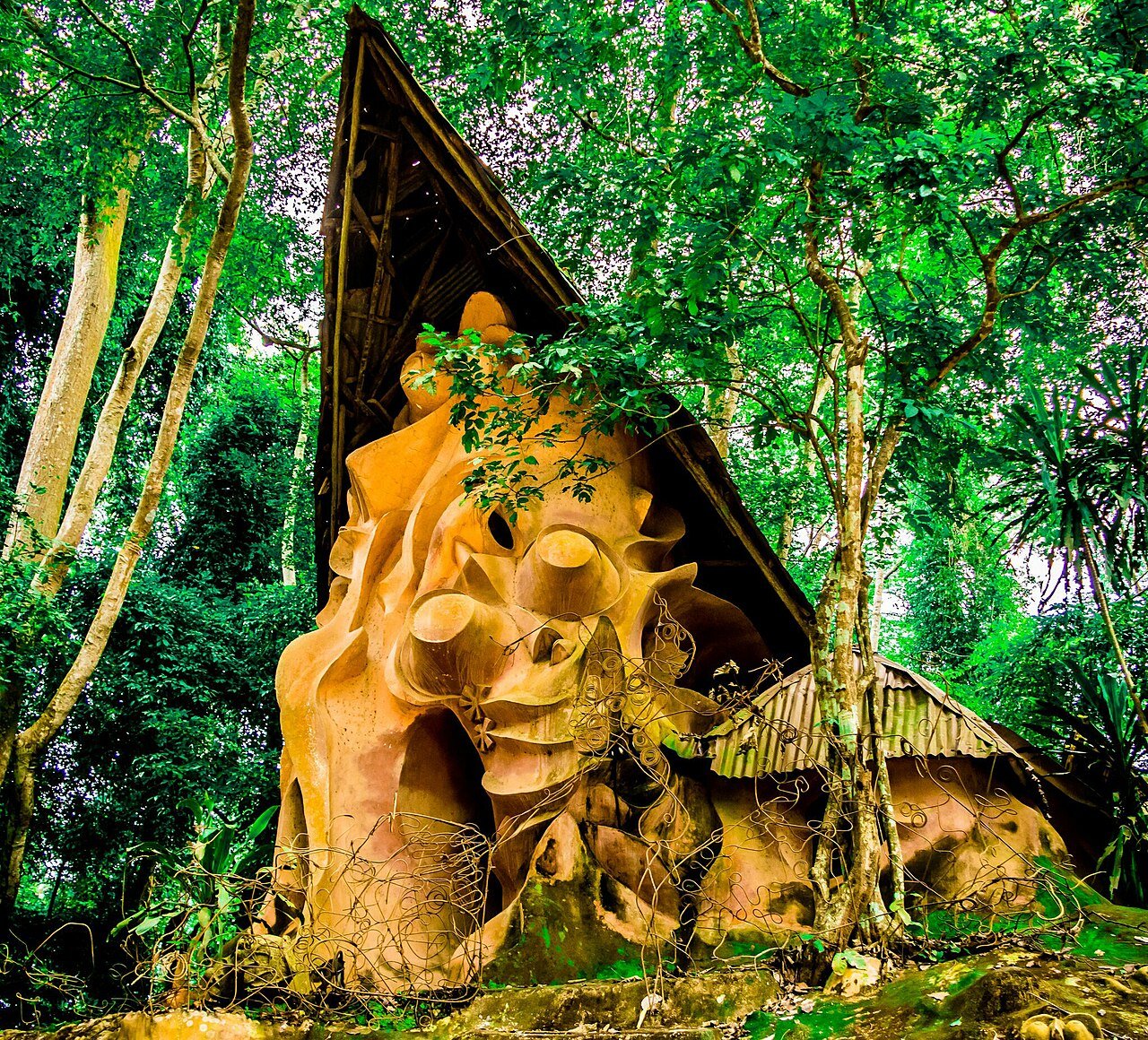
- Osun-Osogbo Sacred Grove (2005) — Inscribed six years later, the grove on the outskirts of Osogbo in Osun State is one of the last surviving examples of a primary forest that once surrounded all Yoruba towns. Its sculptures, shrines, and sanctuaries dedicated to the river goddess Osun are actively maintained, and the annual Osun-Osogbo festival brings tens of thousands of worshippers each August.
The most visited — and the alternatives
The Osun-Osogbo Sacred Grove draws the larger share of international attention, partly because of its visual drama — the forest is dense, the sculptures are striking, and the living religious dimension gives it an atmosphere that purely archaeological sites rarely match. The Austrian artist Suzanne Wenger spent decades restoring and expanding the grove’s artworks beginning in the 1950s, leaving a body of work that itself has become part of the heritage layer.
Sukur, by contrast, sees far fewer visitors despite an inscription that UNESCO described as a “remarkable example of a complex chieftaincy society.” Its relative obscurity owes much to location: the Mandara Mountains sit in the far northeast of Nigeria, a region that has faced security concerns in recent years. Elsewhere on Nigeria’s tentative list, three sites hint at the breadth of what may eventually be nominated: the Arochkwu Long Juju Slave Route in Abia State, a cave-temple complex tied to the transatlantic slave trade; the Surame Cultural Landscape in Sokoto State, whose ancient city walls were recognised by UNESCO’s Advisory Body for their artistic quality; and the Alok Ikom Stone Monoliths in Cross River State, a group of carved basalt pillars whose exact purpose remains debated by researchers.
Natural and shared sites
Nigeria currently holds no inscribed natural or mixed World Heritage Sites. The tentative list, however, points to significant ecological assets under consideration. Gashaka Gumti National Park — the country’s largest protected area, spanning savannahs and montane forest near the Cameroon border — has been put forward for its biodiversity. The Niger Delta mangroves represent one of the largest mangrove systems in the world and form part of a broader West African coastal ecosystem of global significance.
On the transnational side, the proposed Cross River–Korup–Takamanda site would link forests across the Nigeria-Cameroon border, acknowledging that ecosystems do not follow political boundaries. Serial and transnational nominations of this kind have become more common in recent World Heritage cycles, and Nigeria’s participation in such a proposal would mark a new chapter for its presence on the list.
How to find them
Both inscribed sites are reachable independently, though conditions vary considerably. The Osun-Osogbo Sacred Grove lies within the town of Osogbo, accessible by road from Lagos or Ibadan, and the site maintains opening hours for visitors year-round. Sukur requires travel to the Madagali area of Adamawa State; visitors should check current regional advisories before planning the journey, as the wider Mandara region has experienced intermittent instability.
Nigeria’s World Heritage sites sit alongside thousands of other places on CHO’s interactive map, with GPS and sourced editorial history for each. See also our guides to Italy’s and France’s UNESCO sites, and our piece on cultural travel beyond mass tourism.
Frequently Asked Questions
How many UNESCO World Heritage Sites does Nigeria have?
As of 2023, Nigeria has 2 inscribed UNESCO World Heritage Sites: Sukur Cultural Landscape (1999) and Osun-Osogbo Sacred Grove (2005). Both are classified as cultural sites; Nigeria currently holds no natural or mixed inscriptions.
What was Nigeria’s first UNESCO World Heritage Site?
Sukur Cultural Landscape, inscribed in 1999, was Nigeria’s first UNESCO World Heritage Site. Located on the Mandara Mountains in Adamawa State, it preserves the terraced settlements, palace, and iron-smelting sites of a Higi chieftaincy society with roots in the Iron Age.
Is the Osun-Osogbo festival connected to the UNESCO site?
Yes. The annual Osun-Osogbo festival, held each August in Osun State, takes place within the inscribed sacred grove and is central to the site’s outstanding universal value. UNESCO recognised the grove in part because of this continuing living tradition of Yoruba worship of the river goddess Osun, making it one of the relatively rare World Heritage Sites where the intangible dimension remains actively practised.
Does Nigeria have any natural World Heritage Sites?
Nigeria does not currently have any inscribed natural World Heritage Sites. Several natural areas appear on the country’s tentative list, including Gashaka Gumti National Park and the Niger Delta mangroves, but none has yet progressed through the full nomination and review process required for inscription.
Sources used in this article
- UNESCO — State Party Nigeria — World Heritage list.
- UNESCO — Nigeria: World Heritage Sites.
- CHO magazine — What is a World Heritage Site?
- CHO — Interactive map of heritage sites.
Sources
- S1 — Falola, Toyin, and Matthew M. Heaton. A History of Nigeria. Cambridge University Press, 2008. ISBN 978-0-521-68157-5.
- S2 — Willett, Frank. African Art: An Introduction. Thames & Hudson, 2002. ISBN 978-0-500-20364-4.
Spotted an error? Write to editorial@culturalheritageonline.com and we correct it the same day.