
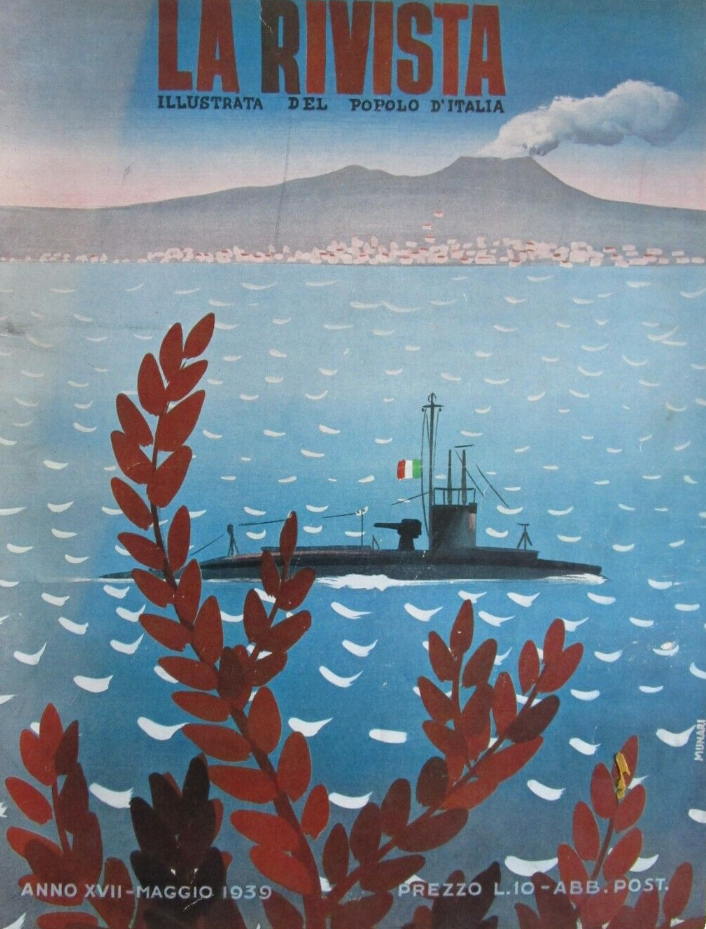
Rivista is a 1939 publication by Bruno Munari, the Italian artist, designer and inventor whose practice spanned modernism, futurism and concrete art across visual design, graphics, games and pedagogical research.
Munari’s work across multiple disciplines—from graphics to didactic method and kinesthetic learning—reflected his conviction that art and functional design should coexist. His principle that useful objects should be aesthetically refined shaped his contributions to twentieth-century visual culture. The publication documents this philosophy at a pivotal moment in his career as he continued to develop his research into the relationship between art, utility and creative practice.
About Bruno Munari
Munari was recognized as one of the greatest figures in twentieth-century art, design and graphics. His work established foundations in modernism and concrete art while expanding into non-visual territories including games, tactile learning and movement. He approached art as inseparable from everyday life, believing that functional objects deserved aesthetic integrity.
Details
- Creator: Bruno Munari
- Year: 1939
- Type: Publication
- Movements: Modernism, Futurism, Concrete Art
Frequently asked questions
Who was Bruno Munari?
Munari was an Italian artist, designer and inventor whose practice contributed fundamentals to modernism, futurism and concrete art, as well as research in games, didactic method and tactile learning.
What was Munari’s approach to design and art?
Munari believed art should not be separated from life, and that objects which are good to look at must also be good to use—rejecting any division between aesthetic and functional value.
What fields did Munari work across?
Beyond visual arts and graphics, Munari conducted research into games, pedagogical method, movement and kinesthetic learning, positioning creativity as central to multiple disciplines.