
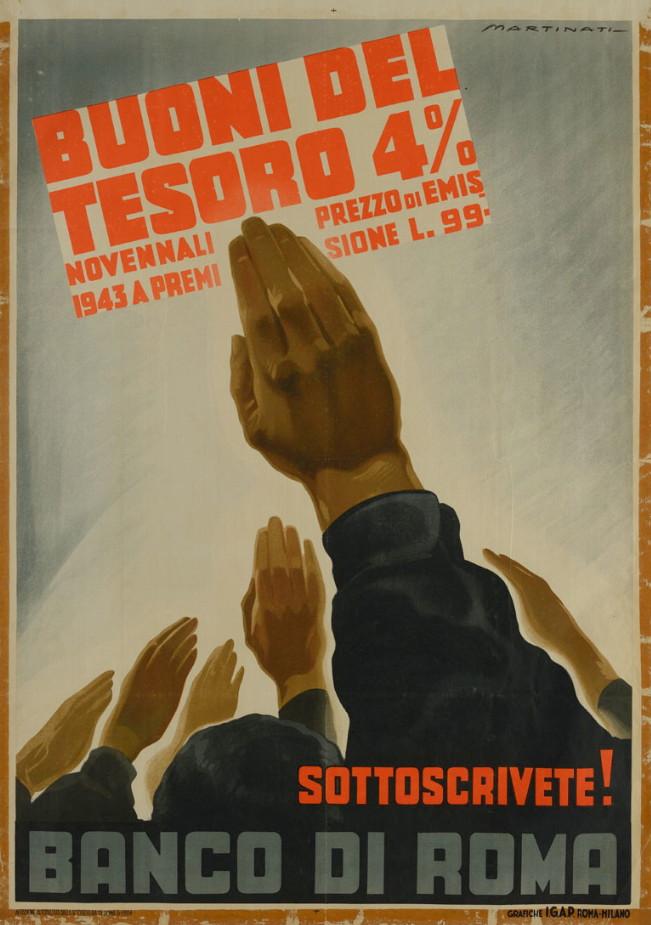
This manifesto was created by Luigi Martinati in 1933, an Italian illustrator, advertising designer, and painter based in Rome.
Martinati maintained a prolific career in illustrative and commercial art throughout the interwar decades. Born in Florence in 1893, he trained at the Accademia di Belle Arti before relocating to Rome in 1911, where he apprenticed under poster painter Federico Ballester. By the 1920s, Martinati had established himself as a leading figure in poster design, creating works spanning commercial advertisements, tourist signage, and promotional campaigns between 1923 and 1941. During the 1930s, he operated from a studio on Via Emanuele Filiberto in Rome, which he shared with fellow designer Tito Corbella. From this period onward, his work was primarily printed by the A.P.E. typography firm in nearby Viale Castrense. Martinati served as director of IGAP (Impresa Generale Affissioni Pubblicità), a major Roman advertising agency, and collaborated with international film companies including Warner Brothers.
Details
- Creator: Luigi Martinati (Florence, 1893–Rome, 1983)
- Year: 1933
- Type: Poster
- Location: Rome
- Working period: 1923–1941
Frequently asked questions
Who was Luigi Martinati?
Martinati was an Italian illustrator, advertising designer, and painter born in Florence in 1893. He relocated to Rome in 1911 and became a prominent figure in commercial and promotional poster design throughout the interwar period.
Where was this poster created?
Martinati created this work in Rome, where he maintained a studio on Via Emanuele Filiberto during the 1930s, with printing carried out by the A.P.E. typography firm in Viale Castrense.
What was Martinati’s professional role?
Beyond his work as a designer and illustrator, Martinati served as director of IGAP, a major Roman advertising agency, and collaborated with international film companies including Warner Brothers.