
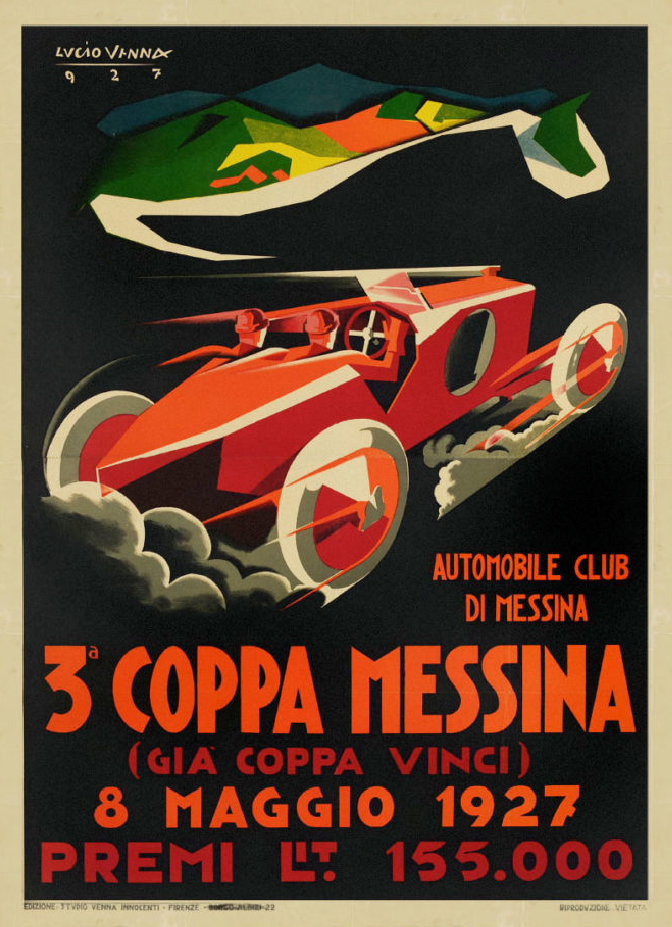
A manifesto by Lucio Venna (pseudonym of Giuseppe Landsmann), created in 1927, represents a document of Italian Futurism during the movement’s mature phase.
Venna, born in Venice on 28 December 1897, moved to Florence at fifteen to pursue painting. In 1913 he encountered painter Emilio Notte, who became his master and lifelong collaborator, introducing him to Futurist circles. Venna’s adoption of a pseudonym reflected a common practice among artists of his era seeking to establish distinct artistic identities.
About Lucio Venna
Venna worked within the Futurist movement during its formative decades in Italy. His career spanned the early twentieth century until his death in Florence on 4 September 1974. The manifesto format was central to Futurist practice, serving as a vehicle for artistic and ideological declaration across painting, sculpture, literature and design.
Details
- Creator: Lucio Venna (Giuseppe Landsmann, 1897–1974)
- Year: 1927
- Movement: Futurism
- Type: Manifesto
Frequently asked questions
Who was Lucio Venna?
Lucio Venna was the artistic pseudonym of Giuseppe Landsmann, a Venetian-born painter and Futurist exponent who moved to Florence in 1912 and died there in 1974.
What role did manifestos play in Futurism?
Manifestos were foundational to Futurist practice, serving as declarations of artistic principles and ideological positions across multiple disciplines.
Where did Venna develop as an artist?
After leaving Venice at fifteen, Venna settled in Florence in 1912, where he met Emilio Notte in 1913, who became his master and collaborator in Futurist circles.