
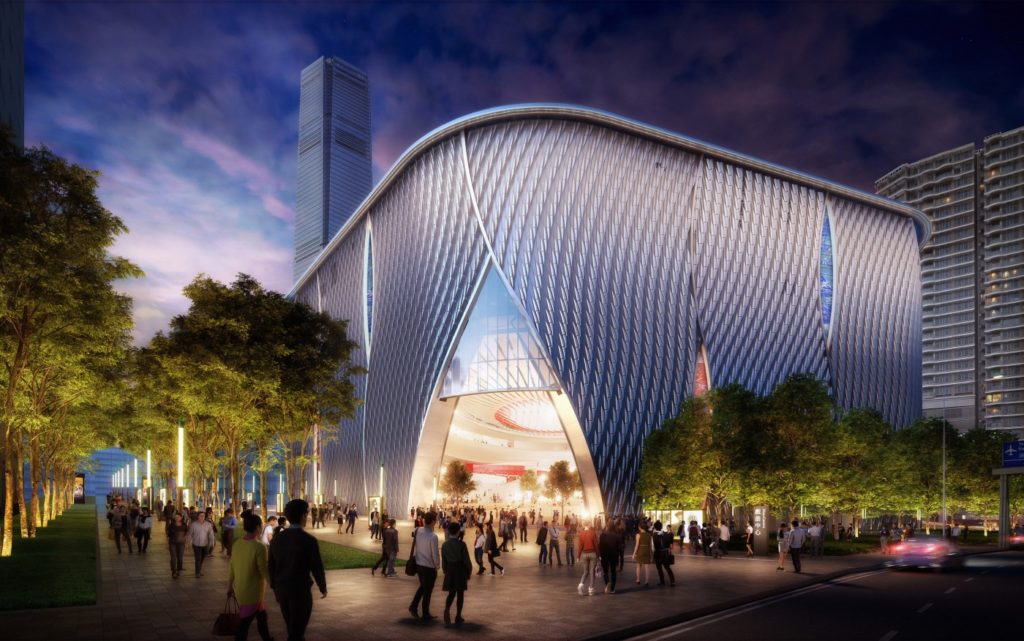
Opened on 20 January 2019, the Xiqu Centre in Hong Kong’s West Kowloon District serves primarily as a performance venue for traditional Cantonese opera, known as Xiqu, while also hosting third-party events and conferences from May onwards.
The centre’s design draws inspiration from traditional Chinese lanterns and intentionally blends traditional and contemporary elements to reflect the evolving nature of Xiqu. The main entrance is shaped to resemble parted stage curtains, leading visitors into a lively atrium featuring a raised podium and flexible space for performances and exhibitions.
Building Design and Facilities
The eight-storey building houses a Grand Theatre, Tea House Theatre, Seminar Hall, eight studios, and retail, food and beverage, and leisure facilities. The architectural approach successfully integrates historical references with modern functionality throughout the venue.
Part of a Larger Cultural Strategy
The Xiqu Centre forms part of a broader cultural development in West Kowloon. An Art Park opened in 2018, while three additional venues were scheduled to follow: M+, a museum set to open in 2020; The Lyric Theatre, a 1,450-seat venue planned for 2021; and the Hong Kong Palace Museum, featuring a 400-seat theatre and scheduled for 2022.
Dr Peter Lam, chairman of the Hong Kong Tourism Board, described the opening as “a big leap forward in establishing Hong Kong as an international arts and cultural hub, expanding the city’s appeal to a wider audience.”
On the heritage map: Xiqu Centre
Frequently asked questions
What is Xiqu?
Xiqu is traditional Cantonese opera, the primary performance art form presented at the centre.
When did the Xiqu Centre officially open?
The centre officially opened on 20 January 2019.
What major facilities does the building contain?
The eight-storey building houses a Grand Theatre, Tea House Theatre, Seminar Hall, eight studios, and various retail, food and beverage, and leisure facilities.
Sources
- S1 — Fairbank, John King, and Merle Goldman. China: A New History. Harvard University Press, 2006. ISBN 978-0-674-01828-0.
- S2 — Solima, Ludovico. Management museale: Teoria e pratica per la gestione del museo. Carocci, 2018. ISBN 978-88-430-9366-3.
Spotted an error? Write to editorial@culturalheritageonline.com and we correct it the same day.


