
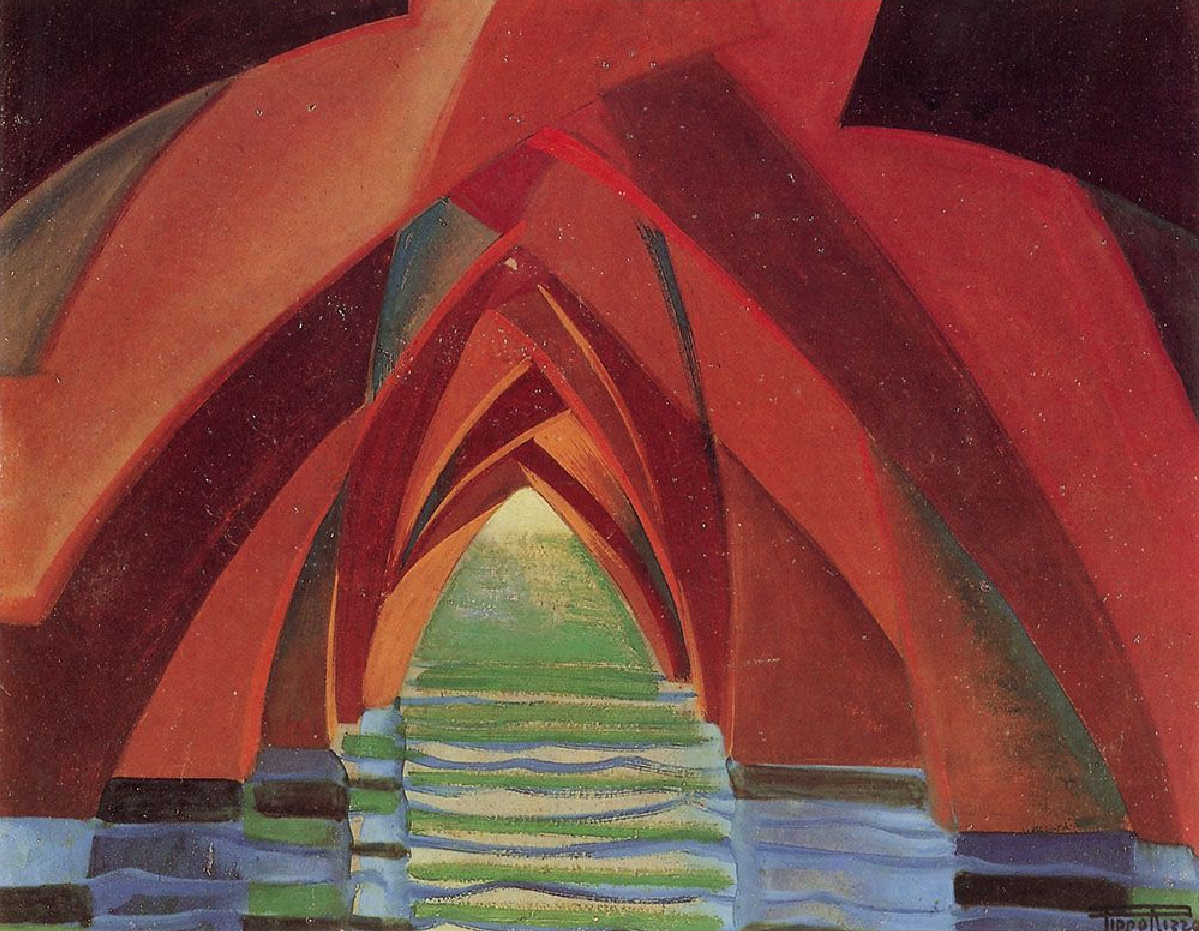
Grotta marina is a work by Pippo Rizzo, created in 1928. Rizzo (1897–1964) was an Italian painter and sculptor born in Corleone, Sicily, who became the leading figure of Sicilian Futurism.
Executed during Rizzo’s most committed period to the Futurist movement, this work reflects the artistic principles he had encountered during his travels to Rome and subsequently championed across Sicily. In 1927, Rizzo had organized the national Futurist exhibition in Palermo, establishing himself at the centre of the movement’s regional activities. His works were exhibited at the Venice Biennale in both 1926 and 1928, marking significant recognition during this phase of his career. By the end of the 1920s, Rizzo’s artistic trajectory was well established within avant-garde circles, though his engagement with Futurism would evolve in the following decade toward Novecento Italiano themes.
About Pippo Rizzo
Giuseppe Rizzo, known as Pippo, studied at the Palermo Academy under Ettore De Maria Bergler before discovering Futurism through a visit to Rome. He founded a Futurist circle in his native Corleone and collaborated with fellow Sicilian artists Vittorio Corona and Giovanni Varvaro. In contact with Filippo Tommaso Marinetti, Rizzo was instrumental in establishing the Futurist presence in Sicily during the 1920s.
Details
- Creator: Pippo Rizzo
- Year: 1928
- Movement: Futurism
- Region: Sicily
Frequently asked questions
Who was Pippo Rizzo?
Giuseppe Rizzo (1897–1964) was a Sicilian painter and sculptor who led the Futurist movement in Sicily, in close contact with Marinetti. He organized the national Futurist exhibition in Palermo in 1927 and exhibited at the Venice Biennale in 1926 and 1928.
When did Rizzo make this work?
Grotta marina was created in 1928, during Rizzo’s most engaged period with Futurism, the year he also exhibited at the Venice Biennale.
Did Rizzo work in other artistic movements?
From 1930 onwards, Rizzo moved away from Futurism toward Novecento Italiano themes, following the example of Carlo Carrà, and participated in the 1931 Rome Quadriennale.
Sources
- S1 — Pontiggia, Elena. Il Novecento Italiano. Abscondita, 2003. ISBN 978-88-8416-048-5.
- S2 — Bossaglia, Rossana. Il Novecento italiano. Electa, 1995. ISBN 978-88-435-6178-0.
Spotted an error? Write to editorial@culturalheritageonline.com and we correct it the same day.


