
Mulino di Caronia I NEBRODI
A nineteenth-century grain mill in Sicily’s Nebrodi gorge, preserved with its complete milling machinery and set within striking natural and geological surroundings.

A nineteenth-century grain mill in Sicily’s Nebrodi gorge, preserved with its complete milling machinery and set within striking natural and geological surroundings.
A romantic five-hectare garden enfolding the ivy-covered ruins of a medieval village in the Pontine Marshes, created by the Caetani family in the late 19th century.

A 19th-century Savoy fortress above Bard in the Aosta Valley, restored and reopened as a cultural venue hosting art exhibitions and three permanent museums.

A grand palazzo on Venice’s Grand Canal housing the International Gallery of Modern Art, with masterworks by Klimt, Kandinsky, Chagall and Italian modernists.
Italy’s largest port and a major European maritime hub, Trieste blends Mediterranean and Central European cultures at the crossroads of global trade routes.
Renaissance palace designed by Palladio in 1550 for the Chiericati counts; now Vicenza’s civic art museum housing prints, drawings, numismatics and sculpture.
A 17th-century silk factory in Piedmont, the Red Spinning Wheel pioneered European yarn production and now houses a museum celebrating the region’s textile heritage.
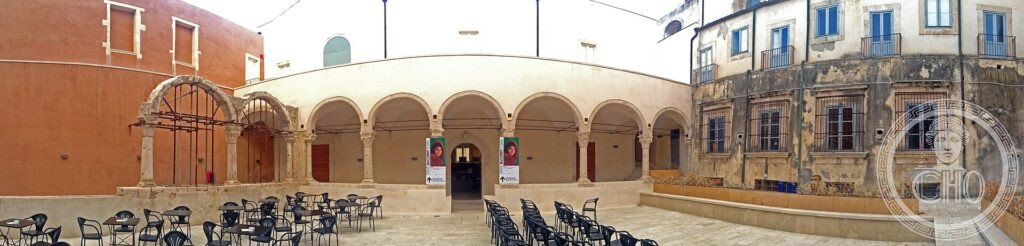
A restored Franciscan convent in Syracuse’s historic Ortigia district, now reopened as a cultural venue after surviving centuries of seismic devastation.

The Brancacci Chapel in Florence preserves a landmark fresco cycle by Masaccio, Masolino da Panicale, and Filippino Lippi, profoundly influencing Renaissance art and inspiring young Michelangelo.

A medieval tower transformed into a Renaissance villa, Masnago Castle showcases International Gothic frescoes and now houses Varese’s museum of modern and contemporary art.