The Tuscan landscape and Tuscan painting were made by the same eye. Drive south of Siena along the Crete and you cross hills that look like the background of a fourteenth-century fresco — because that is exactly what the fourteenth-century painter was looking at when he composed it. The Renaissance did not invent Tuscany. The land was there first. What the Renaissance did was record it, frame it, and turn the geological accident of Tuscan topography into the spatial grammar of European painting. The trip works in both directions. Read the fresco; then drive into the panel.
The cypress as fresco frame
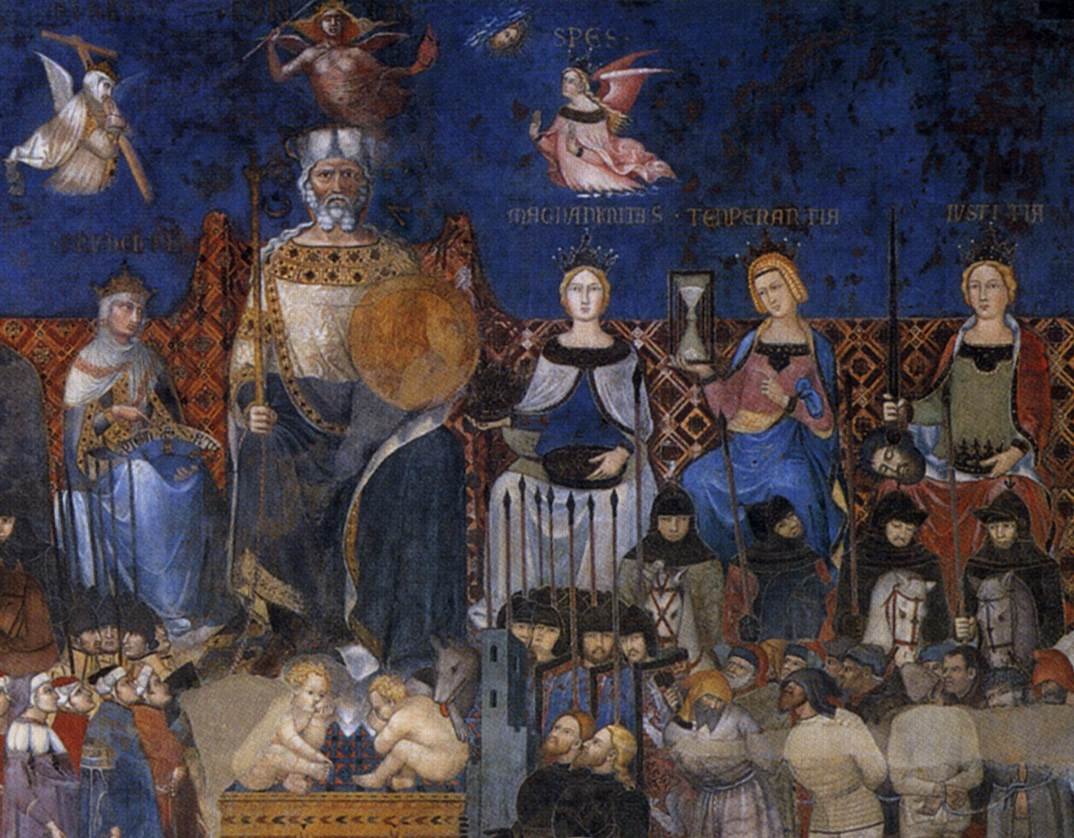
Around 1338–1339, in the Sala dei Nove of the Palazzo Pubblico in Siena, Ambrogio Lorenzetti (c. 1290–1348) painted the cycle now known as the Allegory and Effects of Good and Bad Government. The fresco occupies three walls: the Allegory facing the entrance; Effects of Good Government in the City on one long wall; Effects of Good Government in the Country on the other. The Country panel is the breakthrough. Lorenzetti painted the actual Sienese contado: walled farms, terraced fields, peasants threshing, hunters returning to the gate, and behind everything, ridges of cypress, olive, and bare clay.
The painting was the first European secular landscape at this scale, predating the Renaissance proper by a century. Lorenzetti died, most likely of bubonic plague, in 1348, and the cycle stayed in place. You can stand in front of it today, then walk out of the Palazzo Pubblico into Piazza del Campo, and within a forty-minute drive south, look at the same hills he painted. The fresco is the legend; the Crete Senesi is the map. Italy has no other place where the alignment is this exact.
Florence in three buildings the postcards miss
The Florence postcard is the Duomo, the Uffizi, the Ponte Vecchio. Three buildings the postcards skip do as much work for the Renaissance argument and require none of the queueing.
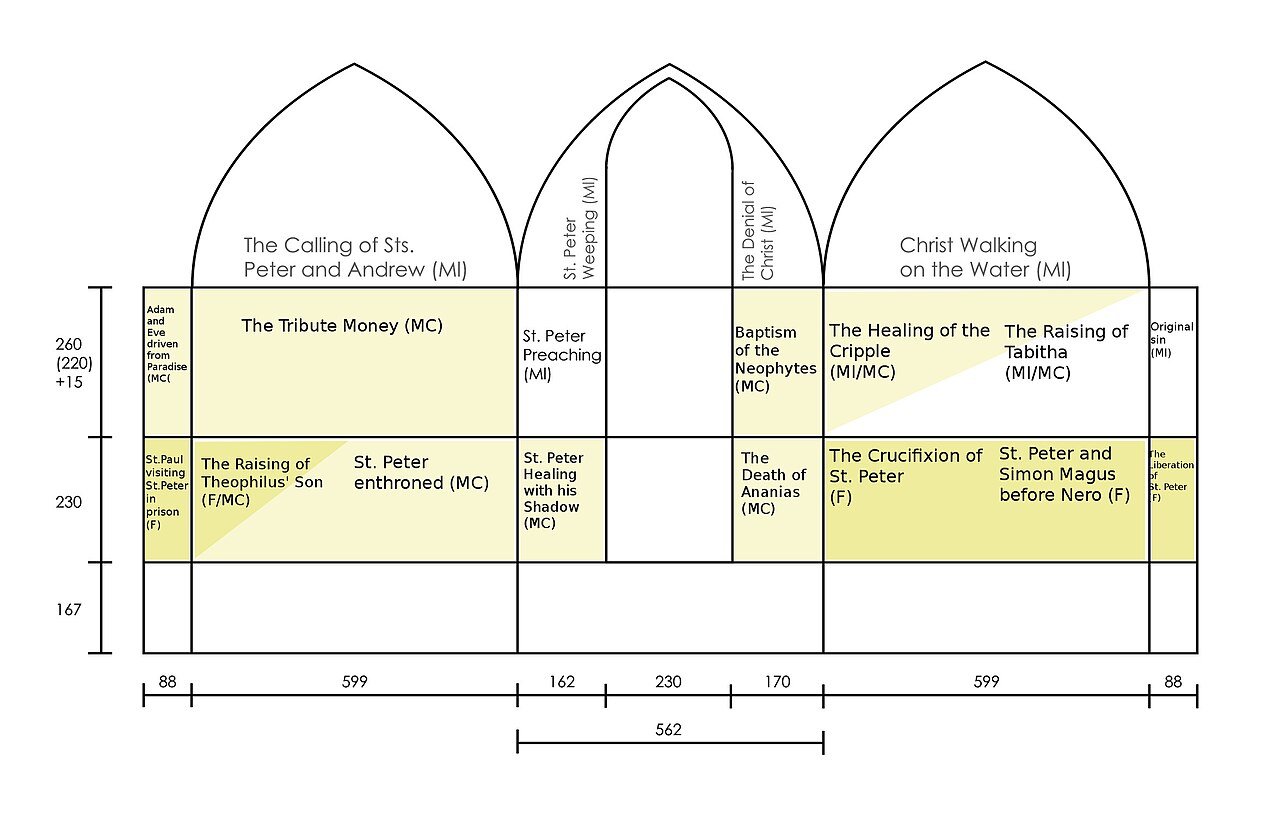
I. The Brancacci Chapel · Santa Maria del Carmine
The chapel holds the frescoes Masaccio (1401–1428) began around 1425, including The Tribute Money (1424–1428) and The Expulsion from the Garden of Eden (1426–1427). Masaccio left them unfinished when he died at twenty-six in Rome; Filippino Lippi completed them in the 1480s. These are the frescoes that taught Brunelleschi’s perspective system to a generation of painters.
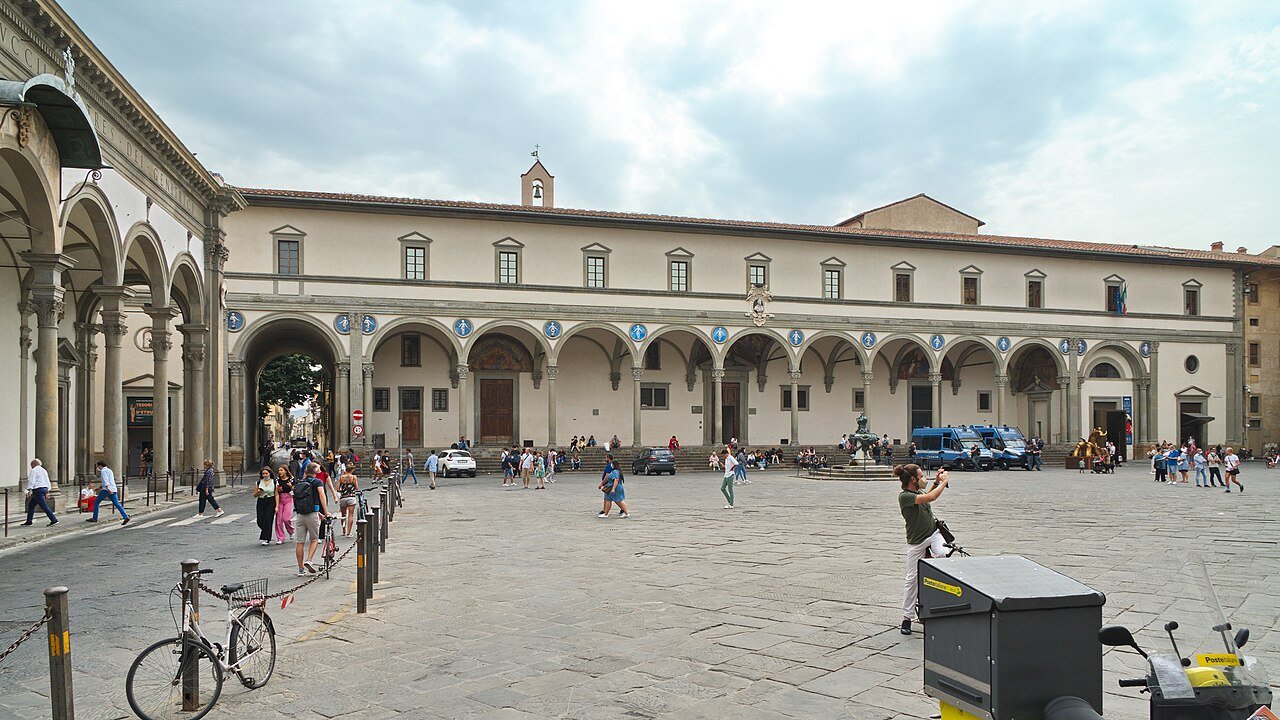
II. The Spedale degli Innocenti · Piazza Santissima Annunziata
The Spedale degli Innocenti was Brunelleschi’s first major commission; his principal work on it ran 1419–1426. The arcade of slim columns and round arches established the visual model for fifty Renaissance buildings across Europe. Brunelleschi (1377–1446) had not yet started the Cathedral dome when he was asked to design this foundling hospital. The arcade reads as the prototype: take this rhythm and re-make the European city.
III. The Cappelle Medicee · San Lorenzo
The Cappelle Medicee at San Lorenzo include Michelangelo’s Sagrestia Nuova, with the funerary sculptures Michelangelo carved for the Medici tombs. The room is sober, slow, and almost empty of tourists by Florence standards. It is where Michelangelo’s late architecture and his sculpture meet at the same wall.
Tuscan land as Renaissance studio
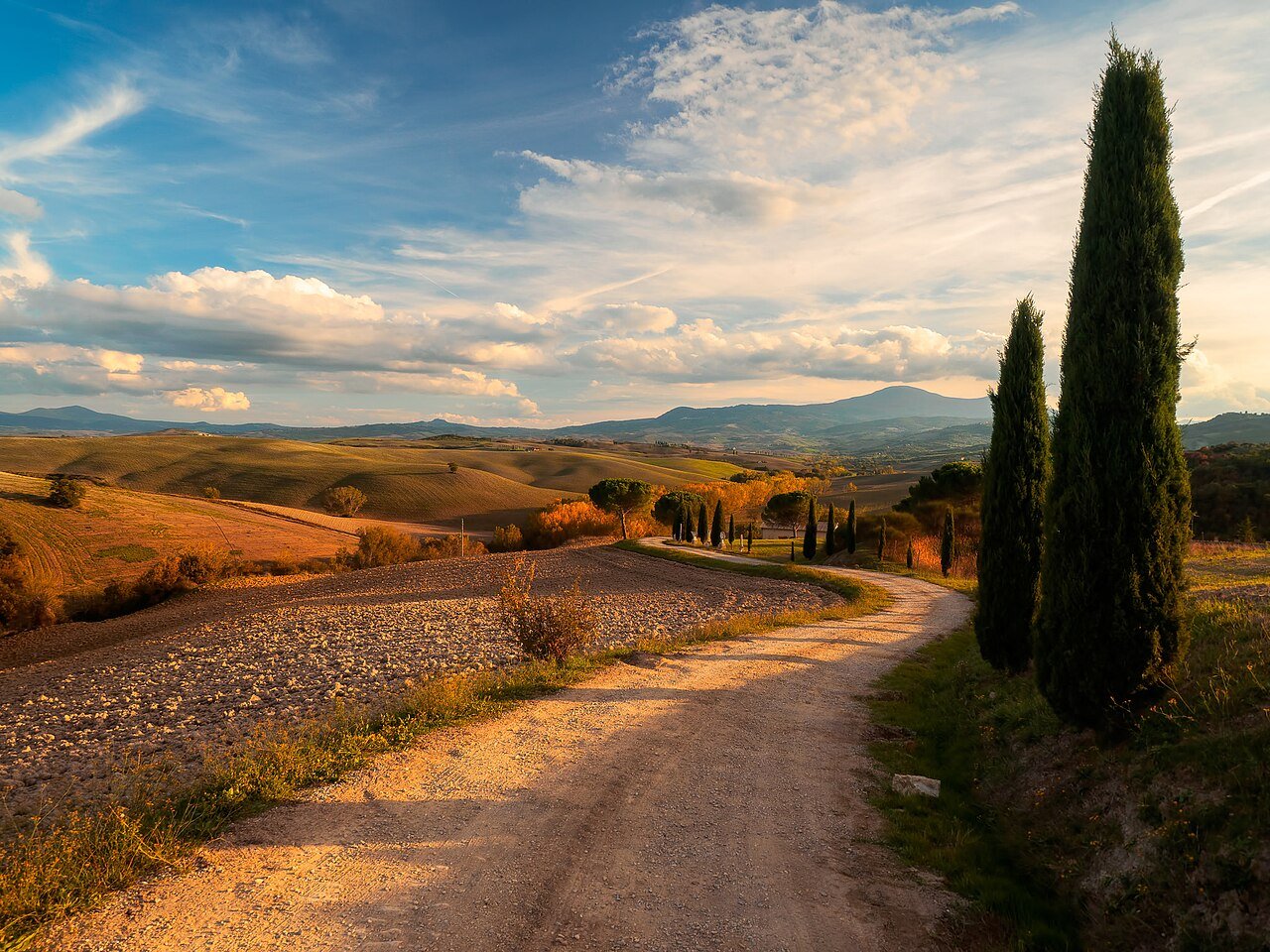
Outside the cities, the Tuscan land itself reads as a Renaissance composition. The Via Francigena, the medieval pilgrimage route from Canterbury to Rome, threads south from Lucca through San Gimignano, Monteriggioni, Siena, and on to the Val d’Orcia. Walk a single segment and you cross the same hills that appear behind every Trecento Madonna painted in Siena.
The Crete Senesi, the bare-clay badlands south-east of Siena, reproduce, in earth, the pale-blue middle distances Lorenzetti painted on plaster. The colour is geological (clay, gypsum, and salt), and the long unbroken horizons are the source of the Tuscan visual rhythm. Drive between Asciano and San Giovanni d’Asso at the end of the day for the version the painters saw.
Pienza · Europe’s first planned Renaissance town
Pienza, ninety minutes south of Siena, is Pope Pius II’s planned Renaissance town. Bernardo Rossellino (1409–1464) redesigned the village from 1459 onward at Pius’s commission, building a cathedral, a papal palace, a town hall, and a bishop’s palace around a single trapezoidal piazza. It was Europe’s first deliberately designed Renaissance city, left uncompleted at Rossellino’s death in 1464. From Pienza’s piazza you look directly south into the Val d’Orcia. The view is not coincidence. The piazza was framed onto the landscape.
Where to start
Tuscany rewards slow travel. A long weekend in Siena and the Val d’Orcia gives you Lorenzetti, Pienza, and the Crete in their original alignment. Add three days in Florence for the Brancacci, the Spedale degli Innocenti, and the Cappelle Medicee. Bring walking shoes, an early start, and a willingness to skip the headline queues.
Renaissance Tuscany is not the only Italy worth slow travel. The Italian Liberty Grand Tour walks you through the seven cities where Italy reinvented itself between 1898 and 1914 — a different chapter, the same patience.
Sources
- Ambrogio Lorenzetti — Wikipedia — c. 1290–1348, Allegory of Good Government, Palazzo Pubblico Siena 1338–1339.
- Masaccio — Wikipedia — 1401–1428, Brancacci Chapel frescoes, Tribute Money, Expulsion.
- Filippo Brunelleschi — Wikipedia — 1377–1446, Ospedale degli Innocenti 1419–1426, Florence Dome 1420–1436.
- Bernardo Rossellino — Wikipedia — 1409–1464, Pienza redesign from 1459 for Pius II.
- Cappelle Medicee — Wikipedia — Sagrestia Nuova, Michelangelo’s funerary sculptures for the Medici.