
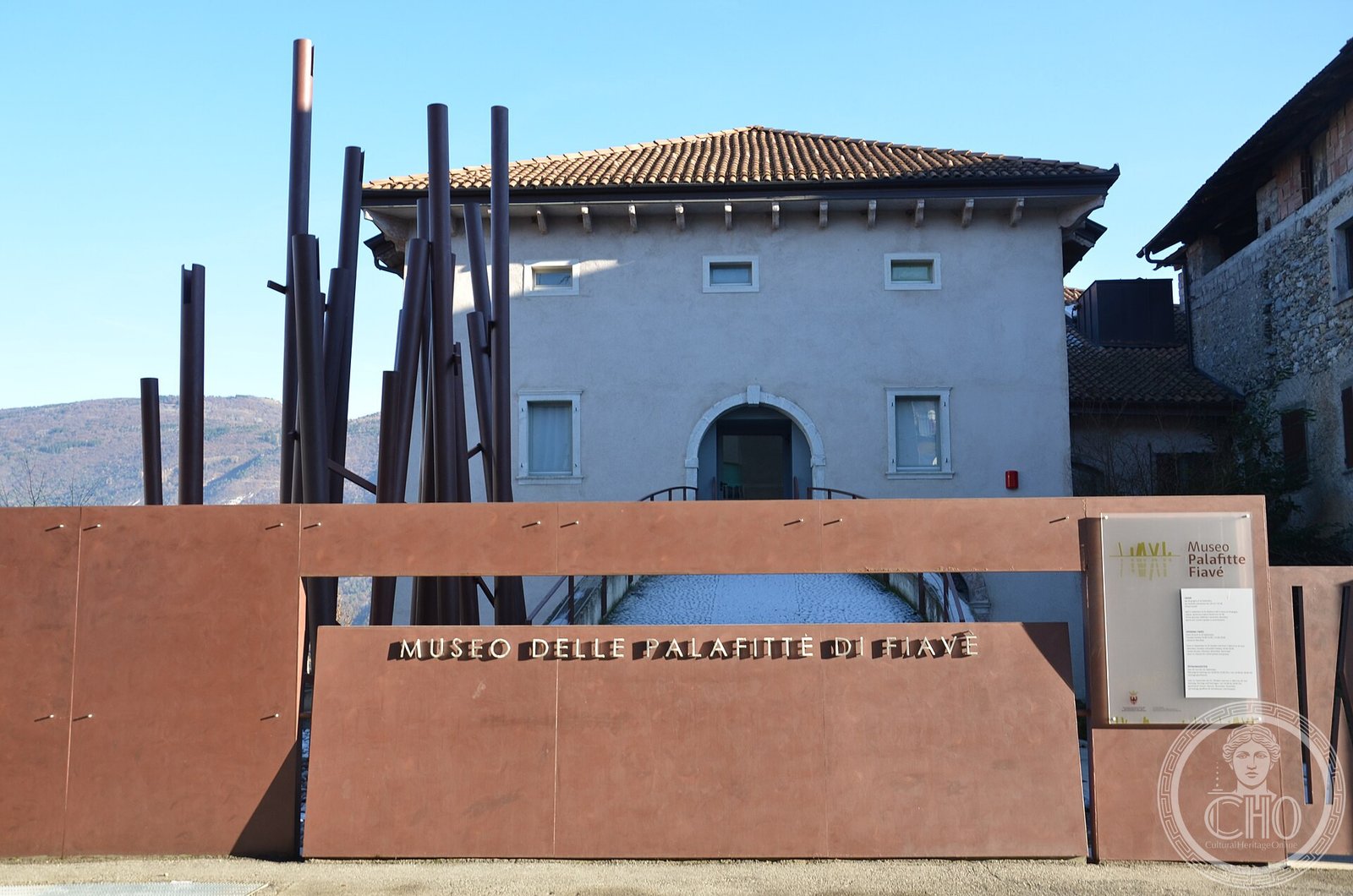
In a former alpine peat bog above Lake Carera, archaeologists pulled timber, ceramics, and woven baskets out of the mud for more than a century. The museum at Fiave tells what they found and what those finds say about a Bronze Age village that vanished under the water around 2200 BC.
- Address
- Via 3 Novembre 53, 38075 Fiave (TN)
- Period
- Pile dwellings: c. 3900–2200 BC (Late Neolithic to Middle Bronze Age)
- Original use
- Stilted settlement on the shore of a small alpine lake, later drained
- Status
- UNESCO World Heritage Site since 2011 (transnational serial inscription "Prehistoric Pile Dwellings around the Alps")
- Managed by
- Soprintendenza per i beni culturali, Provincia autonoma di Trento
- Coordinates
- 46.0020° N, 10.8418° E
Visit on the map
Via 3 Novembre 53, 38075 Fiave (TN) · 46.0020° N, 10.8418° E
Download for your navigator
A single waypoint, ready for GPS apps, navigators, and contacts.
The site was first recognised in the 1860s, when peat-cutters in the Fiave-Carera basin pulled up wooden posts that did not match anything they knew. Systematic excavation began only a century later. Between 1969 and 1976 Renato Perini directed the campaigns that defined what archaeologists now call the seven phases of Fiave, from the Late Neolithic encampments through the dense Middle Bronze Age village of pile-mounted wooden houses arranged in regular rows over the lake.
The waterlogged peat preserved what dry soil destroys. Visitors looking into the display cases see oak posts still sharp at the tip, a fragment of a wooden wheel, charred seeds of emmer wheat and lentil, antler harpoons, and clay loom-weights still grouped as they were left. The reconstruction at the entrance gives the scale: small huts, raised perhaps a metre above the marshy ground, walls of wattle and daub, roofs of thatched reed.
“The pile-dwelling sites of the Alps offer an exceptional record of the way of life of early agrarian societies in this region between 5000 and 500 BC.”
UNESCO World Heritage Committee — Inscription decision, 36th session, 2011
Fiave is one of 111 sites across six countries grouped under the 2011 UNESCO serial inscription Prehistoric Pile Dwellings around the Alps. Italy contributes 19 of those sites, the largest national share. The Trentino subset — Fiave together with the nearby Lake Ledro and Lake Garda settlements — documents a continuous human presence in the alpine valleys from the Neolithic into the late Bronze Age. Why the village was abandoned around 2200 BC is debated: climatic cooling, lake level rise, or a slow migration to the higher meadows are the leading hypotheses, none of them yet decided.
Resources & References
Editorial picks across Wikipedia, photo archives, and the official institution.
Photographs via Wikimedia Commons (CC-BY-SA) unless otherwise stated. Editorial text Cultural Heritage Online, OASIS Tech LLC USA.
Plan your visit
Open to visitors year-round; check local tourism offices for seasonal hours, admission fees, and guided tour availability. GPS coordinates: 46.00201471471691, 10.84176242351532.
See the place
Find it on the map
See this place and what’s around it →📷 Become a Cultural Heritage Online photographer
Share your photos of places: they stay published under your name as the author. The more they're seen, the more you get noticed — and soon a contest will reward the most appreciated photos.
Log in or sign up free to add a photoIs this page about you?
This page is read by travellers and heritage enthusiasts who find it on Google. Tell us how you are connected to this place and we will take it from there.