No country holds more of the World Heritage list than Italy, and no route through it is older than the Grand Tour, the months-long circuit that eighteenth-century travellers made an education in itself. This version threads ten heritage cities into one September loop, from the Venetian lagoon down the spine of the peninsula to the cave-dwellings of the south, and every stop on it is UNESCO-listed. September is the month to make it: the August crowds and prices are gone, the light lengthens over the piazzas, and Italy runs its Giornate Europee del Patrimonio, the European Heritage Days, in the last weekend of the month. It exists as a curated itinerary with GPX and KML downloads, and it pairs with our European Heritage Days country guide.
Why Italy in September?
Because the country empties back to a workable size. The Ferragosto shutdown is over, the coastal crowds have gone home, and the state museums add evening openings for the Heritage Days at the end of the month. Nine of these ten cities sit on the fast rail spine from Venice to Naples, so you can do most of the Grand Tour without a car and pick one up only for Assisi, Siena and Matera. Book the headline sites ahead even in September; the Uffizi and the Vatican do not quieten as much as the streets outside them.
The north: Venice, Verona, Ravenna
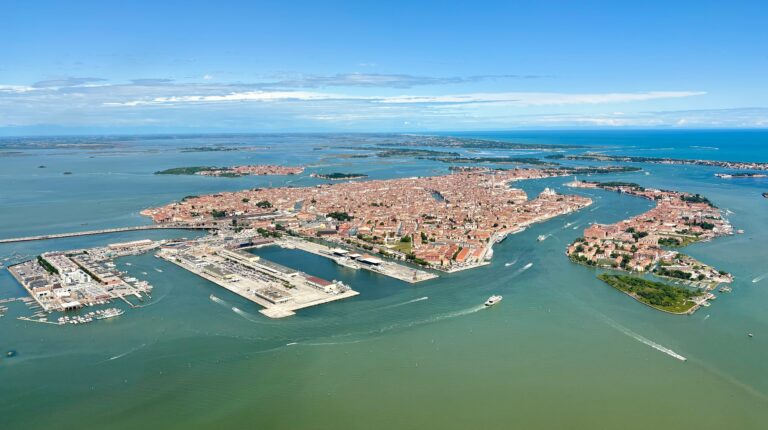
Begin where the Tour began, in Venice, a city raised on a hundred and eighteen islands and stitched by four hundred bridges, UNESCO-listed with its lagoon since 1987. West lies Verona, a Roman colony of 89 BC whose first-century Arena still fills for summer opera (UNESCO 2000). Then turn down the Adriatic side to Ravenna, capital of the late empire, where the golden mosaics of San Vitale and its sister monuments have held their colour since the sixth century (UNESCO 1996).
Tuscany and Umbria: Florence, Pisa, Siena, Assisi
The heart of the Tour is Tuscany. Florence was the first Italian centre placed on the World Heritage list, in 1982, its skyline still ruled by Brunelleschi’s dome. West, the marble field of Pisa gathers cathedral, baptistery and leaning tower on one green (UNESCO 1987). South, Siena keeps its medieval self intact around the shell-shaped Campo where the Palio still runs (UNESCO 1995). Cross into Umbria for Assisi, where the basilica raised over Saint Francis from 1228 carries the frescoes with which Giotto changed the direction of European painting (UNESCO 2000).
Rome and the south
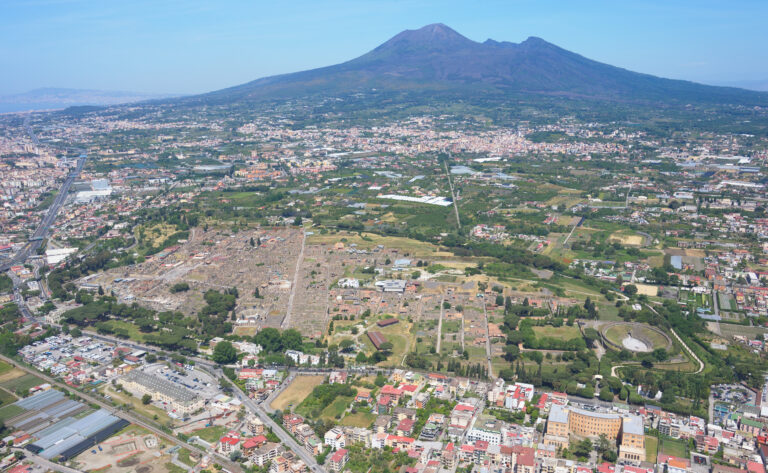
All roads still lead to Rome, the caput mundi, whose historic centre has been UNESCO-listed since 1980 and needs no introduction and at least three days. South, Naples keeps the densest historic core in Europe, Greek Neapolis under baroque churches under laundry lines, with Pompeii and Vesuvius an hour away (UNESCO 1995). Finish where few Grand Tourists ever reached, in Matera, the Basilicata town whose cave-dwellings, the Sassi, have been inhabited since the Paleolithic and were among the first Italian sites listed, in 1993.
The route as an itinerary
The full route lives as a curated itinerary, with an interactive map, a play-through of the stops, and GPX/KML downloads for your own navigator:
Open it as a page at A September Week in Italy: The Grand Tour in Ten Heritage Cities, or see the stops in context on the interactive heritage map. It completes our September series alongside France, Spain, Hungary and Romania.
Frequently Asked Questions
How many days does the Grand Tour need?
Ten to fourteen to do it justice: two or three each for Venice, Florence and Rome, and a day apiece for the rest. With a single week, run the classic short version, Venice to Florence to Rome, and save the south for a second trip.
Can you do it by train?
Mostly, yes. High-speed trains link Venice, Verona, Florence, Rome and Naples in a few hours each, and regional lines reach Pisa and Ravenna. Assisi and Siena need a short connection, and Matera is the one stop that asks for a car or a bus from Bari. The GPX download covers the driving route throughout.
When are the Italian Heritage Days in 2026?
On the last weekend of September, as the Giornate Europee del Patrimonio, with state museums adding one-euro evening openings. The ministry publishes the 2026 dates and the participating sites on cultura.gov.it in the weeks before.
Sources
- S1 — Black, Jeremy. The British Abroad: The Grand Tour in the Eighteenth Century. Sutton Publishing, 2003. ISBN 978-0-7509-3154-0.
- S2 — Wilton, Andrew, and Ilaria Bignamini, eds. Grand Tour: The Lure of Italy in the Eighteenth Century. Tate Gallery Publishing, 1996. ISBN 978-1-85437-188-1.
Spotted an error? Write to editorial@culturalheritageonline.com and we correct it the same day.