

Verona’s historic centre layers two thousand years of building on top of each other. It includes a Roman amphitheatre still staging opera, and Gothic tombs of the Scaligeri rulers. It also includes Renaissance fortifications by Michele Sanmicheli, a Romanesque basilica with a Mantegna altarpiece, and a Shakespearean balcony with no historical basis at all.
At a glance
Verona’s old town sits on a bend of the Adige and carries visible strata from every period of its history. The Arena, a Roman amphitheatre begun in 30 CE, still holds an open-air opera season each summer. The Scaligeri family ruled the city through the thirteenth and fourteenth centuries and left Gothic canopied tombs beside the church of Santa Maria Antica, as well as the fortress now known as Castelvecchio. Michele Sanmicheli, born in Verona, later rebuilt the city’s defences for the Venetian Republic, and his gates count among the most advanced military architecture of their age. The Romanesque basilica of San Zeno, a short way from the centre, holds bronze doors and an altarpiece by Andrea Mantegna. The centre was inscribed on the UNESCO World Heritage List in 2000.
Key facts
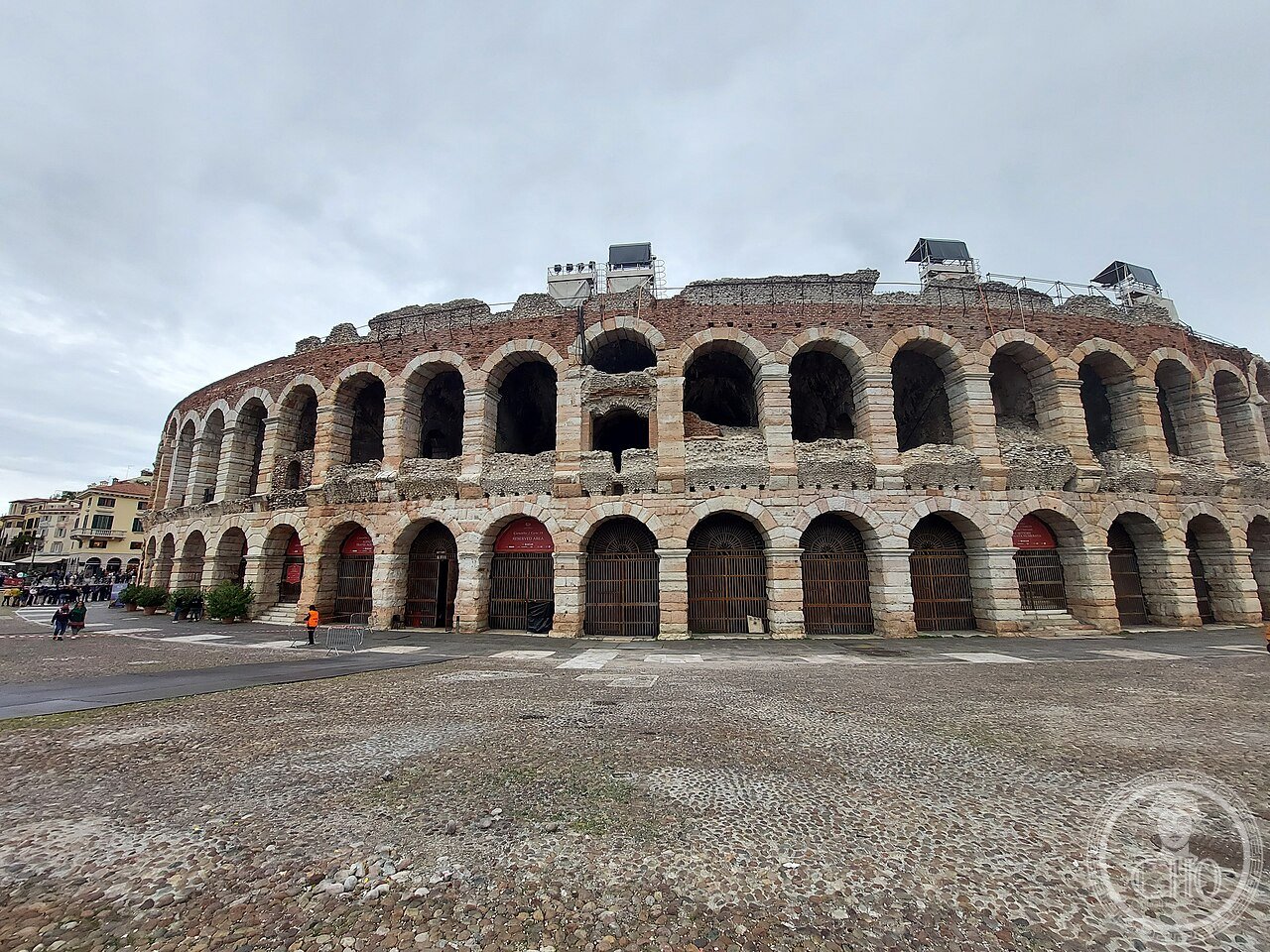
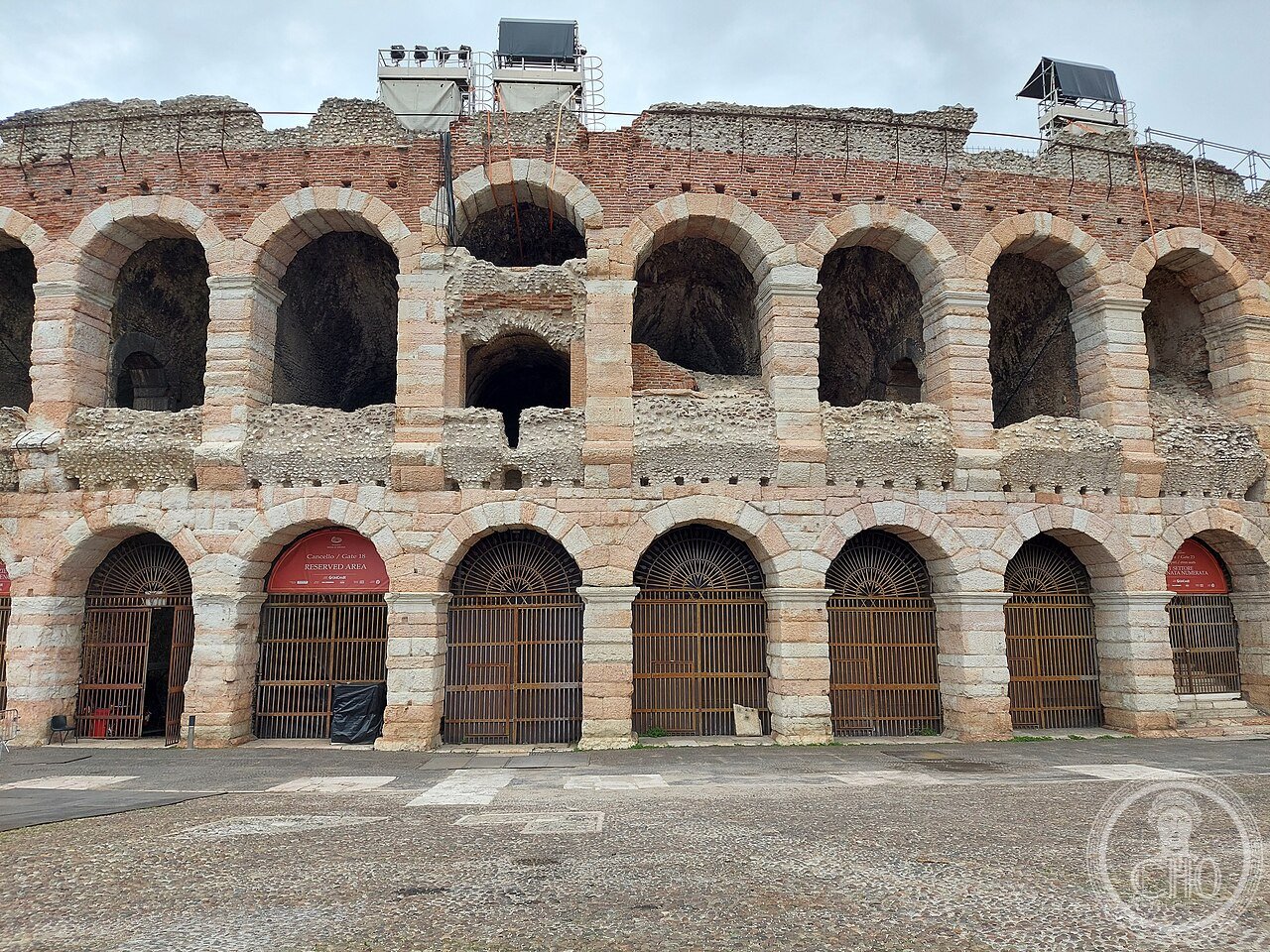
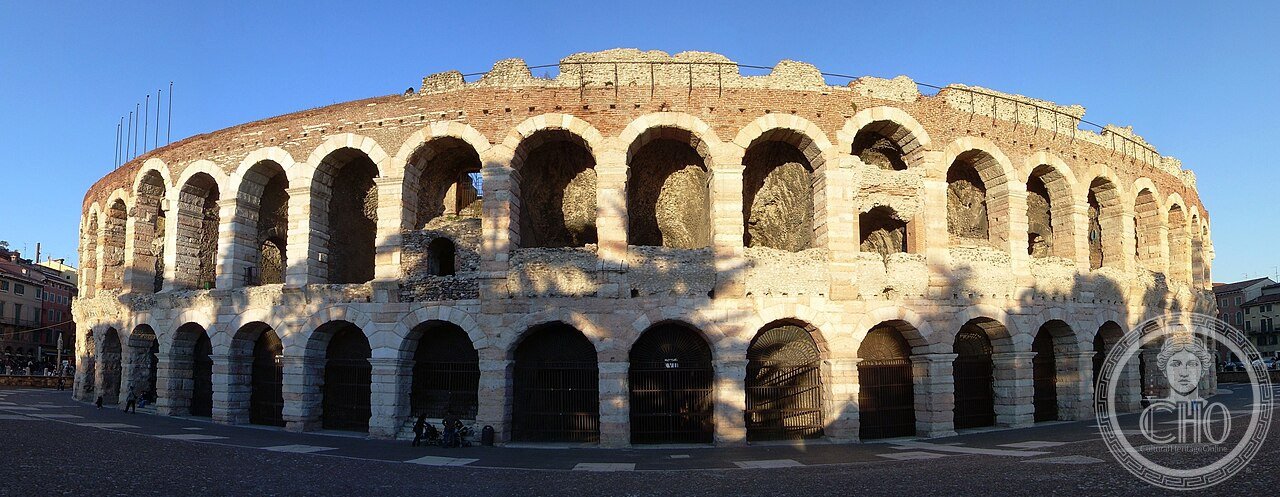
- Arena di Verona: Roman amphitheatre begun around 30 CE, measuring roughly 138 by 109 metres, with a capacity of about 22,000 when intact; only four arches of the original outer tier, known as the ala, survive.
- Scaligeri dynasty: ruled Verona from 1262 to 1387; Cangrande I della Scala, who governed from 1291 to 1329, hosted Dante Alighieri in exile between 1312 and 1318.
- Sanmicheli fortifications: Porta Nuova (1535–1540) and Porta Palio (1542), bastioned gates designed by Michele Sanmicheli after his appointment as military architect to the Venetian Republic in 1530.
- Basilica di San Zeno Maggiore: begun in 1123, with bronze portal doors of 1138 made up of 48 sculpted panels, and Mantegna’s Pala di San Zeno altarpiece of 1457–1460.
- UNESCO status: the historic centre of Verona was inscribed as a World Heritage Site in 2000, reference number 797.
History
Verona became a Roman colony in 89 BCE. The Arena was built outside the city walls in the following century. This followed the Roman practice of placing amphitheatres away from residential areas because of the noise and crowds. The city remained an important Christian centre from the fourth century, survived the Lombard invasion of 568 and became a Carolingian capital in the north after Charlemagne’s conquest of Italy in 774. A self-governing commune was established in 1136, centred on the market square of Piazza delle Erbe.
In 1262 Mastino I della Scala became podestà, founding the Scaligeri dynasty that ruled Verona until 1387. Under Cangrande I, who extended Veronese control over much of the Veneto, the city hosted Dante Alighieri during his exile between 1312 and 1318. During this period Dante was writing the Purgatorio and most of the Paradiso. Cangrande is addressed directly in canto 17 of the Paradiso. After the Scaligeri fell to the Visconti of Milan in 1387, Venice took the city in 1405 and held it until the fall of the Venetian Republic in 1797. Verona then passed to French and Austrian rule before joining unified Italy in 1866.
The Arena’s opera festival began in 1913 and has run in the amphitheatre every summer since. The historic centre was placed on the UNESCO World Heritage List in 2000. The Casa di Giulietta is a house on Via Cappello. It was bought by the municipality in 1905 and fitted with a fourteenth-century balcony from elsewhere. It has since become associated with Shakespeare’s Juliet, although no historical figure of that name is known to have existed. The Capuleti and Montecchi were real Veronese families, but the plot itself comes from a fictional novella of 1530 by Luigi da Porto.
What you see
The Arena dominates Piazza Bra: from the topmost tier the complete run of Roman seating is visible against the Alpine skyline beyond the Adige. Outside, the ala, the four surviving arches of the amphitheatre’s ruined outer tier, is visible free of charge from the piazza and remains the most photographed view of the building. Piazza delle Erbe occupies the site of the Roman forum. Its market still trades on paving raised above the original Roman level. The Column of the Lion marks Venetian rule at the square’s northern end.
Nearby, the Arche Scaligere beside Santa Maria Antica hold the Gothic canopied tombs of the della Scala family. The equestrian figure on Cangrande I’s tomb outside is a cast; the original is kept in the Castelvecchio Museum. Castelvecchio itself, the Scaligeri fortress, was reworked as a museum in the 1920s. It was given a major refurbishment by Carlo Scarpa between 1956 and 1974, one of the most studied museum interventions in twentieth-century Italy.
A few kilometres from the centre stands the Basilica di San Zeno Maggiore, begun in 1123. Its bronze doors of 1138 carry 48 sculpted biblical scenes, among the most extensive Romanesque bronze door programmes to survive in Italy. Inside, Mantegna’s Pala di San Zeno triptych of 1457–1460 uses painted architecture that continues seamlessly from the altarpiece’s real carved frame, an early instance of perspective used to extend a painted space.
Practical information
- Opera season: the Arena stages an open-air opera festival each summer, from June to September; performances take place after nightfall, and the season includes a candle-lighting tradition at the opening of each show. Current dates and seating should be checked on the festival’s official site, arena.it.
- Visiting the Arena: the amphitheatre is closed to general visitors during stage preparation in the summer months; check ahead for access times.
- San Zeno: reached by local bus from Piazza Bra, or on foot along the river.
- Castelvecchio Museum: holds the original Cangrande equestrian statue and other Scaligeri-era material.
Getting there
Verona Porta Nuova station lies within easy walking distance of the Arena, and local buses also run between the station and Piazza Bra. The historic centre itself is compact and best explored on foot, with San Zeno Maggiore reachable by bus or a longer walk along the Adige.
Nearby
- Basilica di San Zeon Maggiore — about 4 km from the centre, reached by bus from Piazza Bra; Romanesque bronze doors and Mantegna’s altarpiece.
- Castelvecchio — within the old town; the Scaligeri fortress turned museum, remodelled by Carlo Scarpa.
- Casa di Giulietta — Via Cappello, in the centre; the courtyard and balcony associated with Shakespeare’s Juliet.
- Piazza delle Erbe — the former Roman forum, now a daily market square.
Sources
- UNESCO World Heritage List
- Fondazione Arena di Verona (arena.it)
- Comune di Verona
Gallery
Find it on the map
See this place and what’s around it →
📷 Become a Cultural Heritage Online photographer
Share your photos of places: they stay published under your name as the author. The more they're seen, the more you get noticed — and soon a contest will reward the most appreciated photos.
Log in or sign up free to add a photo