
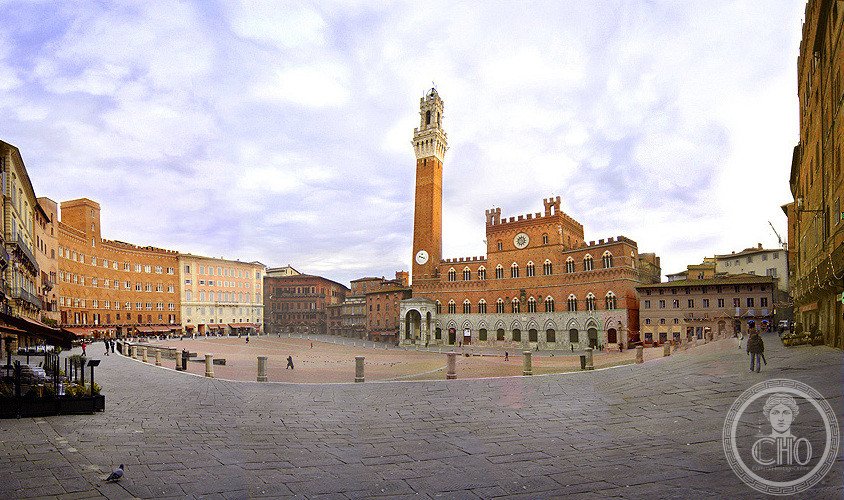
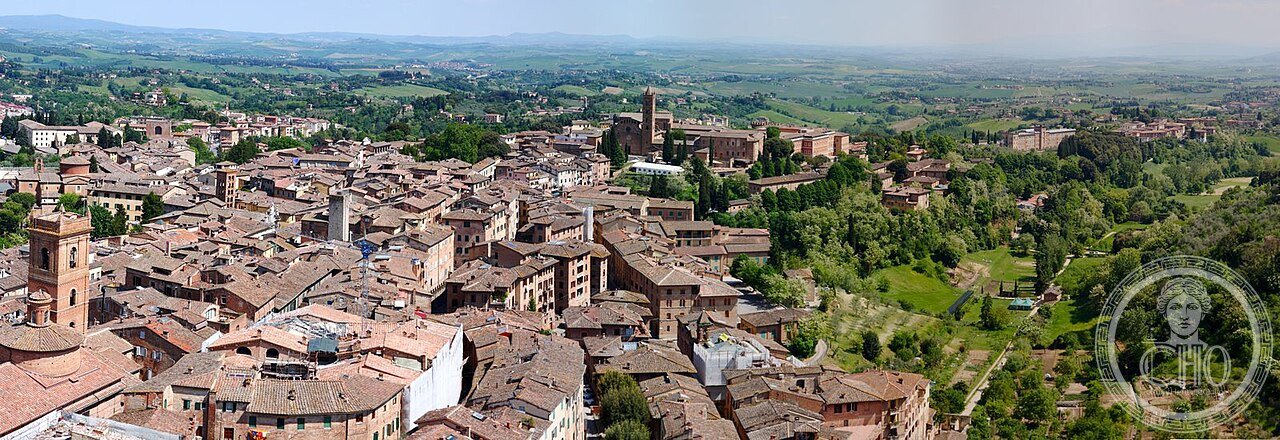
Siena’s historic centre preserves the city almost exactly as it stood at the height of its medieval republic, before plague halted its development in 1348. The shell-shaped Piazza del Campo, the Palazzo Pubblico’s civic frescoes and the striped marble cathedral together form one of the most complete surviving records of Trecento Sienese life and art.
At a glance
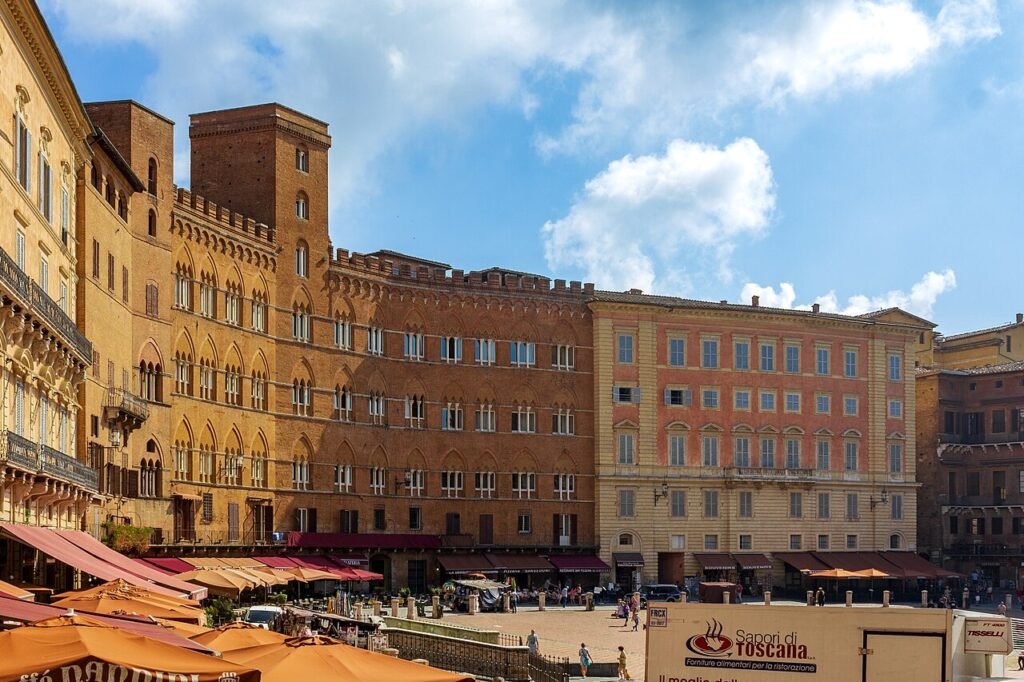
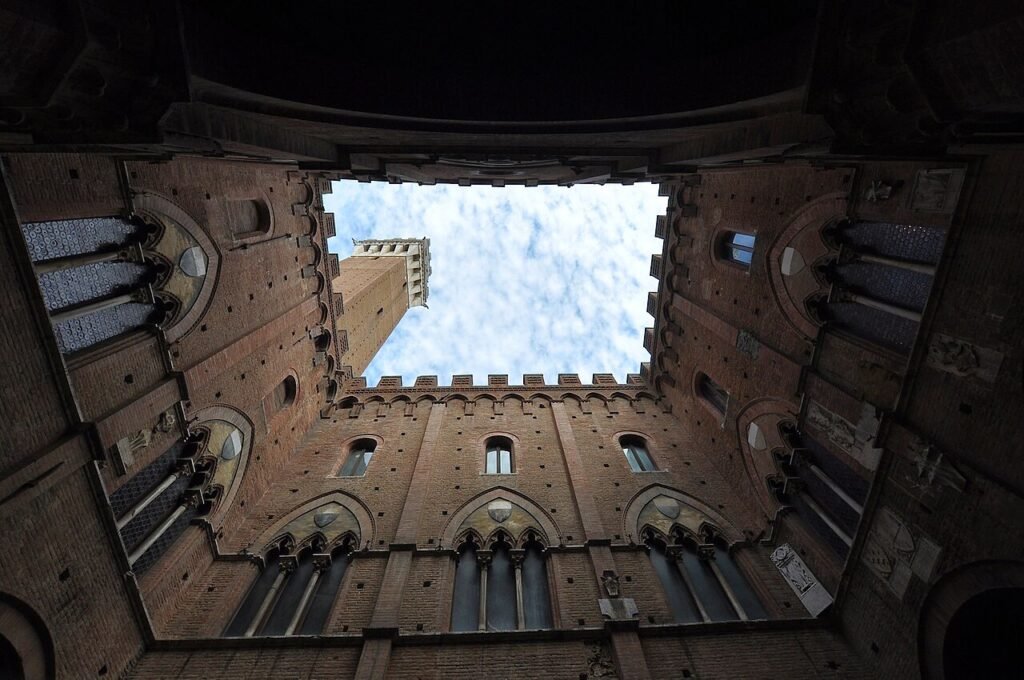
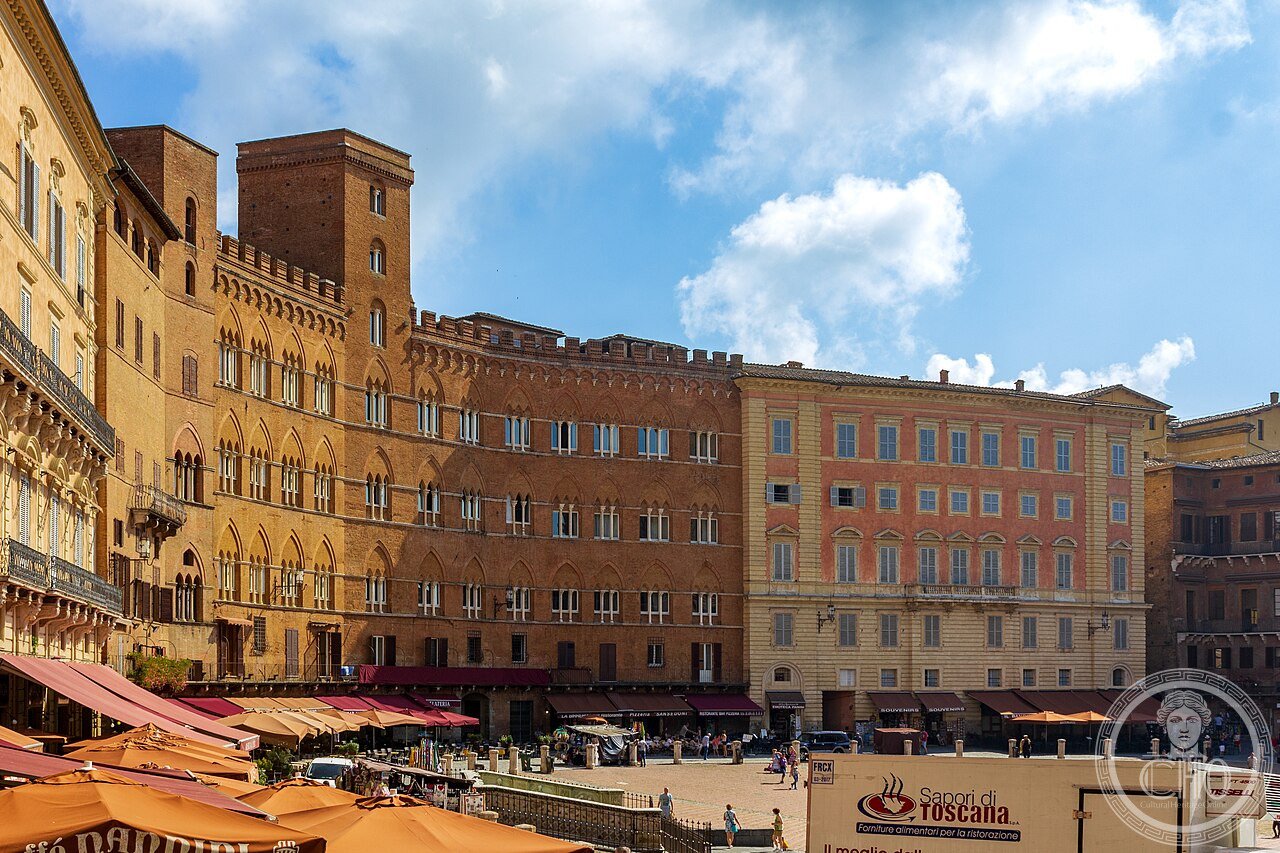
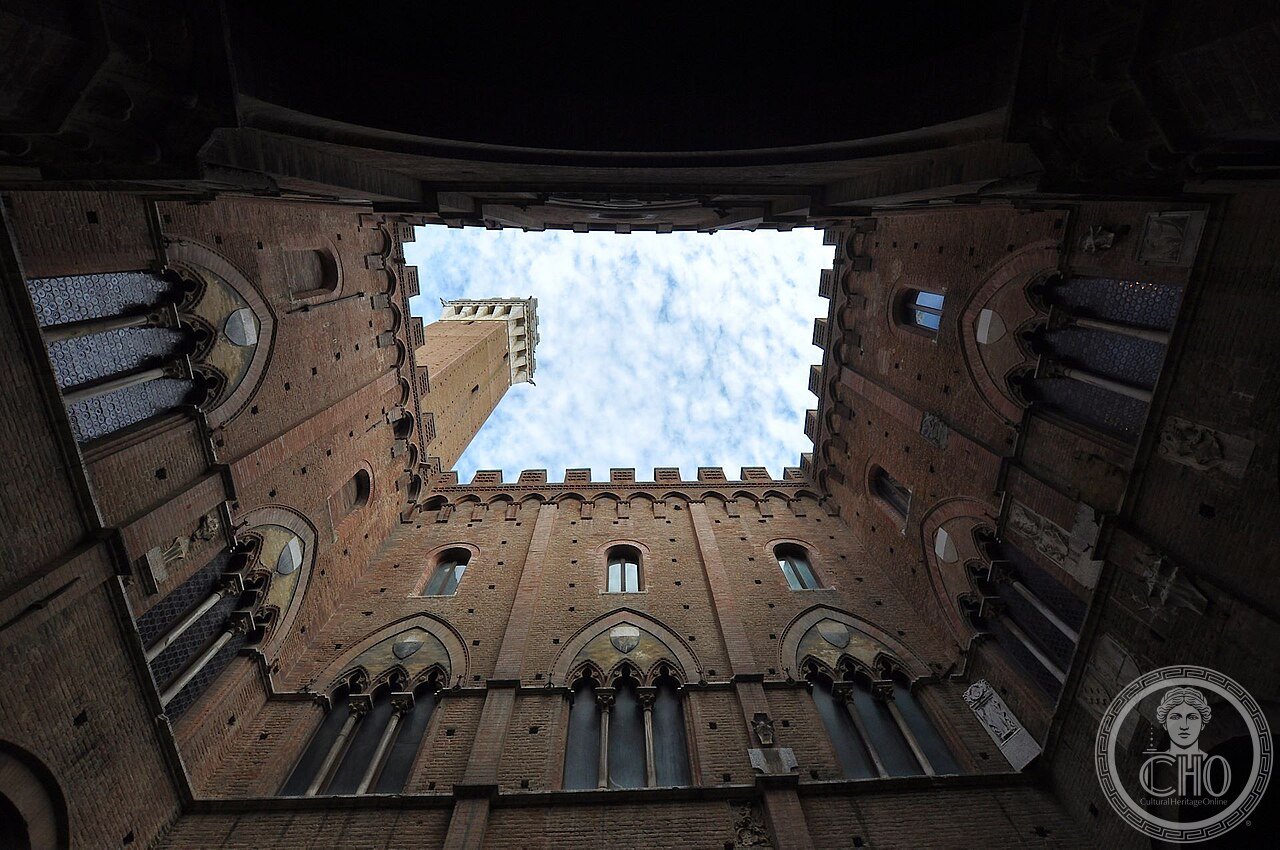
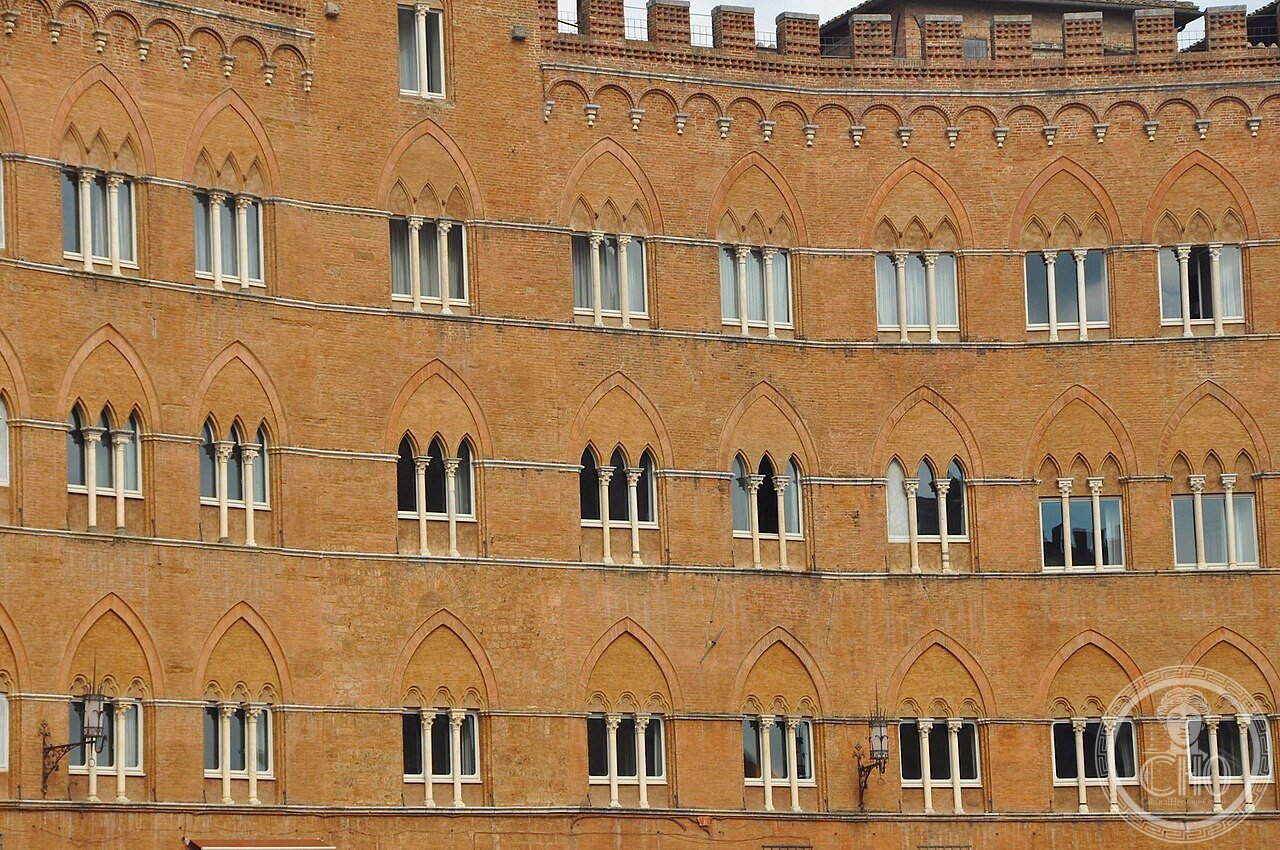
The Piazza del Campo is the only major medieval Italian square built to a non-rectangular plan, its shell shape divided into nine stone segments that recall the Government of the Nine, the merchant oligarchy that ruled Siena at its peak. The square is closed by the Palazzo Pubblico, with its slender Torre del Mangia, and by the Fonte Gaia, whose surviving fifteenth-century marbles by Jacopo della Quercia are now kept in the Palazzo Pubblico’s civic museum, the fountain itself being a nineteenth-century copy.
Twice a year the Campo becomes the track for the Palio di Siena, a bareback horse race run by ten of the city’s seventeen historic contrade over three laps of the square. The race is central to Sienese civic identity, and the hand-painted silk banner awarded to the winning contrada, the drappellone, has over the decades been created by artists including Giorgio de Chirico, Josef Albers, Emilio Pucci and Maurizio Cattelan.
Key facts
- Palazzo Pubblico: built 1297–1310, seat of the Sienese Republic’s government and home to Ambrogio Lorenzetti’s Allegory of Good and Bad Government, 1338–39.
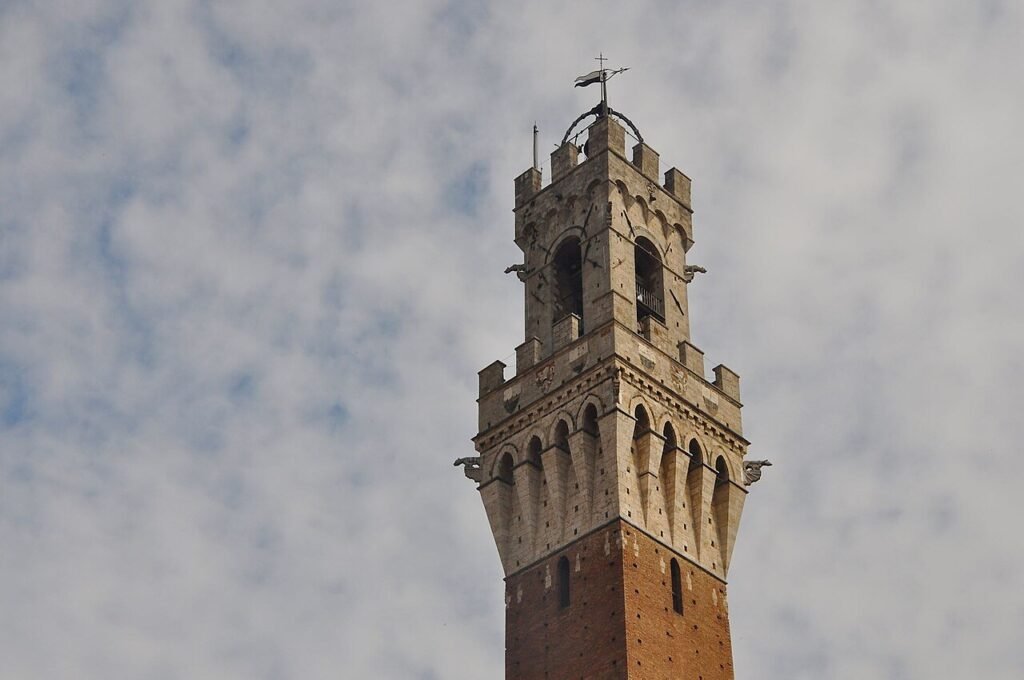
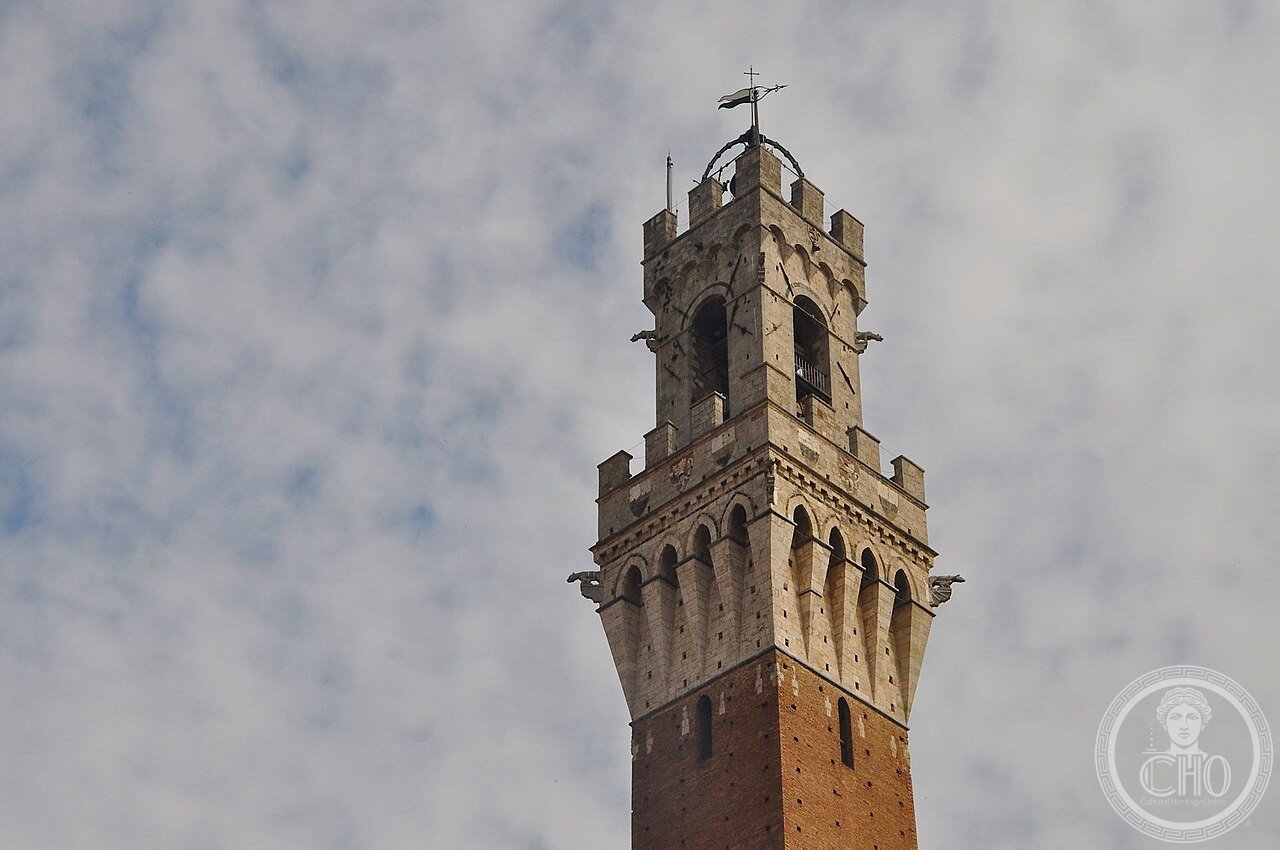
- Torre del Mangia: built 1338–48 to a height of 102 metres, the second tallest tower on any medieval Italian square after Bologna’s Torre degli Asinelli.
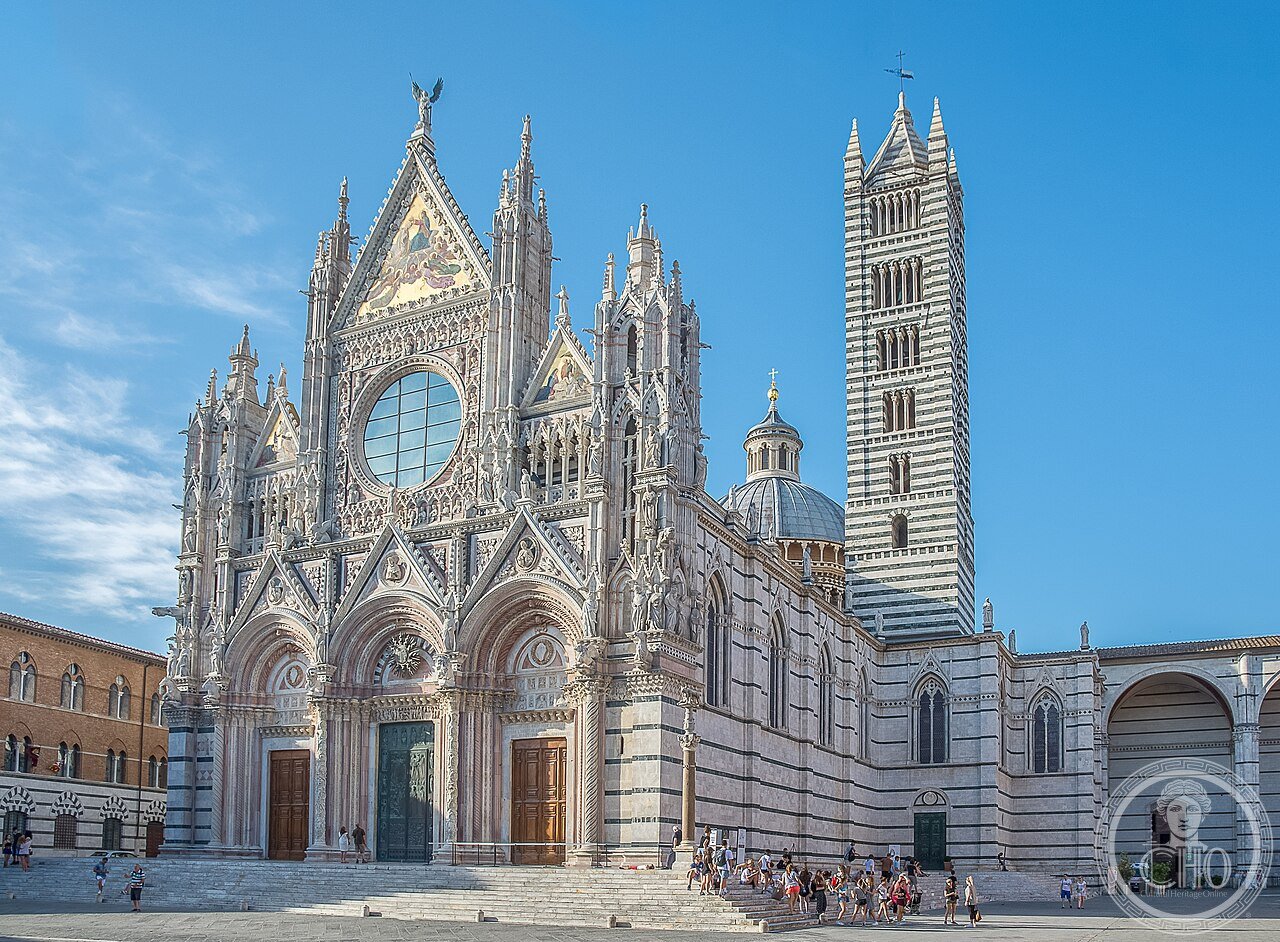
- Duomo di Siena: Gothic cathedral with a black and white striped marble interior, a hexagonal pulpit signed and dated by Nicola Pisano in 1268, and an inlaid marble floor of 56 panels made between 1369 and 1547 by around forty artists.
- Libreria Piccolomini: a chapel-library inside the cathedral frescoed by Pinturicchio between 1502 and 1508 with ten scenes from the life of Pope Pius II.
- Monte dei Paschi di Siena: founded in 1472 as a state pawnshop, it is the world’s oldest bank still in continuous operation.
History
The Sienese Republic governed the city from 1125, when the bishop’s secular authority was ended, until its surrender to Florence in 1555. Its high point came under the Government of the Nine, a constitutional oligarchy of merchants that ruled from 1287 to 1355 and excluded both nobility and clergy from power, an arrangement unusual for its time. In 1260 Siena, allied with the Ghibellines, defeated Florence decisively at the Battle of Montaperti; tradition holds that the Sienese commander offered the city to the Virgin Mary before the battle, a gesture said to underpin the city’s civic religion and, later, the Palio itself. Sienese dominance proved short-lived, and Florence regained control of Tuscany by 1269. The city’s artistic golden age, running from around 1280 to 1348, produced Duccio di Buoninsegna, Simone Martini and the brothers Pietro and Ambrogio Lorenzetti, whose work developed the colour and gilded spirituality of the Byzantine tradition rather than following Giotto’s naturalism. The Black Death of 1348 killed a very large share of Siena’s population, is thought to have killed both Lorenzetti brothers, and effectively froze Sienese painting at its peak; no comparable school emerged afterwards. The historic centre was inscribed on the UNESCO World Heritage List in 1995, reference 717.What you see
The Piazza del Campo remains the physical and symbolic heart of the city, ringed by the Palazzo Pubblico and its tower. Inside the palazzo, the Sala del Mappamondo holds Simone Martini’s Maestà and the disputed Guidoriccio da Fogliano fresco, while an adjoining hall carries Ambrogio Lorenzetti’s Allegory of Good and Bad Government, the largest surviving secular fresco cycle from medieval Europe, its panels showing merchants, masons, dancers and a schoolroom in a functioning fourteenth-century city.
The Duomo presents a striped marble interior built around Nicola Pisano’s pulpit and an inlaid floor normally protected by wooden boarding and uncovered only for a limited period each year, the dates varying annually. Off the left aisle, the Libreria Piccolomini holds Pinturicchio’s fresco cycle on the life of Pope Pius II, its colours unusually well preserved because the room’s shuttered windows kept it out of daily use.
Practical information
- Cathedral floor: uncovered only for a few weeks each year, with dates set annually; check the Opera della Metropolitana di Siena’s own channels before visiting.
- Palazzo Pubblico and tower: access to the museum and the Torre del Mangia is separately ticketed; current arrangements should be checked directly with the site.
- Palio di Siena: run twice yearly, on 2 July and 16 August, in the Piazza del Campo itself.
Getting there
The historic centre is closed to general traffic and is best explored on foot; the Piazza del Campo lies at coordinates 43.3188° N, 11.3307° E.
Nearby
- Duomo di Siena — a short walk from the Piazza del Campo, with the Libreria Piccolomini inside its left aisle.
- Museo dell’Opera del Duomo — adjoining the cathedral, home to Duccio’s work.
- Palazzo Pubblico — on the Piazza del Campo itself, housing the Lorenzetti frescoes and the Torre del Mangia.
More photographs
Sources
- Museo Civico del Palazzo Pubblico
- Opera della Metropolitana di Siena
Gallery
Find it on the map
See this place and what’s around it →
📷 Become a Cultural Heritage Online photographer
Share your photos of places: they stay published under your name as the author. The more they're seen, the more you get noticed — and soon a contest will reward the most appreciated photos.
Log in or sign up free to add a photo