
In Hagan Street, all’angolo con Picton Street, nel centro di Banjul, la cattedrale di Nostra Signora dell’Assunzione è la sede della diocesi — non arcidiocesi — di Banjul: le fonti divergono sulla data di costruzione dell’edificio, alcune indicandone l’origine al 1850, altre alla costruzione coloniale del 1913-1916, senza che sia stato possibile riconciliare i due dati, e non risulta documentato né un architetto né uno stile architettonico specifico. La giurisdizione cattolica in Gambia fu eretta come missione sui iuris nel 1931, elevata a prefettura apostolica di Bathurst nel 1951 e a diocesi di Bathurst nel 1957, rinominata diocesi di Banjul nel 1974 dopo che la capitale coloniale Bathurst assunse il nome attuale; l’attuale vescovo è Gabriel Mendy, dei Padri dello Spirito Santo, primo gambiano a guidare la diocesi, in carica dal 30 novembre 2017. La Gambia è una nazione a stragrande maggioranza musulmana, tra il novantacinque e il novantasei per cento della popolazione secondo le stime più recenti, con una minoranza cristiana attorno al tre-quattro per cento e una comunità cattolica stimata tra le cinquantamila e le cinquantacinquemila persone a seconda dell’anno di riferimento. L’11 dicembre 2015, il presidente Yahya Jammeh dichiarò unilateralmente la Gambia “Repubblica islamica” durante un comizio a Brufut, assicurando contestualmente che i diritti dei cristiani sarebbero stati rispettati; la questione non fu mai risolta per via legislativa o costituzionale, e il Consiglio cristiano del Gambia continuava a chiedere l’iscrizione dello Stato laico in costituzione ancora nel dicembre 2019. Il successore di Jammeh, Adama Barrow, annunciò verbalmente in una conferenza stampa del 28 gennaio 2017 che la Gambia non sarebbe più stata chiamata “Repubblica islamica”, un gesto però puramente nominale, non un decreto o un emendamento costituzionale formale. Le relazioni diplomatiche tra Santa Sede e Gambia risalgono al 1978, e la nunziatura apostolica, eretta nel 1979, non ha mai avuto sede residente in Gambia, essendo affidata al nunzio in Liberia, residente a Monrovia. L’unica visita papale alla Gambia, e a questa cattedrale, fu quella di Giovanni Paolo II, che si rivolse al clero, ai religiosi e ai laici in questo edificio il 23 febbraio 1992, nell’ambito di un viaggio che toccò anche Senegal e Guinea; nessun altro papa vi si è mai recato.
About the Cathedral
The Cathedral of Our Lady of the Assumption, on Hagan Street in Banjul, is the seat of the Diocese of Banjul — a single, non-metropolitan diocese, not an archdiocese. Sources disagree on whether the building dates to 1850 or to colonial-era construction in 1913–1916, and no architect or architectural style is documented.
Key facts
- 1931: Catholic mission in Gambia erected as a Mission sui iuris
- 1957: elevated to the Diocese of Bathurst; renamed Diocese of Banjul in 1974
- 23 February 1992: Pope John Paul II addresses clergy, religious and laity at this cathedral — the only papal visit to The Gambia on record
- 11 December 2015: President Yahya Jammeh unilaterally declares The Gambia an “Islamic Republic”
- 28 January 2017: President Adama Barrow verbally announces the country will no longer use that designation, though no formal legal reversal followed
- Catholics number roughly 50,000–55,000, around 2–3% of a nation that is about 95% Muslim
History
Seat of a small Catholic diocese in one of West Africa’s most overwhelmingly Muslim nations, the cathedral hosted the only papal visit The Gambia has ever received, when John Paul II addressed the Catholic community here in February 1992. Two decades later, the country’s status as a religiously plural but constitutionally undefined state came under strain when President Yahya Jammeh declared an “Islamic Republic” in December 2015 — a declaration his successor informally set aside in 2017 without ever formally repealing it, leaving the country’s Christian Council still pressing years later for secularism to be written explicitly into law.
What you see
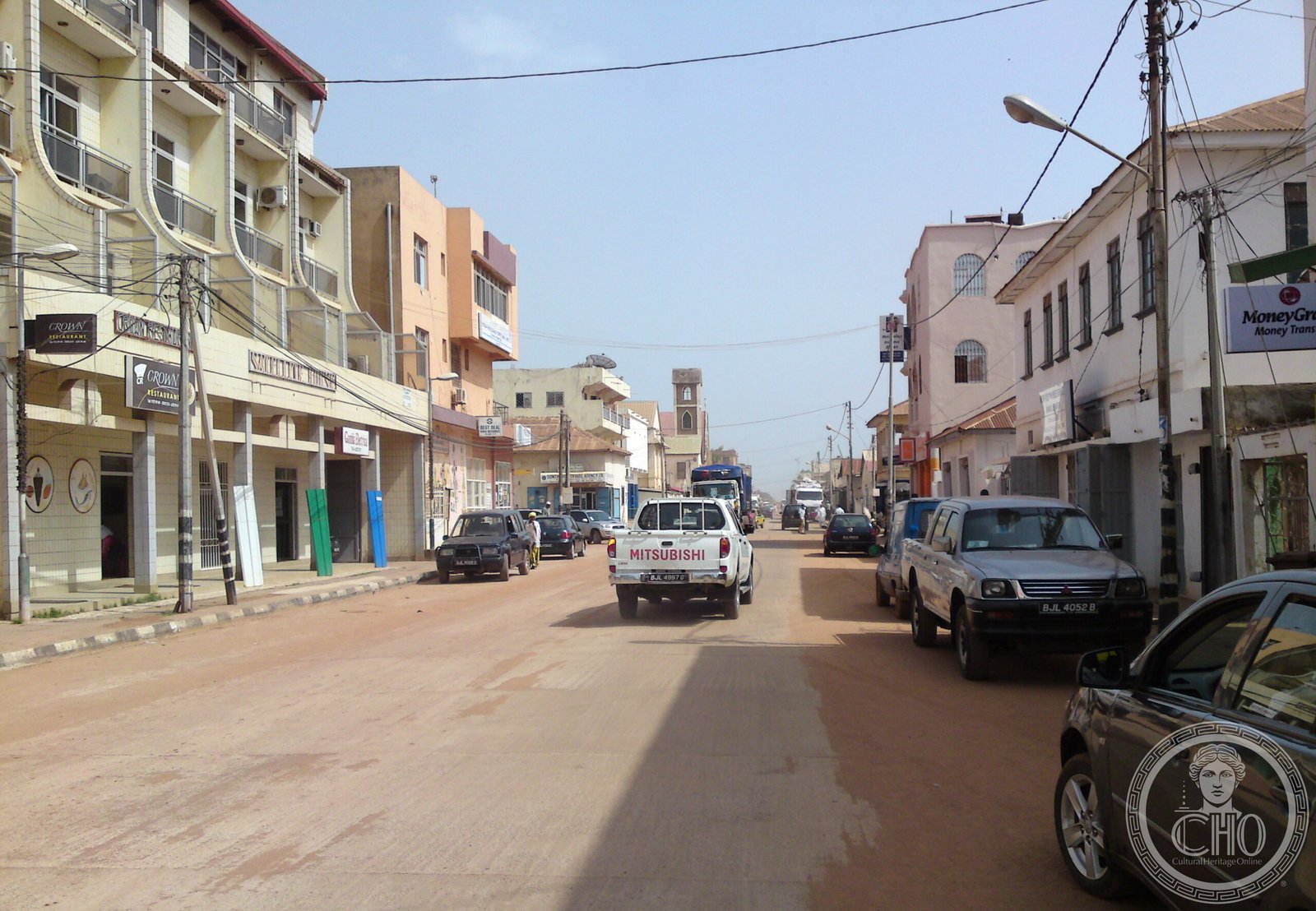
A square brick bell tower with twin-tier lancet windows and a stepped, castellated crown rises above Banjul’s low rooftops, with the pink-tiled roof of the nave visible behind it — the tower is the building’s most recognizable feature from street level.
Practical information
- Opening hours: generally open daily outside services; check current hours before visiting
- Address: 73 Hagan Street, at Picton Street, Banjul, The Gambia
Getting there
The cathedral stands in central Banjul, on Hagan Street at its corner with Picton Street. GPS: 13°27′04″N, 16°34′28″W.
Nearby
- Arch 22 — Banjul’s monumental independence-era arch, a landmark elsewhere in the compact capital
Sources
- Wikipedia — “Our Lady of the Assumption Cathedral, Banjul,” “Roman Catholic Diocese of Banjul”
- GCatholic.org and Catholic-Hierarchy.org — Diocese of Banjul records
- Vatican.va — primary transcript of Pope John Paul II’s 23 February 1992 address in Banjul
- Associated Press, Al Jazeera, AFP/Dawn.com — coverage of Yahya Jammeh’s December 2015 “Islamic Republic” declaration
- US State Department — International Religious Freedom Report, The Gambia
- CIA World Factbook — Gambia religious demographics
Find it on the map
See this place and what’s around it →📷 Become a Cultural Heritage Online photographer
Share your photos of places: they stay published under your name as the author. The more they're seen, the more you get noticed — and soon a contest will reward the most appreciated photos.
Log in or sign up free to add a photo