
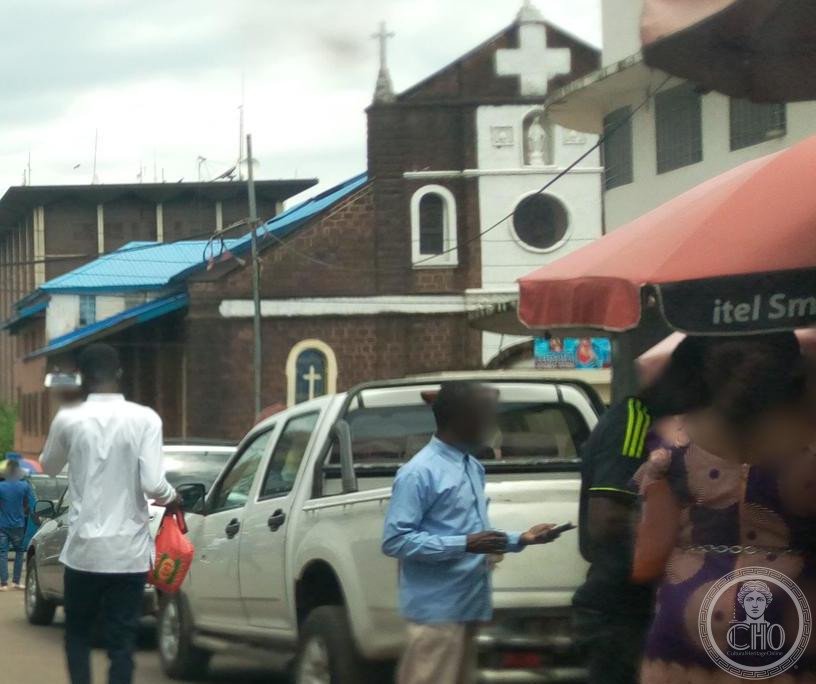
On Howe Street, in the centre of Freetown, Sacred Heart Cathedral is the seat of the Catholic archdiocese of Freetown. Work began in November 1884 and the building was dedicated on 27 October 1887, though neither an architect’s name nor a consecration date distinct from the dedication is documented. The Catholic jurisdiction in Sierra Leone was erected as an apostolic vicariate on 13 April 1858 by Pope Pius IX. The first vicar apostolic, Melchior de Marion-Brésillac, founder of the Society of African Missions, landed at Freetown on 14 May 1859 with two fellow missionaries and died of yellow fever just six weeks later, on 25 June 1859, together with almost the whole of the first missionary group. Unlike the Anglican cathedral of St George, tied to Freetown’s founding history as a settlement for formerly enslaved people, Black Loyalists, Nova Scotian settlers, Jamaican Maroons and “recaptives” freed from slave ships intercepted after the British abolition of 1807, the Catholic presence in Sierra Leone took root only later, in the second half of the nineteenth century, and no documented link exists between this cathedral and that founding history. Raised to a diocese on 18 April 1950 and to a metropolitan archdiocese on 11 November 1970, the archdiocese of Freetown is today led by Archbishop Edward Tamba Charles, in office since 2008. During the Sierra Leone civil war, the invasion of Freetown by the rebels of the Revolutionary United Front and the former Armed Forces Revolutionary Council in January 1999, known as “Operation No Living Thing”, struck the Catholic clergy directly. On 12 January 1999 Archbishop Joseph Henry Ganda, four Xaverian fathers and six Sisters of Charity were kidnapped from their parish residences. Archbishop Ganda managed to escape on 20 January together with three Xaverian fathers as the rebels withdrew from Kissy, but on 22 January four of the kidnapped nuns were killed together with an Italian priest during the rebels’ retreat into the surrounding hills. No direct damage to the cathedral building is documented. No pope has ever visited Sierra Leone; a supposed stop in 1992 during a journey by John Paul II to West Africa is not confirmed by a primary source. On 21 May 2026 Pope Leo XIV received in the Vatican the credentials of Sierra Leone’s ambassador to the Holy See, confirming active bilateral diplomatic relations, but without a papal visit to the country ever having taken place.
About the Cathedral
Sacred Heart Cathedral, on Howe Street in Freetown, seat of the Archdiocese of Freetown, was dedicated on 27 October 1887 after construction began in 1884. No architect or distinct consecration date is documented in available sources.
Key facts
- 13 April 1858: Vicariate Apostolic of Sierra Leone erected by Pope Pius IX.
- 25 June 1859: first vicar apostolic, Melchior de Marion-Brésillac, dies of yellow fever six weeks after arrival.
- 27 October 1887: Sacred Heart Cathedral dedicated.
- 11 November 1970: elevated to a metropolitan archdiocese.
- 12–22 January 1999: Archbishop Joseph Henry Ganda and religious sisters and priests abducted during the RUF/AFRC invasion of Freetown; four Sisters of Charity and an Italian priest killed.
- No pope has ever visited Sierra Leone; diplomatic relations with the Holy See remain active.
History
Dedicated in 1887 after a Catholic mission that had nearly collapsed at its outset — its first vicar apostolic died of yellow fever within weeks of landing in 1859 — Sacred Heart Cathedral’s clergy faced a very different kind of danger during Sierra Leone’s civil war. In January 1999, as rebel forces overran Freetown in what became known as “Operation No Living Thing,” Archbishop Joseph Henry Ganda was abducted from his residence along with priests and religious sisters; he escaped after ten days, but four Sisters of Charity and an Italian priest were killed as the rebels withdrew. Unlike Freetown’s Anglican cathedral, this Catholic institution has no documented ties to the city’s 18th- and early-19th-century founding as a settlement for freed and formerly enslaved people — Catholicism arrived here as a separate, later thread.
What you see
A dark brick Gothic Revival facade with white stone trim rises to a gable crowned by a large white cross, with a round rose-style window, pointed-arch windows, and a niche holding a statue above the entrance.
Practical information
- Opening hours: generally open daily outside services; check current hours before visiting.
- Address: Howe Street, Freetown, Sierra Leone.
Getting there
The cathedral stands on Howe Street in central Freetown. GPS: 8°29′22″N, 13°13′59″W.
Nearby
- St George’s Cathedral — Freetown’s Anglican cathedral, tied to the city’s founding settler history, a short distance away.
Sources
- Wikipedia — “Sacred Heart Cathedral, Freetown,” “Roman Catholic Archdiocese of Freetown,” “Catholic Church in Sierra Leone,” “Melchior de Marion Brésillac”
- GCatholic.org and Catholic-Hierarchy.org — Archdiocese of Freetown records.
- Human Rights Watch — “Sierra Leone,” 1999 report on the January 1999 Freetown invasion.
- US State Department — 1999 Human Rights Report on Sierra Leone.
- Vatican News and Vatican.va — coverage of Sierra Leone–Holy See diplomatic relations.
Find it on the map
See this place and what’s around it →📷 Become a Cultural Heritage Online photographer
Share your photos of places: they stay published under your name as the author. The more they're seen, the more you get noticed — and soon a contest will reward the most appreciated photos.
Log in or sign up free to add a photo