A leaflet rack outside a tourist office is one of the oldest pieces of marketing still in daily use in Europe. It costs little to enter, nobody needs an account to take one, and the owner whose leaflet sits third from the left can walk past at nine in the morning and see, with their own eyes, that it is still there. That last part matters more than it sounds. For an owner who has never trusted anything digital, a leaflet rack offers something a website never quite manages: proof, standing right in front of you, that the thing you paid for exists.
The comfort of something you can hold
There is nothing foolish about this instinct. A printed leaflet has a fixed price, paid once, for a fixed number of copies. Nobody can quietly change the terms halfway through the season. It does not ask for a password. It does not send an invoice you don’t remember agreeing to. And it sits in a place — the tourist office, the hotel lobby, the ferry terminal — chosen by people you can meet and talk to, not by a system whose rules nobody has ever fully explained to you.
Compare that to most of what gets called “digital marketing”, and the leaflet wins on every count that matters to someone who has been burned before, or who has simply heard enough stories about small businesses paying for vague online packages that changed nothing. Caution here is not backwardness. It is experience.
The one question a leaflet rack can never answer
But the leaflet has one blind spot, and it is a complete one. Say the tourist office prints two hundred copies for the season and, in October, one hundred and fifty are gone. That is the entire report you will ever receive. Nobody can tell you how many of those hundred and fifty were picked up out of genuine interest rather than boredom while waiting for a bus. Nobody can tell you how many people who took one actually found your door. Nobody can tell you whether the redesign you paid extra for in spring made any difference at all, because there is no version of the season where the old leaflet and the new one ran side by side and you could compare the results.
This is not a flaw in how the leaflet was printed. It is a flaw built into paper itself: paper cannot report back. Once it leaves the rack, it is gone from your sight, and whatever happens next happens in the dark.
What a hidden counter would actually show you
Imagine, for a moment, that the leaflet rack had a small, silent counter fitted behind it — not just for how many leaflets disappeared, but for who took them, roughly where they had travelled from, and whether they stopped in front of the rack for two seconds or twenty. That is not a hypothetical device. It is what happens, automatically, every time someone finds a place listed online rather than on paper: the search is recorded, the country of origin is recorded, the fact that someone looked and then left without clicking is recorded just as faithfully as the fact that someone looked and stayed.
Cultural Heritage Online, the archive behind this magazine, publishes its own version of that counter openly, because a number nobody can check is worth nothing to a reader who has learned to be careful. On our About page, the growth of the catalogue and where its readers come from are shown as they change, drawn directly from Google’s own measurement tools rather than claimed once and left to go stale. The same openness that lets a journalist verify a coverage claim is exactly what lets an owner verify, for their own listing, whether anyone is actually looking.
Keep the flyer. Add the part that reports back.
None of this is an argument for throwing out the leaflet rack. The hotel lobby and the ferry terminal still work, and a printed guide still reaches the visitor who has already decided to come and simply wants to plan the afternoon. The argument is narrower and more useful than “go digital”: add, alongside the paper, the one channel that can tell you afterwards what happened — so that next season’s decision about where to spend is based on something more solid than “it felt like fewer people came this year.”
A free, editorially verified listing does that quietly, in the background, without asking you to abandon anything that already works. It does not compete with the leaflet. It is the counter the leaflet never had.
Frequently Asked Questions
Does a free listing mean giving up the leaflet rack?
No. Nothing about a digital listing asks you to stop printing. The two work at different moments: the leaflet reaches someone who has already arrived in town, while a listing reaches someone still deciding where to go. Most places that use both find the printed version keeps its role exactly as before.
What does a listing actually measure that a leaflet cannot?
How many people searched for something like your place, how many of those searches led to a click, and roughly where the search came from — recorded automatically, day by day, rather than guessed at the end of a season.
Is this only worth doing for large attractions?
No. The measurement works the same way for a single-room local museum as for a national gallery. The difference is that a small, independent place usually has the most to gain from finally seeing whether anyone is looking, because until now it has had the least evidence either way.
Does it cost anything to be listed?
The listing itself is free and stays online whether or not you ever do anything more with it. There is no obligation attached to appearing in the catalogue.
Where to start
Cultural Heritage Online lists heritage places, tours and cultural associations across Europe free of charge, with no obligation attached — the entry stays online whether or not you ever do anything more with it. If you organise tours, walks or events and want to see what that looks like for a place like yours, the organiser page explains what is included, or you can simply write to the editorial team and ask.
Sources
- Cultural Heritage Online, About — growth and readership figures (catalogue size, reader geography, updated from Google Search Console)
- Cultural Heritage Online, Press page (catalogue and citation figures, verification method)
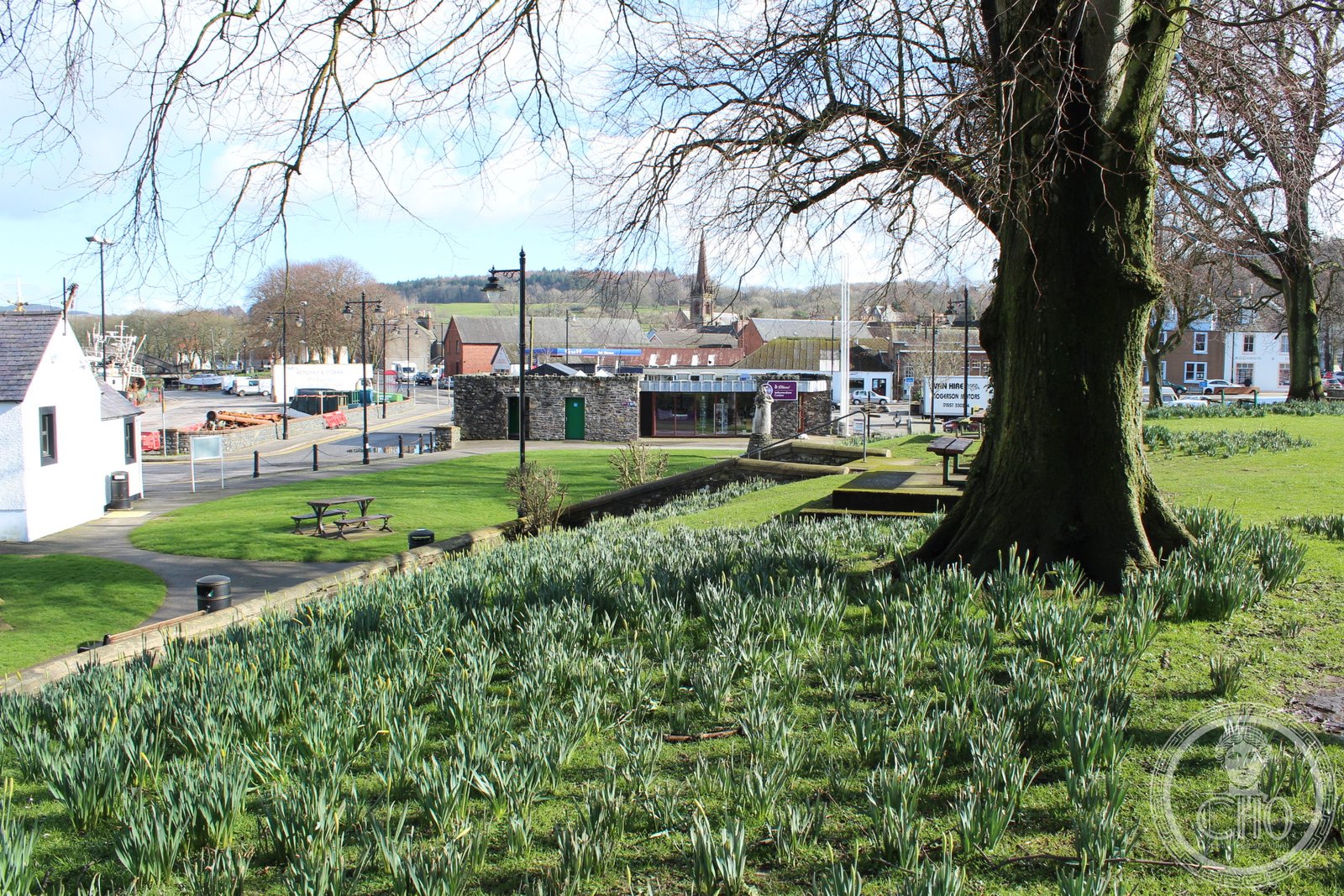
- Photo: Billy McCrorie, Kirkcudbright Tourist Information Office, Geograph Britain and Ireland via Wikimedia Commons, CC BY-SA 2.0