
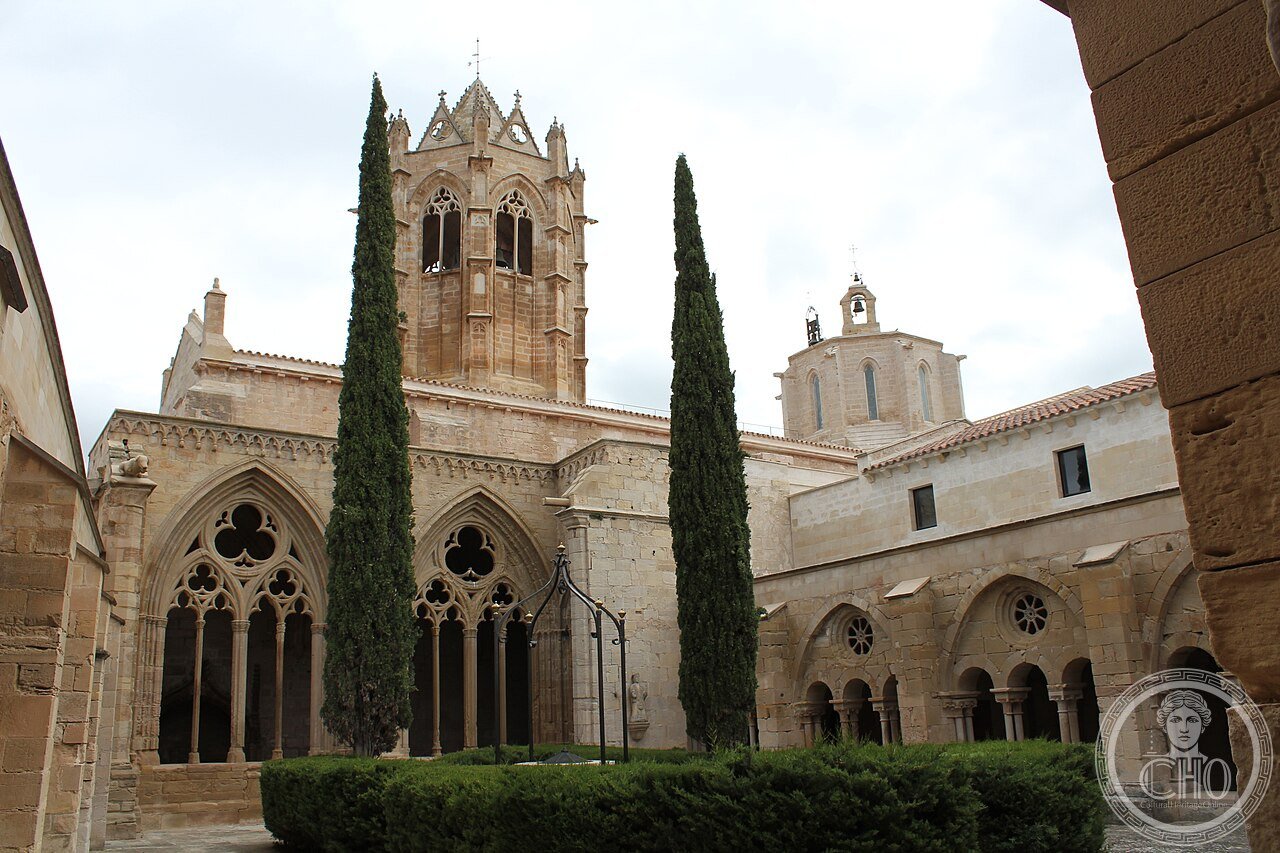
Nato da un gruppo di eremiti riuniti dal fondatore Ramon de Vallbona secondo la regola benedettina, nel 1175 gli eremiti maschi si ritirarono e la comunità femminile scelse di aderire pienamente all’ordine cistercense, ricevendo l’anno seguente la sua prima badessa. Da allora, salvo le interruzioni dovute alle guerre, Vallbona è rimasto abitato ininterrottamente da monache per più di 850 anni — l’unico dei tre monasteri del “triangolo cistercense” catalano, insieme a Poblet e Santes Creus, a non essere mai stato abbandonato. Nel presbiterio riposa la regina Violante d’Ungheria, moglie di Giacomo I il Conquistatore.
About Vallbona de les Monges Monastery
The Royal Monastery of Santa Maria de Vallbona, founded in the early 12th century, is regarded as the most important female Cistercian monastery in Catalonia and, remarkably, has been inhabited by nuns continuously since a stable community was established in 1153, making it, together with Poblet and Santes Creus, one of the three houses forming Catalonia’s celebrated “Cistercian triangle.” The community began as a double settlement of hermits, both male and female, who lived according to the Benedictine rule under their founder, Ramon de Vallbona; by 1175 the male hermits had departed, and the remaining stable community of nuns chose full incorporation into the Cistercian Order, receiving their first abbess, Oria Ramírez of Tulebras, the following year. Despite later crises and reforms — including those prompted by the Council of Trent — the monastery has remained continuously occupied by a community of nuns for more than 850 years, except during periods of war, preserving an unbroken liturgical and contemplative tradition that distinguishes Vallbona from its two sister houses, both of which were eventually secularised. Legal and jurisdictional confirmation of the abbey’s temporal power came under Abbess Saurena de Anglesola (1379-1392), who purchased from King Peter III of Aragon full civil and criminal jurisdiction over all the monastery’s possessions for 22,000 Barcelona salaries; at this period the community numbered around 150 nuns, most drawn from prominent Catalan noble families including the Cardonas, Cerveras, Queralts, Boixadors, and Anglesolas. To the right of the altar stands the tomb of Queen Violant of Hungary, wife of King James I of Aragon, “the Conqueror”; she died in 1251 at the monastery of Salas de Huesca, but her body was transferred to Vallbona in 1275, the date inscribed on her sarcophagus.
Key facts
- Early 12th century: founded as a double hermit community under Ramon de Vallbona
- 1153: a stable community established, marking the start of continuous nun habitation
- 1175-1176: full Cistercian incorporation; first abbess, Oria Ramírez of Tulebras
- 1379-1392: Abbess Saurena de Anglesola purchases civil and criminal jurisdiction from Peter III
- 1275: Queen Violant of Hungary’s remains transferred to the monastery
- Over 850 years: continuous nun habitation, uninterrupted except during wartime
- Unique status: the only still-active house of the Cistercian triangle
History
Vallbona’s unbroken 850-year record of continuous nun habitation, uninterrupted even as its sister houses of Poblet and Santes Creus were eventually secularised, makes it a genuinely exceptional survival among medieval European monasteries — one of the very few religious communities anywhere on the continent to maintain unbroken institutional and liturgical continuity across such an extended span. Abbess Saurena de Anglesola’s purchase of full civil and criminal jurisdiction over the monastery’s lands from King Peter III situates Vallbona within the broader medieval pattern of powerful abbesses wielding genuine temporal legal authority, comparable to similar arrangements at other major female monastic institutions across medieval Europe.
Queen Violant of Hungary’s burial at Vallbona, following the transfer of her remains a full 24 years after her death, ties the monastery directly into the royal history of the Crown of Aragon, extending the pattern of royal patronage and burial already well established at the neighbouring male houses of Poblet and Santes Creus into this uniquely enduring female community.
What you see
The monastery’s Romanesque and Gothic church, cloister, and surrounding conventual buildings remain in active use by the resident community of nuns, giving Vallbona a living continuity distinct from the more purely monumental character of Poblet and Santes Creus. Within the church, the tomb of Queen Violant of Hungary stands to the right of the altar, alongside other significant medieval funerary and artistic elements accumulated across the monastery’s long history.
Practical information
- Opening hours: generally open daily with seasonal variation for guided visits; check current hours before visiting, respecting the active monastic community
- Address: Carrer Major 17, 25268 Vallbona de les Monges, Lleida, Spain
Getting there
The Monastery of Vallbona de les Monges is located in the village of the same name, in the province of Lleida, Catalonia, reachable by road. GPS: 41.5246° N, 1.0882° E.
Nearby
- Poblet Monastery — another of the Cistercian triangle abbeys and royal pantheon, nearby
- Santes Creus Monastery — the third of the Cistercian triangle abbeys
- Lleida — the provincial capital, within driving distance
Sources
- Monestir de Vallbona official site — “History of the monastery” (monestirvallbona.cat)
- Cultural Heritage, Government of Catalonia — “Royal Monastery of Santa Maria de Vallbona” (patrimoni.gencat.cat)
- Wikipedia — “Vallbona Abbey” (en.wikipedia.org)
Find it on the map
See this place and what’s around it →📷 Become a Cultural Heritage Online photographer
Share your photos of places: they stay published under your name as the author. The more they're seen, the more you get noticed — and soon a contest will reward the most appreciated photos.
Log in or sign up free to add a photo