
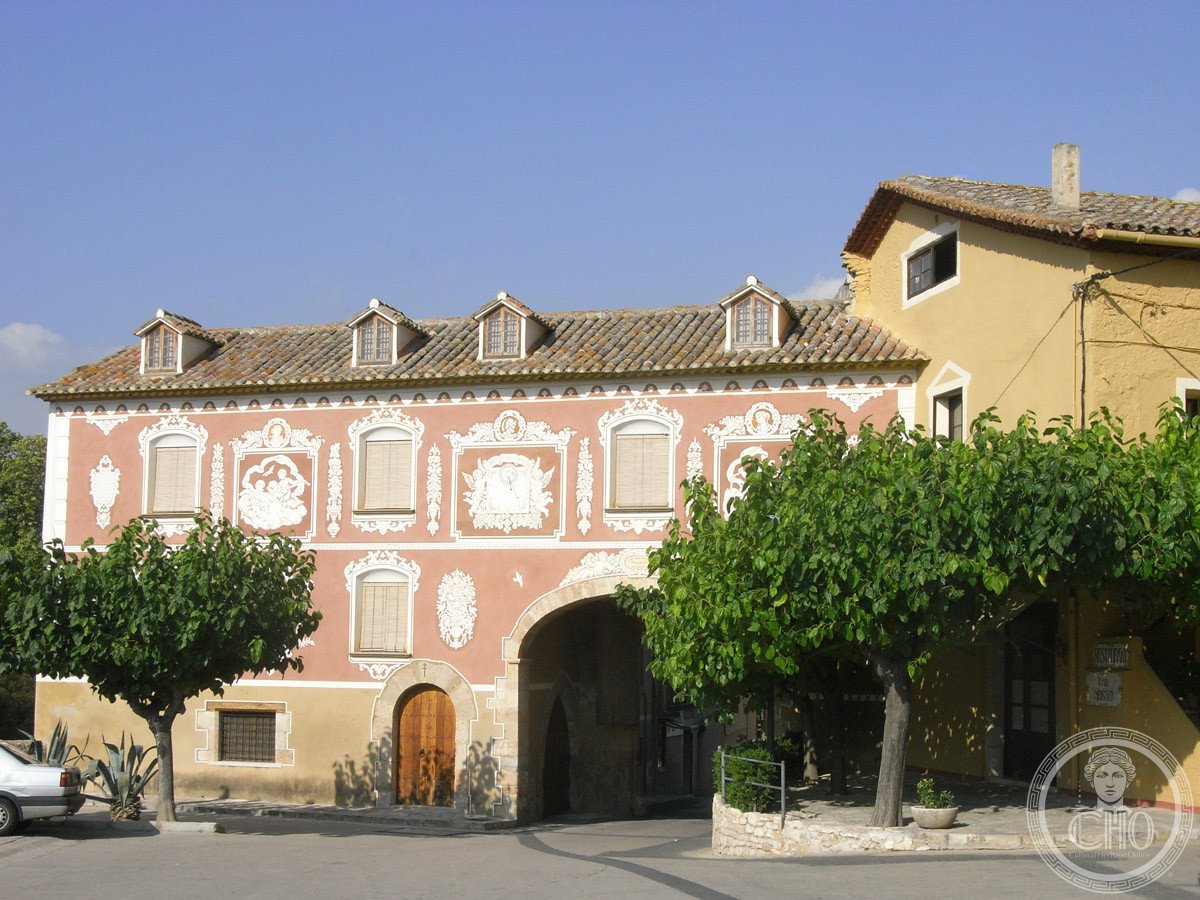
Founded in 1158, Santes Creus is one of the three monasteries of the Catalan “Cistercian triangle”, together with Poblet and Vallbona de les Monges. In the thirteenth century Peter III of Aragon — called the Great — chose this monastery as his burial place: his sarcophagus rests on a genuine Roman bathtub of red porphyry, brought by the admiral Roger de Lauria. In June 2010, during restoration work, the tomb was opened for the first time: the king’s body, mummified, still lay stretched out inside the tub, one of very few burials of a Catalan sovereign ever to reach us intact.
About Santes Creus Monastery
The origins of Santes Creus Monastery date to 1158, when the Lords of Montagut and Albà donated the village of Santes Creus to monks from the earlier monastery of Valldaura; the necessary papal decree establishing the new monastery came from Pope Alexander III, and construction of the monastic buildings began in 1174, with the powerful Moncada family serving as the monastery’s principal early patrons. Santes Creus, together with Poblet Monastery and the convent of Vallbona de les Monges, forms what is known as the “Cistercian triangle,” a cluster of three closely linked Cistercian foundations that played a significant role in consolidating royal and ecclesiastical power across Catalonia during the 12th century. Santes Creus reached its greatest splendour during the 13th and 14th centuries, when the kings of the Crown of Aragon selected the monastery as a royal pantheon: in the 13th century, Peter III of Aragon — known as Pere el Gran, “Peter the Great” — expressed his wish to be buried at Santes Creus, and a royal crypt was constructed for him and his son, King James II, a choice of burial site that many of the local Catalan nobility subsequently adopted for themselves as well. Peter’s monumental tomb, begun by the sculptor known as Master Bartomeu around 1296, presents an especially striking design: the king’s sarcophagus rests directly atop an authentic ancient Roman bathtub carved from red porphyry, reportedly brought to the monastery by the admiral Roger de Lauria, with the whole ensemble set beneath a Gothic pavilion and flanked by two lions likely of Mesopotamian origin. Remarkably, Peter’s tomb is one of the very few tombs of any European royal line never to have been exhumed, and the only tomb of a Catalan king never to have been plundered; when the sepulchre was finally opened during restoration works in June 2010, the king’s mummified body was found lying horizontally within the porphyry bathtub, arms folded over the chest, head tilted slightly to the left.
Key facts
- 1158: founded through a donation of the village to monks from Valldaura
- 1174: construction of the monastic buildings begins
- Cistercian triangle: Santes Creus, Poblet, and Vallbona de les Monges together
- 13th-14th centuries: chosen as the royal pantheon of the Crown of Aragon
- c. 1296: Peter III’s tomb begun by Master Bartomeu
- The sarcophagus: rests on a genuine Roman red porphyry bathtub
- June 2010: the tomb opened, revealing Peter’s mummified body still in place
History
Santes Creus’s role within the “Cistercian triangle” alongside Poblet and Vallbona de les Monges situates the monastery within a deliberate 12th-century strategy of royal and ecclesiastical power consolidation across Catalonia, three closely interlinked Cistercian foundations that together helped extend both religious and secular authority across the region during a formative period of Crown of Aragon statehood. Peter the Great’s extraordinary tomb, combining an ancient Roman porphyry bathtub with 13th-century Gothic royal funerary sculpture, exemplifies the broader medieval European practice of reusing prestigious antique materials — spolia — to enhance the perceived grandeur and legitimacy of new royal monuments.
The 2010 opening of Peter’s previously unviolated tomb represents an exceptionally rare opportunity for direct scientific and historical study of a medieval European monarch’s actual remains, since the vast majority of comparable royal tombs across the continent were disturbed, looted, or relocated at some point over the intervening seven centuries — making Santes Creus’s preserved sepulchre a genuinely unique source of bioanthropological and paleopathological evidence about a 13th-century Catalan king.
What you see
The monastery complex preserves its Cistercian Gothic church and cloister, alongside the royal chapter house and the ornate Porta Reial (Royal Gate). Within the church, the Gothic royal mausoleums of Peter the Great and of James II with his wife remain the site’s most significant funerary monuments, Peter’s tomb distinguished by its reused Roman porphyry bathtub sarcophagus set beneath an elaborate Gothic canopy.
Practical information
- Opening hours: generally open daily with seasonal variation; check current hours before visiting; admission fee applies
- Address: Plaça de Jaume el Just, 43815 Aiguamúrcia, Tarragona, Spain
Getting there
The Monastery of Santes Creus is located in the municipality of Aiguamúrcia, in the province of Tarragona, Catalonia, reachable by road. GPS: 41.3463° N, 1.3641° E.
Nearby
- Poblet Monastery — another of the Cistercian triangle abbeys and royal pantheon, nearby
- Vallbona de les Monges — the third monastery of the Cistercian triangle
- Tarragona — the provincial capital, within driving distance
Sources
- Wikipedia — “Santes Creus” (en.wikipedia.org)
- Cultural Heritage, Government of Catalonia — “Opening the tomb of Peter the Great” (patrimoni.gencat.cat)
- La Ruta del Cister — “Royal Monastery of Santes Creus” (larutadelcister.info)
Find it on the map
See this place and what’s around it →📷 Become a Cultural Heritage Online photographer
Share your photos of places: they stay published under your name as the author. The more they're seen, the more you get noticed — and soon a contest will reward the most appreciated photos.
Log in or sign up free to add a photo