
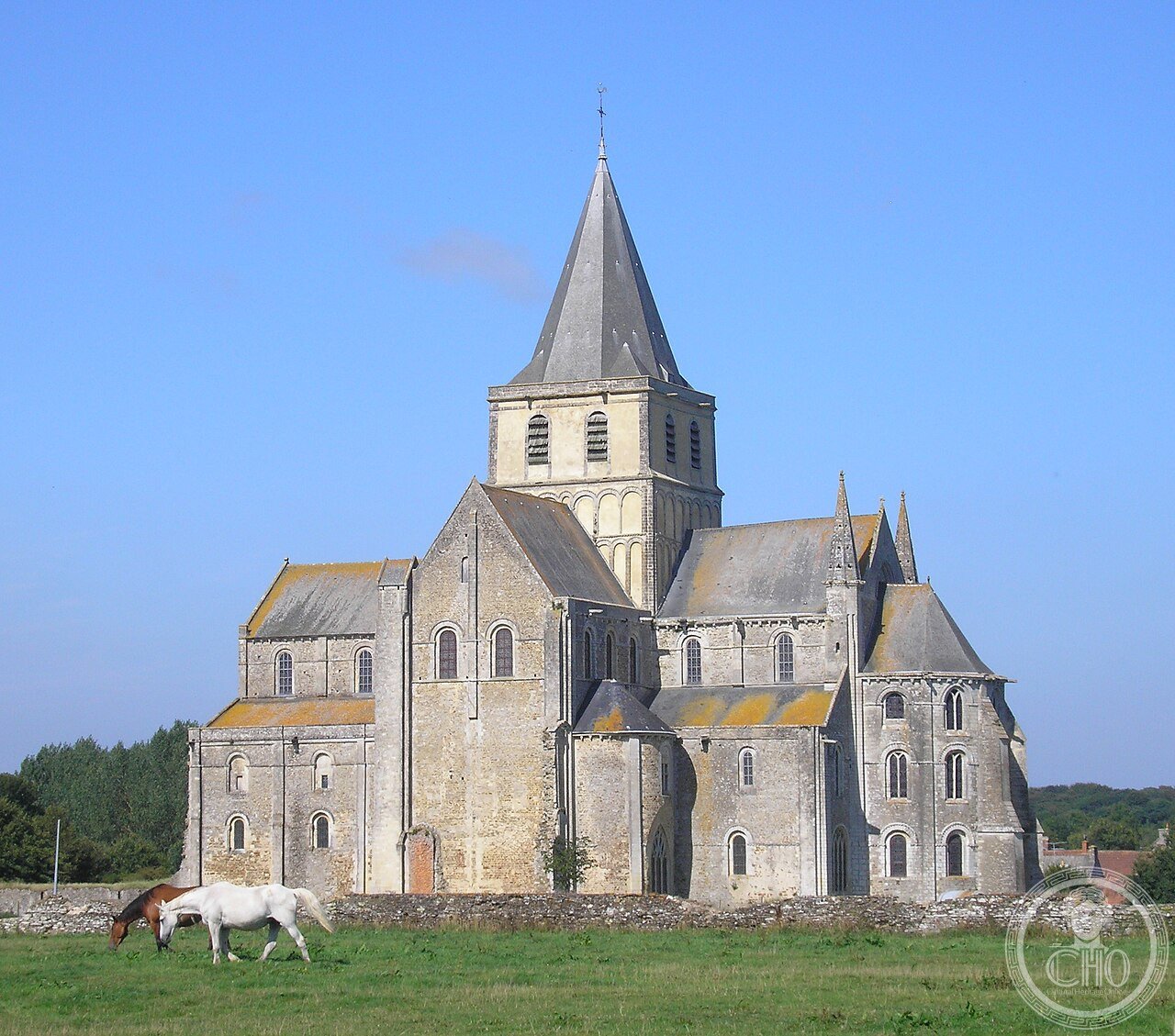
Fondato intorno al 510 da San Vigor, primo vescovo di Bayeux, il monastero fu distrutto durante le invasioni vichinghe del IX secolo. Rifondato nel 1032 da Roberto il Magnifico, duca di Normandia, sullo stesso sito, raggiunse il suo apice a fine Duecento come “abbazia reale” sotto la protezione del re di Francia. La sua abside a tre piani, attraversata da quindici finestre, è unica al mondo e servi da modello per numerose chiese inglesi dopo la conquista normanna.
About Cerisy-la-Forêt Abbey
The abbey at Cerisy-la-Forêt was originally established around 510 by Vigor, the first Bishop of Bayeux, as a monastery dedicated to Saints Peter and Paul, but the community was destroyed during the Viking invasions of the 9th century. The abbey was refounded in 1032 by Robert the Magnificent, Duke of Normandy (father of William the Conqueror), directly on the site of the older monastery the Normans themselves had earlier destroyed — this time dedicated to Saint Vigor. The abbey church was constructed during the reign of William the Conqueror, Robert’s son, and completed by the end of the 11th century, making it a cornerstone of Norman ecclesiastical history and a major example of Norman Romanesque architecture that would go on to serve as a model for the construction of many English churches following the Conquest. The community became an important economic and intellectual centre, welcoming several kings of France on multiple occasions and counting numerous notable intellectuals among its members. In 1178, Pope Alexander III confirmed the abbey’s privileges with a special bull, and Cerisy reached the height of its glory toward the end of the 12th century, bearing the title of “royal abbey” under the direct protection of the King of France. The church’s most extraordinary architectural feature is its three-storey apse, pierced by fifteen windows — a design unique in the world, lending the monument exceptional visual power.
Key facts
- Original foundation: c. 510, by Saint Vigor, first Bishop of Bayeux
- Viking destruction: 9th century
- Refoundation: 1032, by Robert the Magnificent, Duke of Normandy, father of William the Conqueror
- Church construction: during William the Conqueror’s reign, completed by the end of the 11th century
- 1178: privileges confirmed by Pope Alexander III via special bull
- Royal abbey status: under the direct protection of the King of France, at the height of its glory in the late 12th century
- Three-storey apse: pierced by 15 windows, a design unique in the world
- Architectural influence: served as a model for many English churches after the Norman Conquest
History
Robert the Magnificent’s decision to refound the abbey directly on the site of the Viking-destroyed 6th-century monastery, rather than establishing an entirely new foundation elsewhere, reflects a broader ducal Norman strategy of reclaiming and re-consecrating sites with genuine, documented pre-Viking Christian heritage — a deliberate act of continuity that lent the newly refounded institution greater historical legitimacy than a purely new foundation could claim. The church’s subsequent construction during William the Conqueror’s own reign, and its documented influence on English ecclesiastical architecture following the 1066 Conquest, situates Cerisy directly within the broader architectural transmission of Norman Romanesque style into England, part of the same wave of Norman ecclesiastical building that reshaped English cathedral and church architecture for generations after the Conquest.
The abbey’s elevation to “royal abbey” status under direct French royal protection, confirmed by Pope Alexander III’s 1178 bull, reflects Cerisy’s genuine institutional prominence by the late 12th century — a period when the abbey attracted repeated royal visits and counted significant intellectual figures among its community, situating Cerisy within the upper tier of medieval Norman monastic institutions in terms of both religious and political significance. The unique three-storey, fifteen-window apse represents a genuinely singular architectural achievement within the broader Norman Romanesque tradition, its unmatched design giving Cerisy a specific claim to architectural distinction beyond its already substantial historical and political significance.
What you see
The three-storey apse, pierced by fifteen windows and unique anywhere in the world, is the abbey’s essential single architectural feature, rewarding close study of a design with no direct parallel elsewhere in Romanesque church building. The Norman Romanesque nave and transept, dating substantially to William the Conqueror’s own reign, give visitors direct access to architecture that directly influenced English church building after 1066. The site’s setting within the Cerisy forest adds a further scenic dimension to any visit.
Practical information
- Opening hours: generally open daily, check current hours before visiting; free admission
- Address: L’Étang, 50680 Cerisy-la-Forêt, France
Getting there
Cerisy-la-Forêt is reachable by car from Saint-Lô (approximately 20 minutes) in the Manche department, Normandy. GPS: 49.1972° N, -0.9324° E.
Nearby
- Saint-Lô — approximately 20 minutes away; the Manche department’s capital
- Bayeux — within reach; home to the famous Bayeux Tapestry depicting the Norman Conquest
- D-Day beaches — the Normandy landing beaches, within the same general region
Sources
- Wikipedia — “Cerisy Abbey” (en.wikipedia.org)
- Normandy Abbeys — “Cerisy la Forêt Abbey” (normandy-abbeys.com)
- SpottingHistory — “St. Vigor Abbey Church” (spottinghistory.com)
Find it on the map
See this place and what’s around it →📷 Become a Cultural Heritage Online photographer
Share your photos of places: they stay published under your name as the author. The more they're seen, the more you get noticed — and soon a contest will reward the most appreciated photos.
Log in or sign up free to add a photo