
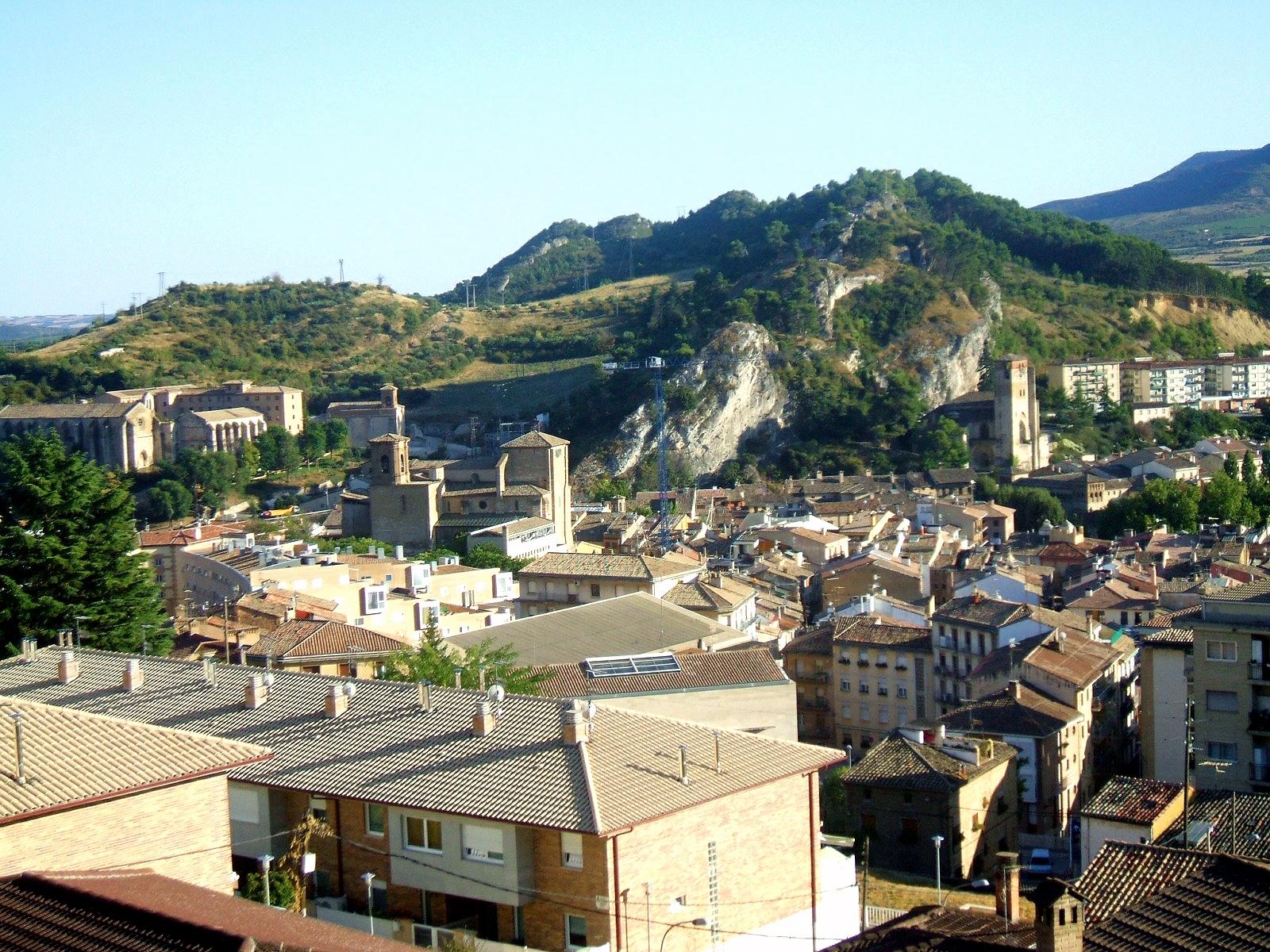
A medieval pilgrimage town in northern Spain where Romanesque churches and palaces mark a crossroads of cultures on the Way of St. James.
At a glance
Estella-Lizarra stands in Navarre, southwest of Pamplona, near the boundaries of La Rioja and Álava. The town curves around a dramatic meander of the Ega river, a geography that shaped its medieval importance. Today, its Romanesque monuments—among Spain’s finest—testify to centuries of pilgrimage and prosperity.
History
King Sancho Ramírez granted Estella a charter in 1090, establishing the town beside the fortified settlement of Lizarra. The royal privilege attracted settlers from across Europe. Frankish immigrants—mainly Occitans from Auvergne and Limousin—arrived alongside Jewish communities and local Navarrese inhabitants, creating a rare medieval melting pot.
The town’s strategic position on the Way of St. James pilgrimage route to Santiago de Compostela brought wealth and continuous growth. This prosperity funded extraordinary architectural patronage throughout the medieval period.
What you see
Estella’s architectural legacy centers on its Romanesque churches and civic buildings. The Church of San Pedro de la Rúa and the Church of San Miguel showcase the style’s local interpretation, while the Palacio de los Reyes de Navarra reflects the town’s royal connections and economic reach. These monuments cluster through the medieval core, revealing layers of 11th- and 12th-century ambition.
Cultural significance
Estella represents a pivotal junction in European medieval history. The convergence of pilgrimage, royal patronage, and multicultural settlement created a town where Romanesque innovation flourished. Its architecture influenced broader developments in Spanish medieval art, while its social composition illuminates the cosmopolitan reality of medieval Iberia.
Key facts
- Country: Spain
- Region: Navarre
- Founded: 1090
- Coordinates: 42.67°N, 2.03°W
Practical information & getting there
Estella-Lizarra lies on the Camino de Santiago (Way of St. James) pilgrimage route. The town is accessible by road from Pamplona, approximately 40 kilometers away. Contact local tourism offices for visitor facilities, opening hours, and guided tours of the churches and palaces.
Sources & resources
Find it on the map
See this place and what’s around it →📷 Become a Cultural Heritage Online photographer
Share your photos of places: they stay published under your name as the author. The more they're seen, the more you get noticed — and soon a contest will reward the most appreciated photos.
Log in or sign up free to add a photo