
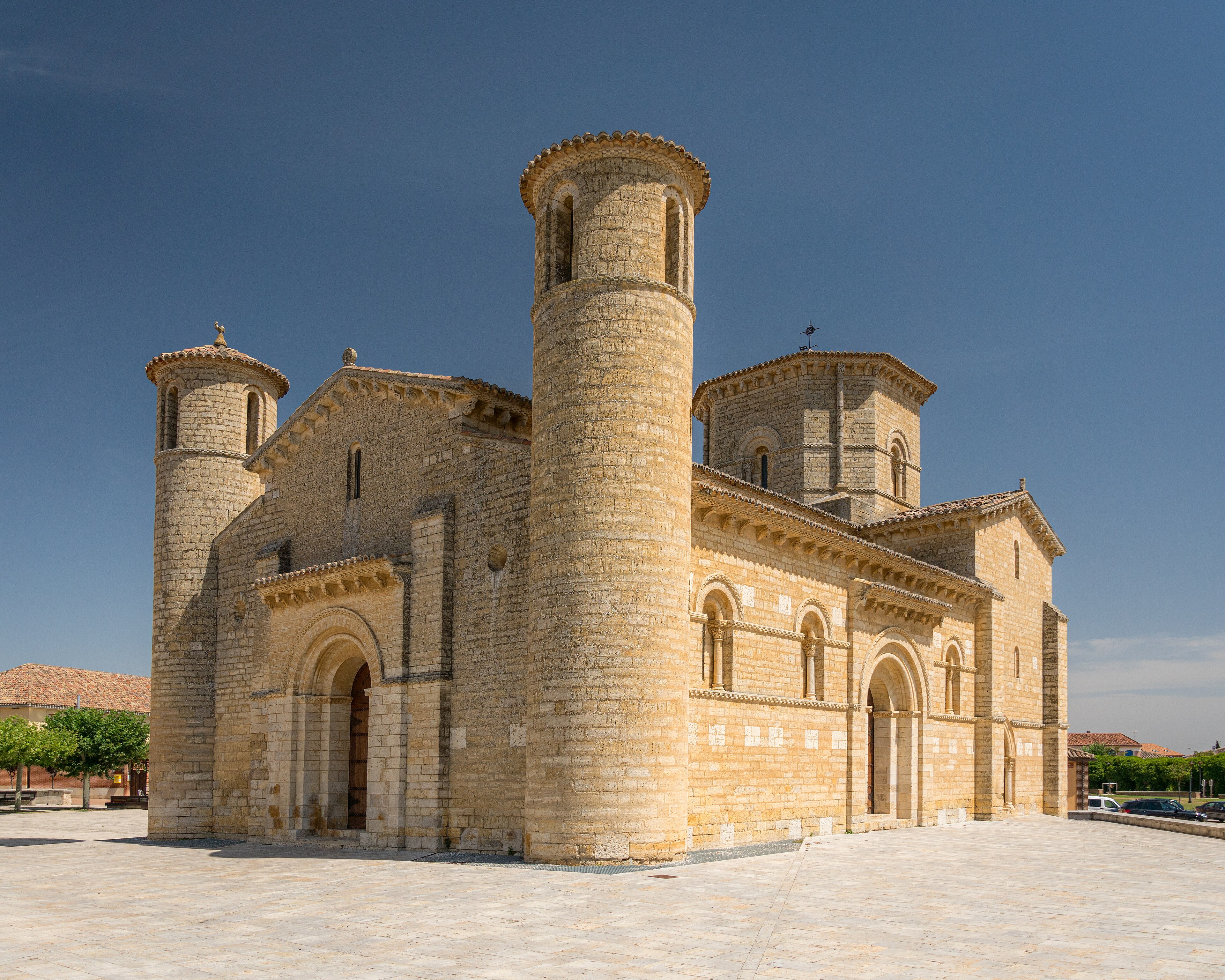
A masterpiece of Romanesque architecture standing at a crossroads of medieval pilgrimage, where devotion to Saint Martin shaped the spiritual landscape of northern Spain.
At a glance
This 11th-century church in Frómista represents the Romanesque style at its most refined. Positioned on the Way of St. James, one of Christendom’s greatest pilgrimage routes, it served both as a spiritual waystation and architectural statement. The church remains a testament to the architectural ambitions of medieval Spain.
History
Built during the 11th century, the Church of Saint Martin of Tours emerged as pilgrims traveled the Way of St. James toward Santiago de Compostela. Its construction reflects the religious and cultural momentum of the medieval pilgrimage movement. The church was dedicated to Saint Martin, whose veneration was widespread throughout medieval Europe.
What you see
The building exemplifies Romanesque design principles characteristic of 11th-century Iberian architecture. Its articulate stone work, proportioned masses, and decorative elements reveal the sophisticated craftsmanship of medieval builders. The church’s form and ornamentation demonstrate the integration of local building traditions with broader Romanesque aesthetics.
Cultural significance
The church occupies a vital position on the Way of St. James, one of medieval Europe’s most consequential pilgrimage routes. Its location made it a focal point for traveling devotees and contributed to Frómista’s importance as a pilgrimage destination. The structure embodies the intersection of religious devotion, architectural ambition, and cultural exchange that defined medieval Spain.
Key facts
- Country: Spain
- City: Frómista, Palencia
- Coordinates: 42.266715, −4.406932
- Date: 11th century
- Style: Romanesque
Practical information & getting there
The church is located in Frómista in the province of Palencia, along the Way of St. James hiking route. For visiting hours, facilities, and current access details, consult local tourism resources or the church directly before your visit.
Sources & resources
Find it on the map
See this place and what’s around it →📷 Become a Cultural Heritage Online photographer
Share your photos of places: they stay published under your name as the author. The more they're seen, the more you get noticed — and soon a contest will reward the most appreciated photos.
Log in or sign up free to add a photoIs this page about you?
This page is read by travellers and heritage enthusiasts who find it on Google. Tell us how you are connected to this place and we will take it from there.