

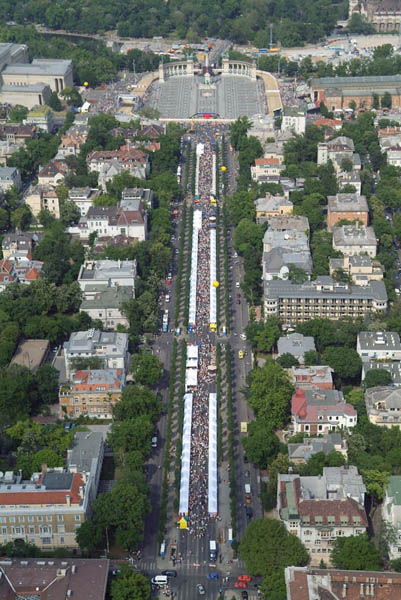
A grand nineteenth-century boulevard lined with Neo-Renaissance mansions, connecting the heart of Budapest to its largest public park. UNESCO World Heritage Site.
At a glance
Andrássy Avenue stretches from Erzsébet Square to the Városliget, Budapest’s most prominent nineteenth-century urban thoroughfare. The street showcases masterful architectural design and remains central to the city’s cultural and commercial life, home to world-class institutions and luxury shopping.
History
The avenue was laid out in 1872 as part of Budapest’s ambitious modernisation during the Austro-Hungarian era. Its creation reflects the period’s confidence and prosperity, linking the city centre to one of Europe’s finest public parks. The street quickly became the preferred address for the urban elite, housing government ministers, industrialists and cultural figures.
What you see
Andrássy Avenue presents a remarkable collection of Neo-Renaissance mansions and townhouses with ornate facades and richly appointed interiors. Key buildings include the State Opera House, the Zoltán Kodály Memorial Museum and Archives, the Hungarian University of Fine Arts, and the Ferenc Hopp Museum of East Asian Arts. A former Ballet School building—long under reconstruction—remains an integral part of the streetscape.
Cultural significance
The avenue represents nineteenth-century European urban planning at its most ambitious. It embodies the aspirations of Budapest during the Austro-Hungarian Compromise era. Today it serves as a cultural spine, hosting major theatres, diplomatic missions and artistic institutions alongside contemporary commerce.
Key facts
- Country: Hungary
- City: Budapest
- Coordinates: 47.5097, 19.07
- UNESCO World Heritage Site: 2002
Practical information & getting there
Andrássy Avenue is easily reached by Budapest’s public transport system. The street itself is pedestrian-friendly and lined with cafes and restaurants ideal for exploring on foot.
Sources & resources
Find it on the map
See this place and what’s around it →📷 Become a Cultural Heritage Online photographer
Share your photos of places: they stay published under your name as the author. The more they're seen, the more you get noticed — and soon a contest will reward the most appreciated photos.
Log in or sign up free to add a photo