
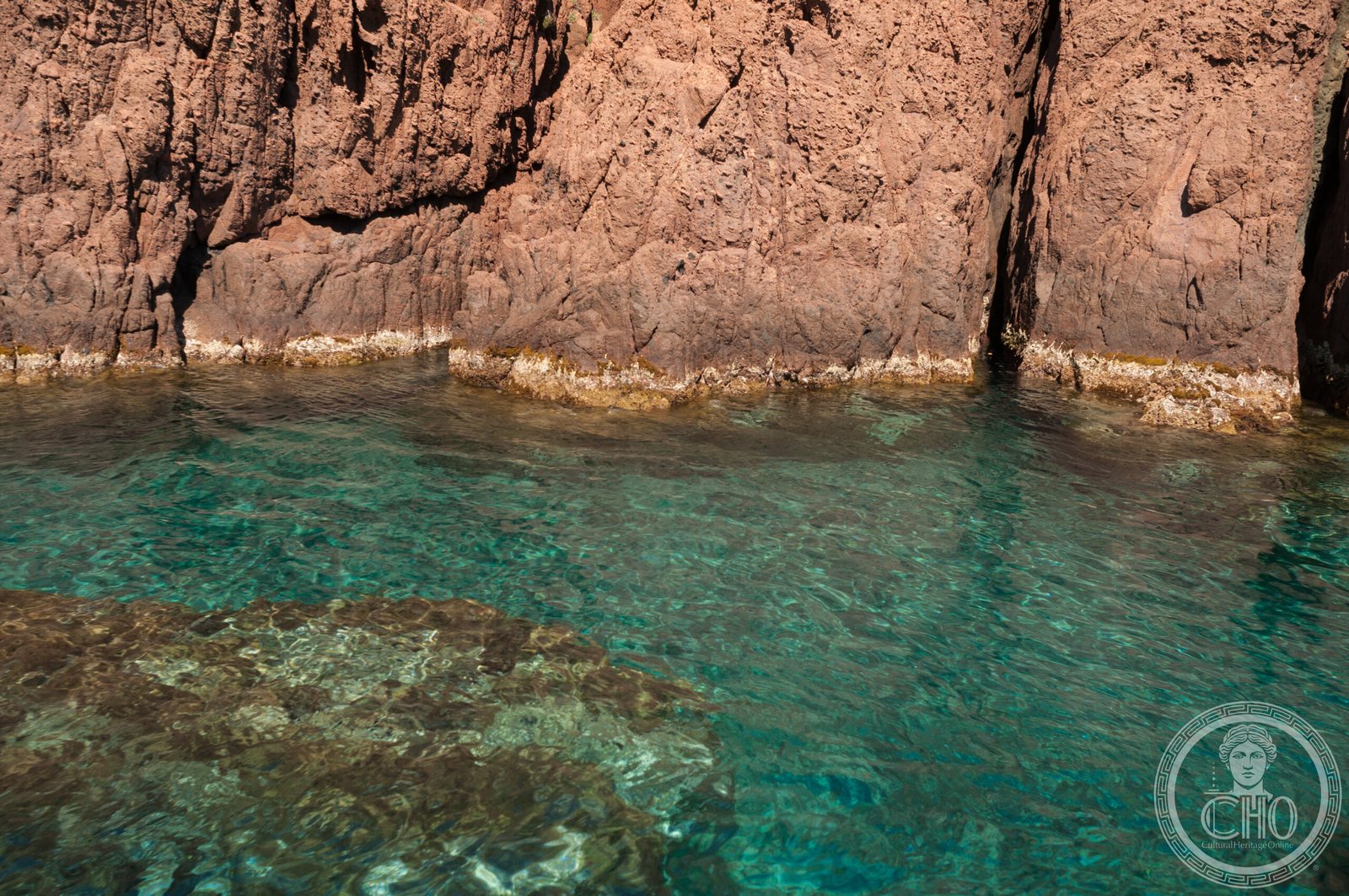
On the wild west coast of Corsica, where volcanic rock meets the Mediterranean in a collision of impossible colours, the UNESCO World Heritage site of the Gulf of Porto encompasses three of the most dramatic natural landscapes in Europe: the Scandola Nature Reserve with its beetling red porphyry cliffs and crystal marine reserve, the Calanche of Piana with their sculpted orange granite towers and needles, and the pristine enclosed bay of the Gulf of Girolata, accessible only by sea or on foot. UNESCO 1983.
Significance and overview
The Gulf of Porto UNESCO site covers approximately 11,800 hectares on the west coast of Corsica, including both terrestrial and marine zones. UNESCO inscribed it in 1983 (ref. 258) as an outstanding natural site of exceptional scenic beauty and ecological importance. The property encompasses three distinct but interconnected landscapes: the Scandola Nature Reserve (a protected peninsula of volcanic rock with a strict marine reserve), the Calanche of Piana (extraordinary orange and red granite formations eroded into towers, arches, and needles), and the Gulf of Girolata (a pristine bay surrounded by maquis-covered mountains, with a small fishing hamlet accessible only by boat or a 1.5-hour trail).
The site is notable for both its geological interest (the red and orange porphyry and granite of volcanic origin, some 250 million years old) and its marine ecology (the Scandola marine reserve is one of the most pristine in the Mediterranean, with exceptional clarity, rich fish life, and nesting ospreys).
Historical background
The Corsican west coast has been inhabited since the Neolithic period, and the landscape of the Gulf of Porto shows traces of prehistoric Corsican culture. The Genoese, who controlled Corsica from the 13th century until 1768, built watchtowers along the coast (the Tour de Capo Rosso and the Tower of Porto are the most prominent) to warn of pirate raids. The small settlement at Girolata was a fishing community; its extreme inaccessibility meant it was never developed beyond a handful of stone houses.
The Scandola Nature Reserve was created in 1975 — one of the first combined land and marine reserves in France — and became the nucleus of the UNESCO inscription eight years later. The reserve is managed by the Parc Naturel Régional de Corse and entry to the land area is strictly prohibited; the marine zone is open to non-motorised boats and diving.
Key features
The Scandola cliffs are among the most visually dramatic in the Mediterranean: vertical walls of red and purple porphyry, riddled with sea caves and stacks, plunging directly into water of extraordinary clarity and colour — ranging from turquoise in the shallows to deep indigo offshore. Ospreys (Pandion haliaetus) nest on the cliff ledges and can be observed fishing in the bay; sea eagles and peregrine falcons are also present.
The Calanche of Piana are a UNESCO-listed geological wonder: the valley of the Spelunca gorge opens onto a landscape of surreal orange granite formations, where erosion has sculpted the rock into shapes resembling animals, faces, and abstract sculptures. The D81 road cuts through the Calanche, and viewpoints allow observation of the most dramatic formations, particularly at sunset when the orange rock catches the last light.
Ecological importance
The Scandola marine reserve is recognised as one of the healthiest marine ecosystems remaining in the western Mediterranean. The strict no-take zone has allowed fish populations to recover to near-natural levels: groupers, sea breams, moray eels, and lobsters reach sizes rarely seen elsewhere on the French coast. The reserve acts as a source population for adjacent fisheries, and its conservation success is frequently cited as a model for Mediterranean marine protected area management. The terrestrial zone supports a rich Corsican maquis ecosystem with endemic plants, reptiles, and birds.
UNESCO criteria
The Gulf of Porto was inscribed under criteria (vii) and (viii). Criterion (vii) recognises the site’s exceptional natural beauty — the dramatic interplay of red volcanic cliffs, emerald sea, and fragrant maquis coastline is one of the most spectacular Mediterranean landscapes. Criterion (viii) acknowledges the site’s geological significance as an outstanding example of volcanic coastal landforms, including the red porphyry cliffs of Scandola and the granite formations of the Calanche.
Visitor experience
The most popular way to experience the UNESCO site is by boat tour from Porto (departing daily in summer): two-hour excursions combine a circuit of the Scandola cliffs with a landing at Girolata village. The Calanche of Piana are best explored on foot (the Chalets de Piana walk) or by road (the D81 between Porto and Piana). Diving in the Scandola marine reserve is permitted with licensed dive operators from Porto. The Gulf of Girolata is reached on foot via a 1.5-hour trail from Girolata parking (the Col de la Croix).
Getting there
The Gulf of Porto is accessible from Ajaccio (80 km south via D81 — 2 hours by car) or from Calvi (70 km north — 2 hours). Fly to Ajaccio (Napoleon Bonaparte Airport) or Calvi from Paris, Lyon, or Nice. Porto village is the main base; ferry connections from Marseille, Nice, and Toulon reach Ajaccio or Calvi. GPS (Gulf of Porto): 42.333° N, 8.633° E.
Nearby context
The Gorges de Spelunca begin immediately east of Porto — a dramatic river gorge with Genoese bridges, ideal for trekking. Piana village (15 km south of Porto) is one of the most beautiful villages in Corsica and provides excellent access to the Calanche. The GR20, France’s most celebrated long-distance hiking trail, crosses the mountains above the UNESCO site. Ajaccio, Napoleon’s birthplace, is 80 km south with museums and Genoese citadel.
Find it on the map
See this place and what’s around it →📷 Become a Cultural Heritage Online photographer
Share your photos of places: they stay published under your name as the author. The more they're seen, the more you get noticed — and soon a contest will reward the most appreciated photos.
Log in or sign up free to add a photo