Belize has 1 UNESCO World Heritage Site — a sprawling marine system that protects the second-longest barrier reef on earth, three mid-ocean atolls, hundreds of cayes, and some of the Caribbean’s most biodiverse coral ecosystems. That single inscription, made in 1996, encompasses seven distinct protected areas and covers 960 square kilometres of the western Caribbean. From Cultural Heritage Online.
Why Belize’s list looks the way it does
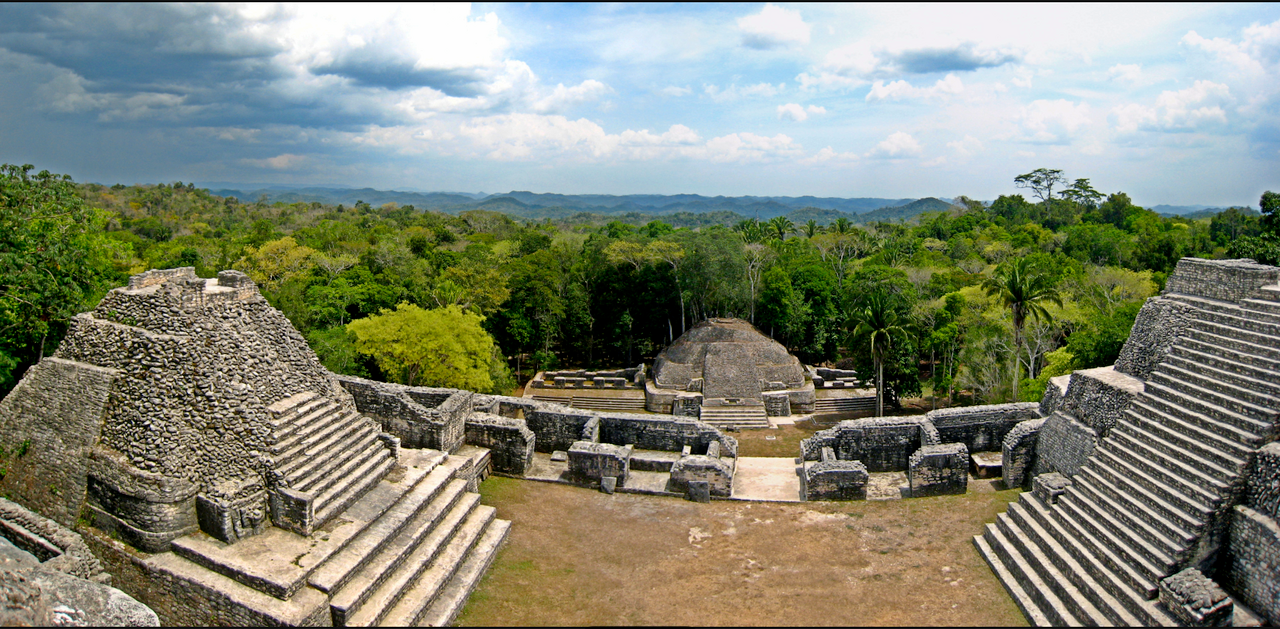
Belize is a small Central American nation of just under 23,000 square kilometres, but roughly 40 percent of its territory is protected in some form — national parks, forest reserves, marine protected areas. Its UNESCO footprint reflects that emphasis on natural systems rather than the built environment. The country’s pre-Columbian Maya heritage, while archaeologically significant, has not produced a World Heritage inscription; major sites such as Caracol, Lamanai, and Xunantunich remain nationally protected but fall outside the UNESCO list as of 2025.
The Belize Barrier Reef Reserve System, the sole listed property, was selected under natural criteria vii, ix, and x — meaning it was recognised for outstanding natural beauty, its role in illustrating major stages of Earth’s ecological history, and for providing habitat for threatened and endangered species. The decision to inscribe seven protected areas as a single serial property reflects the ecological interconnection between reef, atoll, seagrass, and mangrove systems that cannot be evaluated in isolation.
The first inscriptions
The Belize Barrier Reef Reserve System received its World Heritage designation in 1996 at the 20th session of the World Heritage Committee. It remains the country’s first and, as of mid-2025, only inscription. The site is not a transnational designation — it covers only Belizean waters — though the reef itself forms one section of the much larger Mesoamerican Barrier Reef System, which stretches roughly 900 kilometres from the Yucatán coast of Mexico to the Bay Islands of Honduras.
- Belize Barrier Reef Reserve System (1996) — natural, UNESCO reference no. 764
Between 2009 and 2018 the site appeared on UNESCO’s List of World Heritage in Danger, primarily because of threats from coastal development, unsustainable fishing, water pollution, and the early effects of climate-related coral bleaching. Its removal from the Danger List in 2018 followed the Belizean government’s decision to ban offshore oil exploration within the World Heritage property and to strengthen legal protections for mangroves.
The most visited — and the alternatives
The Great Blue Hole, a circular marine sinkhole 318 metres across and 124 metres deep on Lighthouse Reef, draws the most international attention of anything within the Belize Barrier Reef Reserve System. Jacques Cousteau’s 1971 expedition brought it to global awareness, and it has appeared on nearly every list of premier dive destinations since. The karst cavern formed during Quaternary glaciation when sea levels were far lower; as oceans rose, the cave flooded, preserving stalactites that now allow scientists to date successive glacial periods going back 153,000 years.
Several of the other six protected areas within the system offer comparable ecological richness with considerably fewer visitors. Glover’s Reef Marine Reserve, an oval atoll 32 kilometres long, contains an interior lagoon dotted with around 850 reef patches and is one of only two remaining viable spawning sites for the endangered Nassau grouper. Half Moon Caye Natural Monument holds a nesting colony of red-footed boobies and was the first marine protected area established in Central America, with a bird sanctuary designation dating to 1924. Hol Chan Marine Reserve, whose name is Mayan for “little channel,” protects a natural cut in the reef near Ambergris Caye where nurse sharks, southern stingrays, sea turtles, and manatees congregate year-round.
Natural and shared sites
The Belize Barrier Reef Reserve System is entirely natural in designation, and all seven of its component areas — Glover’s Reef Marine Reserve, Turneffe Atoll, Lighthouse Reef, the Great Blue Hole, Half Moon Caye Natural Monument, Hol Chan Marine Reserve, and South Water Caye Marine Reserve — protect marine and coastal ecosystems rather than archaeological or built heritage. Together they harbour around 70 species of hard coral, 36 of soft coral, and approximately 500 fish species. Turneffe Atoll, the largest of Belize’s three atolls, adds more than 500 fish species and critical nursery habitat for lobster, conch, and American crocodiles across a network of mangrove islands.
The reef sits within the Mesoamerican Barrier Reef System, the second largest coral reef system in the world after Australia’s Great Barrier Reef, but Belize’s inscription is an independent national designation rather than a shared transnational site. The ecological connections to Mexican and Guatemalan waters are real, but the World Heritage boundaries are drawn around Belizean protected areas alone.
How to find them
All seven protected areas within the Belize Barrier Reef Reserve System are accessible by boat from the mainland or from the island communities of Ambergris Caye and Caye Caulker. Hol Chan is the closest component to a major resort hub, roughly 8 kilometres from San Pedro; the outer atolls — Turneffe, Lighthouse Reef, and Glover’s Reef — require longer crossings and are typically reached on live-aboard dive vessels or organised day charters. Half Moon Caye is accessible as a day trip from Lighthouse Reef and receives far fewer visitors than the Great Blue Hole despite sitting on the same atoll.
Belize’s World Heritage sites sit alongside thousands of other places on CHO’s interactive map, with GPS and sourced editorial history for each. See also our guides to Italy’s and France’s UNESCO sites, and our piece on cultural travel beyond mass tourism.
Frequently Asked Questions
How many UNESCO World Heritage Sites does Belize have?
Belize has one UNESCO World Heritage Site: the Belize Barrier Reef Reserve System, inscribed in 1996. It is a natural property comprising seven protected marine areas covering 960 square kilometres of the western Caribbean.
What was Belize’s first UNESCO World Heritage Site?
The Belize Barrier Reef Reserve System, inscribed at the 20th session of the World Heritage Committee in 1996, is both Belize’s first and only UNESCO World Heritage Site. It was recognised under natural criteria vii, ix, and x for its biodiversity, ecological processes, and natural beauty.
Why was the Belize Barrier Reef on the UNESCO Endangered List?
The site was placed on UNESCO’s List of World Heritage in Danger in 2009, primarily due to threats from coastal development, overfishing, mangrove clearance, and coral bleaching linked to rising sea temperatures. It was removed from the Danger List in 2018 after Belize banned offshore oil drilling within the property’s boundaries and strengthened protections for mangroves.
Does Belize have any UNESCO-listed Maya archaeological sites?
No. Despite the presence of significant pre-Columbian sites such as Caracol, Lamanai, and Xunantunich, none of Belize’s Maya archaeological sites carry UNESCO World Heritage designation as of mid-2025. These sites are protected under Belizean national law but have not been put forward for, or received, inscription on the World Heritage List.
Sources used in this article
- UNESCO — State Party Belize — World Heritage list.
- UNESCO — Belize: World Heritage Sites.
- CHO magazine — What is a World Heritage Site?
- CHO — Interactive map of heritage sites.