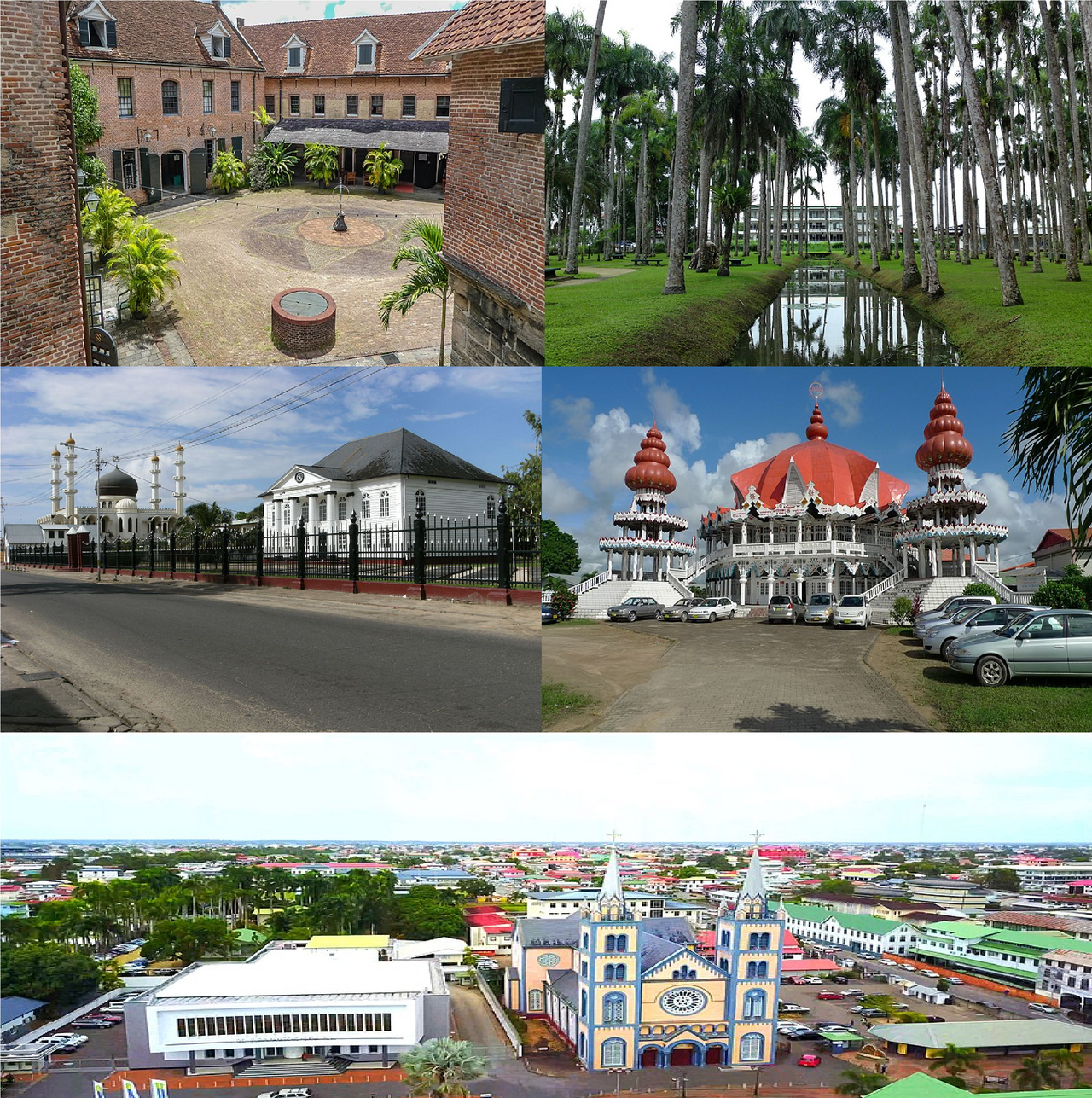
Suriname has three UNESCO World Heritage Sites — a small but remarkably varied list that spans Amazonian rainforest of continental scale, a canal-laced colonial capital, and the oldest synagogue of architectural significance in the Americas. Together they form a portrait of a country shaped by Indigenous ecology, Dutch mercantile ambition, and one of the most diverse diasporas in the Western Hemisphere. From Cultural Heritage Online.
Why Suriname’s list looks the way it does
Suriname is a small nation on South America’s northeastern Atlantic coast, yet it contains roughly 90 percent unbroken tropical forest — one of the highest proportions of any country on earth. Its UNESCO list reflects that reality: the single natural site accounts for the overwhelming majority of the country’s protected land. The two cultural sites, by contrast, are compact in area but extraordinary in layered significance, carrying histories that connect four continents.
Suriname’s colonial past under the Dutch, and before them the English, left behind a built environment unlike anywhere else in South America. Simultaneously, the transatlantic slave trade, the arrival of Sephardic Jewish refugees from Brazil and Portugal, and later waves of indentured workers from Asia produced a social fabric with few parallels. UNESCO’s selection — forest, colonial town, and Sephardic settlement — acknowledges all of that complexity without reducing it to a single narrative.
The first inscriptions
Suriname’s engagement with the World Heritage programme began in 2000 with a site that had nothing to do with its cities. The country joined the list with a site of global ecological importance, and added its first cultural inscription just two years later. Both remain the anchors of the national heritage offer.
- Central Suriname Nature Reserve — inscribed 2000 (natural)
- Historic Inner City of Paramaribo — inscribed 2002 (cultural)
The most visited — and the alternatives
The Historic Inner City of Paramaribo draws the most international attention, and the reasons are easy to understand. The core of the capital preserves a dense grid of 17th- and 18th-century Dutch colonial buildings constructed almost entirely in wood — an unusual choice for a tropical climate, and one that gives the city a character wholly different from the brick or stone colonial centres of neighbouring countries. The Saint Peter and Paul Cathedral, built in wood and long counted among the largest wooden structures in the Western Hemisphere, stands near the central square as the emblem of that tradition.
Suriname’s third site, inscribed in 2023, offers a quieter and more historically pointed experience. The Jodensavanne Archaeological Site — whose name translates as “Jewish savannah” — preserves the remains of a plantation settlement founded in the 1680s by Sephardic Jews who had fled the Portuguese Inquisition via Brazil. The site contains the oldest synagogue of architectural significance in the Americas, along with a cemetery whose carved tombstones document generations of community life in extraordinary detail. It receives a fraction of the visitors that Paramaribo does, yet it encodes a chapter of Atlantic history that is not duplicated anywhere else in the region.
Natural and shared sites
The Central Suriname Nature Reserve is one of the largest protected areas of primary tropical forest in the world, covering 1.6 million hectares of the Guiana Shield — an ancient geological formation predating the Andes. The reserve shelters over 400 recorded bird species and eight species of primates, and its river systems remain largely intact. UNESCO designated it under criteria for outstanding examples of ongoing ecological and biological processes, and for exceptional biodiversity. Access is genuinely remote: most visitors reach the interior by small aircraft or multi-day river journey, which keeps visitor numbers low and the ecosystem largely undisturbed.
None of Suriname’s current inscriptions form part of a transnational or serial nomination, though the broader Guiana Shield ecosystem is shared with neighbouring Guyana, Venezuela, and Brazil, and regional coordination on forest protection remains an active discussion. The Jodensavanne site’s connections to Sephardic heritage communities in Curaçao, Jamaica, and the United States also invite comparison with Atlantic Jewish heritage networks, even without a formal serial designation.
How to find them
Paramaribo’s heritage district is walkable from the city centre, and most organised tours of Suriname include at least a half-day in the historic inner city. The Jodensavanne site lies roughly 50 kilometres south of Paramaribo along the Suriname River and is accessible by road combined with a short boat crossing. The Central Suriname Nature Reserve requires advance planning — light aircraft from Johan Adolf Pengel International Airport serve the Raleighvallen airstrip inside the reserve, and several specialist tour operators run guided river expeditions from the town of Atjoni.
Suriname’s World Heritage sites sit alongside thousands of other places on CHO’s interactive map, with GPS and sourced editorial history for each. See also our guides to Italy’s and France’s UNESCO sites, and our piece on cultural travel beyond mass tourism.
Frequently Asked Questions
How many UNESCO World Heritage Sites does Suriname have?
Suriname has three UNESCO World Heritage Sites as of 2026. Two are cultural designations — the Historic Inner City of Paramaribo and the Jodensavanne Archaeological Site — and one is a natural designation: the Central Suriname Nature Reserve.
What was Suriname’s first UNESCO World Heritage Site?
The Central Suriname Nature Reserve was Suriname’s first World Heritage Site, inscribed in 2000. The Historic Inner City of Paramaribo followed in 2002, becoming the country’s first cultural inscription.
What makes Jodensavanne significant?
Jodensavanne, inscribed in 2023, contains the oldest synagogue of architectural significance in the Americas. Founded in the 1680s by Sephardic Jews who had fled the Portuguese Inquisition, the site also preserves a cemetery with carved tombstones that document one of the earliest Jewish communities established in the Western Hemisphere.
How large is the Central Suriname Nature Reserve?
The Central Suriname Nature Reserve covers approximately 1.6 million hectares of primary tropical rainforest on the ancient Guiana Shield. It is one of the largest protected areas of undisturbed tropical forest in the world and is home to more than 400 bird species and eight primate species.
Sources used in this article
- UNESCO — State Party Suriname — World Heritage list.
- UNESCO — Suriname: World Heritage Sites.
- CHO magazine — What is a World Heritage Site?
- CHO — Interactive map of heritage sites.
Sources
- S1 — Hoogbergen, Wim. The Boni Maroon Wars in Suriname. E.J. Brill, 1990. ISBN 978-90-04-09303-4.
- S2 — Price, Richard. First-Time: The Historical Vision of an Afro-American People. Johns Hopkins University Press, 1983. ISBN 978-0-8018-2984-0.
Spotted an error? Write to editorial@culturalheritageonline.com and we correct it the same day.