The Philippines has 6 UNESCO World Heritage Sites, a compact but remarkably varied roster that spans coral-encircled reef systems in the Sulu Sea, living agricultural terraces carved by hand two millennia ago, a subterranean river threading through a limestone mountain to the sea, a colonial urban grid that fused four architectural traditions into a single streetscape, and a forested mountain range sheltering species found nowhere else on Earth. Taken together, they trace the archipelago’s layered identity — deep ecological time, pre-colonial indigenous engineering, and four centuries of maritime commerce — with a precision no single monument could achieve alone. This overview is published by Cultural Heritage Online.
Why the Philippines’s list looks the way it does
Six sites is a modest count for a nation of more than 7,600 islands, and it reflects both the scale of the task facing Philippine heritage authorities and the rigorous criteria UNESCO applies. The country nominated its first two sites simultaneously in 1993, establishing from the outset that the list would cover both human and natural achievement. Subsequent inscriptions have come steadily rather than in waves, with each nomination requiring lengthy documentation, buffer-zone management plans, and demonstrated state capacity to protect the property against encroachment, tourism pressure, and climate change.
The balance between cultural and natural sites — three each — is unusual for a Southeast Asian nation. It signals a deliberate institutional choice to pursue Outstanding Universal Value across categories rather than concentrating nominations on the pre-colonial or colonial built heritage that dominates many regional lists. The absence of any mixed designation to date also reflects how the Philippine committee has chosen to frame each property: as either predominantly human-made or predominantly ecological, even where the distinction is blurred in practice.
The first inscriptions
The Philippines entered the World Heritage list in 1993 with two properties inscribed in the same year, setting a dual opening that remains unusual in UNESCO’s history for the country:
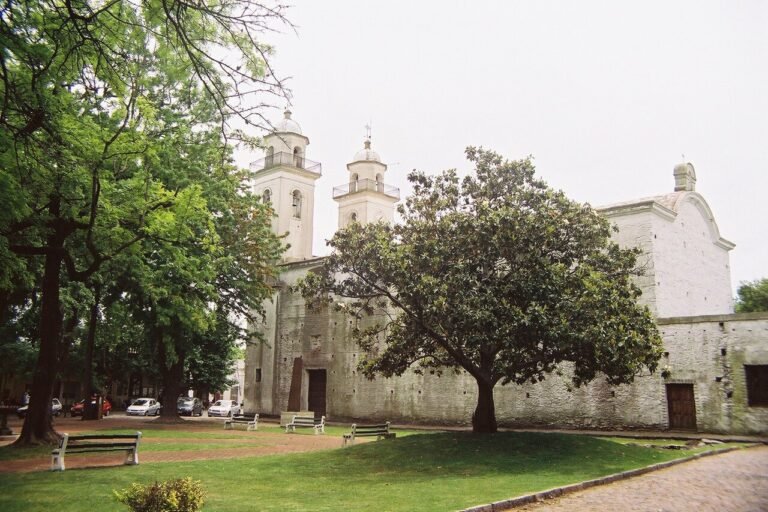
- Baroque Churches of the Philippines (1993) — a serial cultural inscription comprising four churches: San Agustín in Manila, the Immaculate Conception Parish in Santa Maria, San Agustín in Paoay, and Santo Tomás de Villanueva in Miag-ao. Built by Spanish friars between the late sixteenth and eighteenth centuries, they represent the fusion of European Baroque forms with local building materials and indigenous decorative sensibilities.
- Tubbataha Reefs Natural Park (1993) — a remote atoll system in the Sulu Sea, accessible only during the brief dive season between March and June, and uninhabited for most of the year. Its inscription recognised exceptional marine biodiversity at a site largely untouched by the pressures affecting most Philippine coastal ecosystems.
The 1993 double inscription established the structural logic of the Philippine list: one property documenting the colonial encounter, one documenting a natural environment preserved precisely because of its inaccessibility.
The most visited — and the alternatives
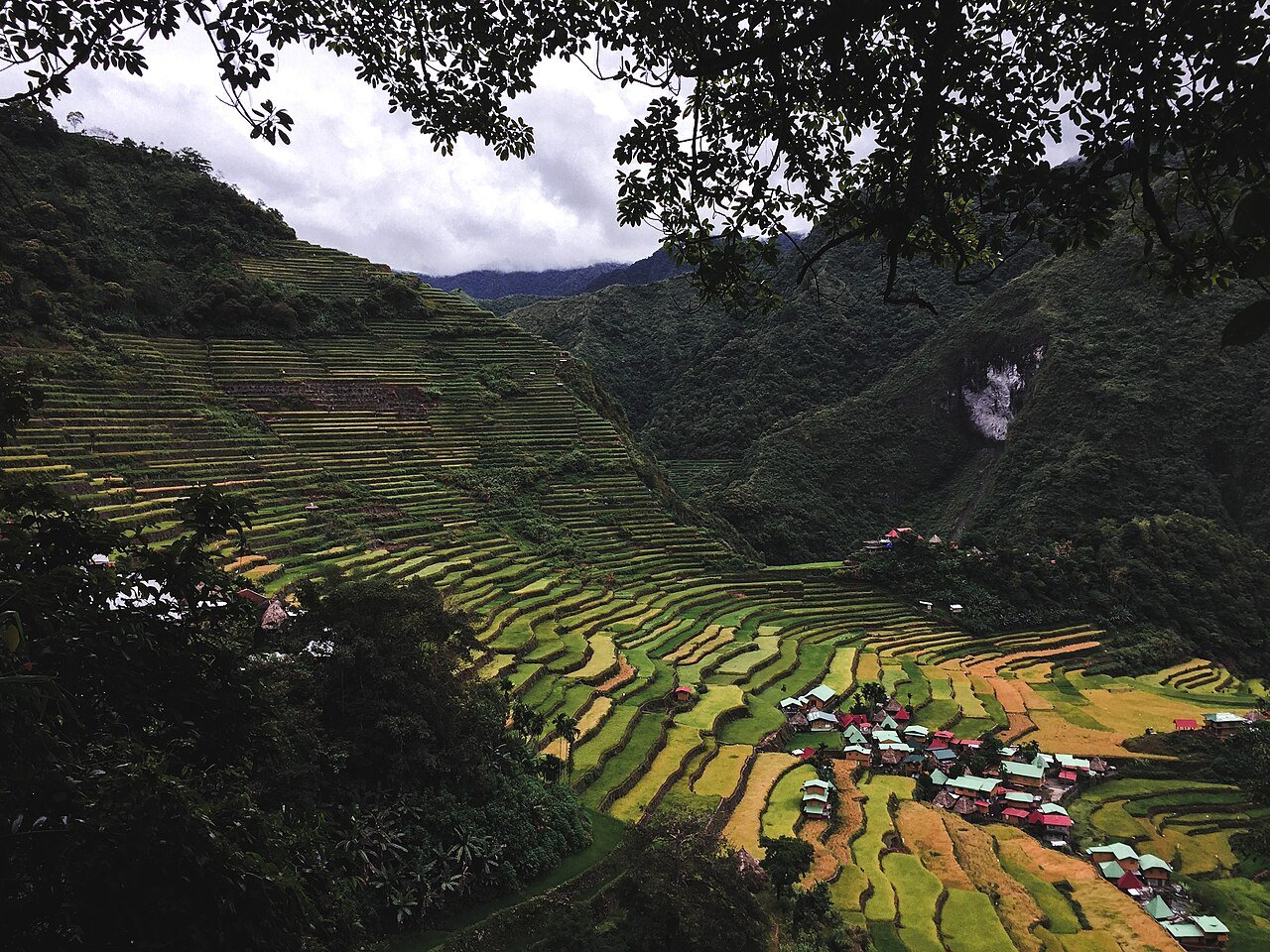
The Rice Terraces of the Philippine Cordilleras, inscribed in 1995 and associated with the Ifugao people of northern Luzon, are the site that most visitors picture when UNESCO and the Philippines are mentioned together. The terraces were begun approximately 2,000 years ago, engineered without mechanised tools to redistribute mountain water across a steeply contoured landscape, and they remain productive agricultural land today. That continuity — living heritage rather than archaeological remnant — is precisely what secured their inscription under cultural criteria.
Less visited, but equally specific in their significance, are three other properties worth seeking out. The Historic City of Vigan (1999), in Ilocos Sur, preserves a colonial urban grid where Filipino, Chinese, European, and Mexican architectural influences converged along a single trading corridor, producing a built environment unlike any other in Asia. Puerto Princesa Subterranean River National Park (1999), on Palawan, contains an 8.2-kilometre navigable underground river that discharges directly into the sea — one of the world’s longest such passages. Mount Hamiguitan Range Wildlife Sanctuary (2014), on Mindanao, rises through five distinct vegetation zones to a pygmy forest of centuries-old trees no taller than a person’s waist, sheltering species endemic to the Davao Oriental peninsula.
Natural and shared sites
The three natural World Heritage Sites in the Philippines cover fundamentally different ecological registers. Tubbataha Reefs Natural Park, in open ocean, protects a system of coral atolls and adjacent seagrass beds that serve as breeding and nursery grounds for species ranging from whale sharks to Napoleon wrasse. Puerto Princesa’s subterranean river sits within a karst landscape on Palawan that includes one of the most significant cave ecosystems in the region. Mount Hamiguitan, the most recently inscribed of the three (2014), occupies an ultramafic substrate that filters out most plant species, producing a hyperendemic flora that has evolved in near-isolation.
The Baroque Churches serial inscription is the closest the Philippine list comes to a transnational or cross-regional format, grouping four physically separate properties under a single nomination to argue a shared architectural thesis. No Philippine site currently forms part of a formal transnational nomination shared with another country, though the archipelago’s ecological connections — particularly through the Coral Triangle — make future cooperative nominations a plausible avenue for heritage authorities to explore.
How to find them
The six sites are distributed across a country where inter-island travel requires planning: Tubbataha is reachable only by liveaboard from Puerto Princesa; the Cordillera terraces demand road travel into the mountains of northern Luzon; the Baroque Churches are spread across four provinces. Lead times for permits, dive-season windows, and local transport schedules all affect access. Checking each site’s management authority before travel is advisable, as visitor numbers at some properties are capped to limit physical impact.
the Philippines’s World Heritage sites sit alongside thousands of other places on CHO’s interactive map, with GPS and sourced editorial history for each. See also our guides to Italy’s and France’s UNESCO sites, and our piece on cultural travel beyond mass tourism.
Frequently Asked Questions
How many UNESCO World Heritage Sites does the Philippines have?
The Philippines has 6 UNESCO World Heritage Sites as of 2026, comprising three cultural and three natural properties. They range from the Baroque colonial churches of Luzon to the remote coral atolls of the Sulu Sea and an underground river on Palawan.
What was the Philippines’s first UNESCO World Heritage Site?
The Philippines inscribed its first two World Heritage Sites simultaneously in 1993: the Baroque Churches of the Philippines, a serial cultural nomination grouping four colonial-era churches, and Tubbataha Reefs Natural Park, a remote coral atoll system in the Sulu Sea. Both nominations were accepted at the same UNESCO session.
What is the most recently inscribed World Heritage Site in the Philippines?
Mount Hamiguitan Range Wildlife Sanctuary on Mindanao, inscribed in 2014, is the most recently designated World Heritage Site in the Philippines. It protects a distinctive ultramafic mountain ecosystem with five vegetation zones and a high proportion of species endemic to the Davao Oriental peninsula.
Are any of the Philippines’s World Heritage Sites natural properties?
Three of the Philippines’s six World Heritage Sites are inscribed as natural properties: Tubbataha Reefs Natural Park (1993), Puerto Princesa Subterranean River National Park (1999), and Mount Hamiguitan Range Wildlife Sanctuary (2014). Together they represent marine, karst, and montane ecosystems of exceptional biodiversity value.
Sources used in this article
- UNESCO — State Party the Philippines — World Heritage list.
- UNESCO — the Philippines: World Heritage Sites.
- CHO magazine — What is a World Heritage Site?
- CHO — Interactive map of heritage sites.