New Zealand has three UNESCO World Heritage Sites — a small number for a country of such extraordinary ecological and cultural range, but each inscription carries unusual weight. Together they span volcanic highlands sacred to Māori, ancient glaciated wilderness along the Southern Alps, and some of the most biologically intact sub-Antarctic islands on the planet. From Cultural Heritage Online.
Why New Zealand’s list looks the way it does
With only three inscribed properties, New Zealand’s UNESCO tally is one of the shortest among developed nations with significant heritage assets. The explanation is partly geographic — much of the country’s outstanding natural landscape is already protected under national park legislation — and partly strategic, as New Zealand has submitted nominations selectively rather than in bulk. The three sites that have made the list represent genuine best-in-class cases at the global scale, rather than a comprehensive survey of the country’s heritage.
The country holds no purely cultural World Heritage Sites. All three inscriptions are either natural or mixed (cultural and natural combined), which reflects both the depth of New Zealand’s ecological distinctiveness and the degree to which Māori cultural identity is bound to landscape rather than built fabric. That said, the tentative list includes urban-scale nominations such as the Napier Art Deco historic precinct — rebuilt entirely in Art Deco style after the 1931 Hawke’s Bay earthquake — and the Kerikeri Basin historic precinct, which contains the oldest surviving European building in the country, the 1822 Mission House.
The first inscriptions
New Zealand’s World Heritage story begins in 1990, when two sites were inscribed simultaneously — an unusually strong opening for any country’s list.
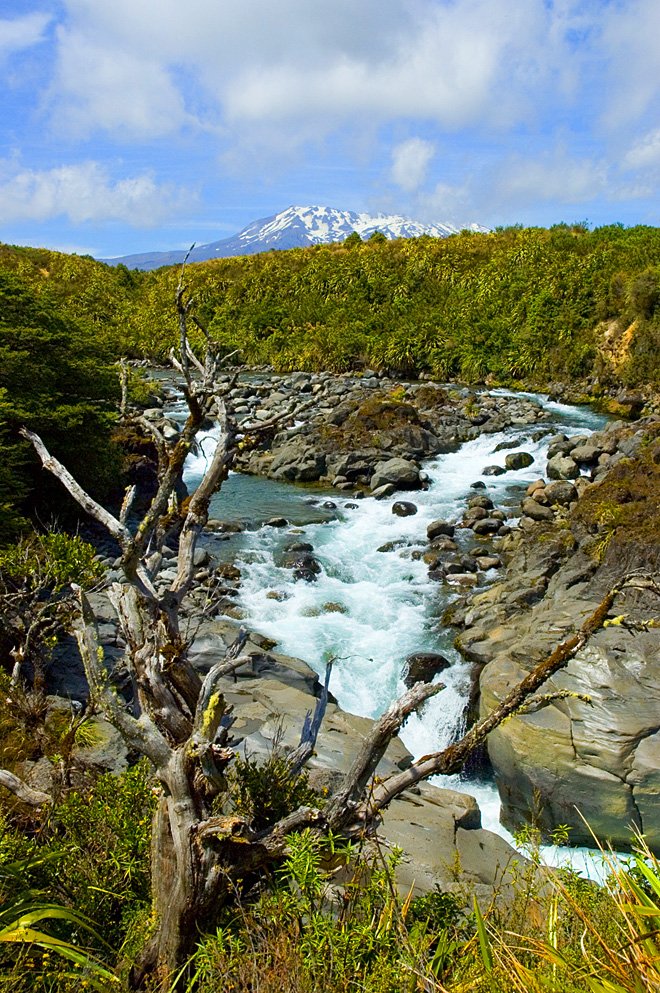
- Tongariro National Park (1990, extended 1993) — inscribed first as a cultural site for its significance to Māori as a sacred landscape, then re-inscribed as a mixed property after its volcanic terrain was also recognised under natural criteria. It remains one of the few sites in the world to have been inscribed under the cultural landscape concept before that category was formally codified.
- Te Wahipounamu – South West New Zealand (1990) — a vast natural property covering roughly 10 percent of New Zealand’s total land area, encompassing four national parks along the west coast of the South Island, including Fiordland, Mount Aspiring, Westland Tai Poutini, and Mount Cook.
Both inscriptions signalled from the outset that New Zealand’s approach to World Heritage would prioritise depth of significance over quantity of nominations.
The most visited — and the alternatives
Tongariro National Park draws the largest share of international visitors among the three sites, anchored by the Tongariro Alpine Crossing — one of the most walked day routes in the Southern Hemisphere. The volcanic plateau, with its active vents and multicoloured crater lakes, sits at the centre of the North Island and is closely associated with the Ngāti Tūwharetoa iwi, who gifted the land to the Crown in 1887 partly to protect it from commercial exploitation. Te Wahipounamu attracts its own considerable traffic, particularly around Milford Sound and the Franz Josef and Fox glaciers, though its sheer size means large portions remain seldom visited.
For travellers interested in New Zealand heritage beyond the major circuits, the tentative list points to compelling alternatives. The Kerikeri Basin historic precinct in Northland preserves the 1822 Mission House and the 1836 Stone Store side by side — the oldest surviving European timber building and the oldest stone building in New Zealand respectively — set against a Māori pā site of considerable earlier occupation. Further south, the Whakarua Moutere (North East Islands) group — nine island clusters in the Hauraki Gulf — supports active recovery programmes for threatened seabird and reptile species within two designated marine reserves, making it one of the country’s most significant biodiversity restoration zones.
Natural and shared sites
Two of New Zealand’s three inscribed sites are purely natural properties. Te Wahipounamu is one of the largest temperate rainforest wilderness areas in the Southern Hemisphere, and its glacial valleys, fiords, and alpine zones hold species found nowhere else on Earth, including the kea and the kākāpō. The third inscribed site, the New Zealand Sub-Antarctic Islands (1998), is the most recently recognised and among the most remote — five island groups lying between 47 and 52 degrees south in the Southern Ocean, collectively supporting extraordinary concentrations of seabirds and marine mammals, including 40 percent of the world’s albatross species.
The Sub-Antarctic Islands are not open to general tourism; access is tightly controlled and limited largely to research expeditions and occasional permitted voyages, which makes the inscription an exercise in protective recognition rather than visitor promotion. Tongariro’s mixed status as the only property combining cultural and natural outstanding universal value places New Zealand in a small international category that includes sites such as Machu Picchu and Mount Huangshan.
How to find them
All three inscribed properties are accessible via New Zealand’s Department of Conservation network, which maintains detailed visitor information and permit systems for each. Tongariro is reached from the central North Island town of National Park Village or Turangi. Te Wahipounamu is best approached through Queenstown, Te Anau, or Hokitika depending on which section of the property is the focus. The Sub-Antarctic Islands require a permitted expedition departure, typically from Invercargill or Bluff.
New Zealand’s World Heritage sites sit alongside thousands of other places on CHO’s interactive map, with GPS and sourced editorial history for each. See also our guides to Italy’s and France’s UNESCO sites, and our piece on cultural travel beyond mass tourism.
Frequently Asked Questions
How many UNESCO World Heritage Sites does New Zealand have?
New Zealand has three inscribed UNESCO World Heritage Sites: Tongariro National Park, Te Wahipounamu – South West New Zealand, and the New Zealand Sub-Antarctic Islands. The country also maintains a tentative list of properties under consideration for future nomination, including urban heritage sites such as the Napier Art Deco precinct.
What was New Zealand’s first UNESCO World Heritage Site?
New Zealand’s first UNESCO World Heritage Sites were inscribed in 1990, when both Tongariro National Park and Te Wahipounamu – South West New Zealand were added to the list simultaneously. Tongariro was initially inscribed for its cultural significance to Māori before being re-inscribed as a mixed property in 1993 to also recognise its volcanic landscape under natural criteria.
What is the most recently inscribed UNESCO World Heritage Site in New Zealand?
The New Zealand Sub-Antarctic Islands, inscribed in 1998, is the country’s most recently recognised UNESCO property. The site comprises five remote island groups in the Southern Ocean, notable for supporting an extraordinary diversity of seabirds and marine mammals, including a significant proportion of the world’s albatross species.
Are New Zealand’s UNESCO sites open to visitors?
Tongariro National Park and Te Wahipounamu are both accessible to the public through New Zealand’s Department of Conservation network. The New Zealand Sub-Antarctic Islands are not open to general tourism — access is tightly regulated and granted primarily to scientific research expeditions and a small number of permitted voyage operators.
Sources used in this article
- UNESCO — State Party New Zealand — World Heritage list.
- UNESCO — New Zealand: World Heritage Sites.
- CHO magazine — What is a World Heritage Site?
- CHO — Interactive map of heritage sites.
Sources
- S1 — King, Michael. The Penguin History of New Zealand. Penguin Books, 2003. ISBN 978-0-14-301867-4.
- S2 — Belich, James. Making Peoples: A History of the New Zealanders. University of Hawaii Press, 1996. ISBN 978-0-8248-2517-1.
Spotted an error? Write to editorial@culturalheritageonline.com and we correct it the same day.