

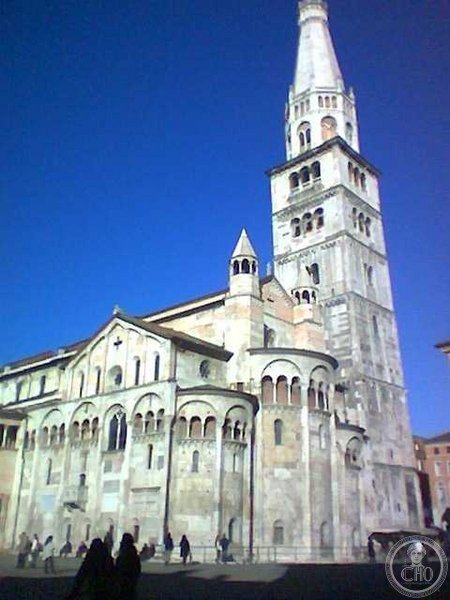
In Piazza Grande stands one of the most coherent Romanesque ensembles in northern Italy: a cathedral begun in 1099 with Wiligelmo’s carved Genesis panels on its facade, and the slender Ghirlandina tower rising beside it. The facade even bears the signatures of both architect and sculptor, a rare survival from medieval Italy.
At a glance
The Cathedral of Modena, its bell tower known as the Ghirlandina, and the civic square of Piazza Grande together form a single inscribed site recognised by UNESCO in 1997 under reference 827. The cathedral was founded in 1099 on the tomb of Saint Geminianus, the city’s patron saint, and its design by the architect Lanfranco introduced structural ideas that would reappear in Gothic architecture decades later in France. The sculptor Wiligelmo carved the facade reliefs, among the earliest narrative Romanesque sculpture in northern Italy.
The Ghirlandina tower, built in stages between 1170 and 1319, takes its name from the marble garlands decorating its octagonal belfry. Piazza Grande, the square linking cathedral, tower and the medieval town hall, has kept its layout largely unchanged since the twelfth century.
Key facts
- Cathedral founded: 1099, on the site of the tomb of Saint Geminianus, patron saint of Modena.
- Architect and sculptor: Lanfranco designed the building; Wiligelmo carved its facade reliefs, and both men are named in an inscription on the facade.
- Ghirlandina tower: built in phases between 1170 and 1319, reaching 87 metres, and leaning slightly from the vertical.
- Piazza Grande: the medieval civic square between the cathedral and the Palazzo del Comune, its plan essentially unaltered since the twelfth century.
- Wiligelmo’s Genesis panels: four reliefs on the lower facade depicting the Creation, the Fall, the Expulsion, and Cain and Abel.
- UNESCO status: the cathedral, tower and piazza were inscribed together as a World Heritage Site in 1997, reference 827.
History
The cathedral rose on the burial place of Saint Geminianus, whose relics had been found in the fourth century during work on an earlier church. In 1099 the foundation stone was laid and the saint’s remains moved to the crypt of the new building on the same day, the feast of his translation. The project was overseen by Lanfranco, described in a facade inscription as a remarkable builder, working alongside the sculptor Wiligelmo, whose name also appears on the building. The pairing of architect and sculptor named together on an Italian medieval facade is unusual.
The cathedral’s construction coincided with the Investiture Controversy, the long dispute between the Emperor and the Papacy over the appointment of bishops. Modena sided with the Papacy, and the new cathedral has been read as a statement of that political allegiance.
The Ghirlandina tower went up gradually: its square lower stories date from 1170 to 1179, with the octagonal upper section and spire added between 1261 and 1319 by a builder whose identity was never recorded. The tower later held a wooden bucket seized from Bologna during the Battle of Zappolino in 1325, an episode that inspired Alessandro Tassoni’s mock-heroic poem La Secchia Rapita. The cathedral, tower and Piazza Grande were jointly inscribed on the UNESCO World Heritage List in 1997, reference 827.
What you see
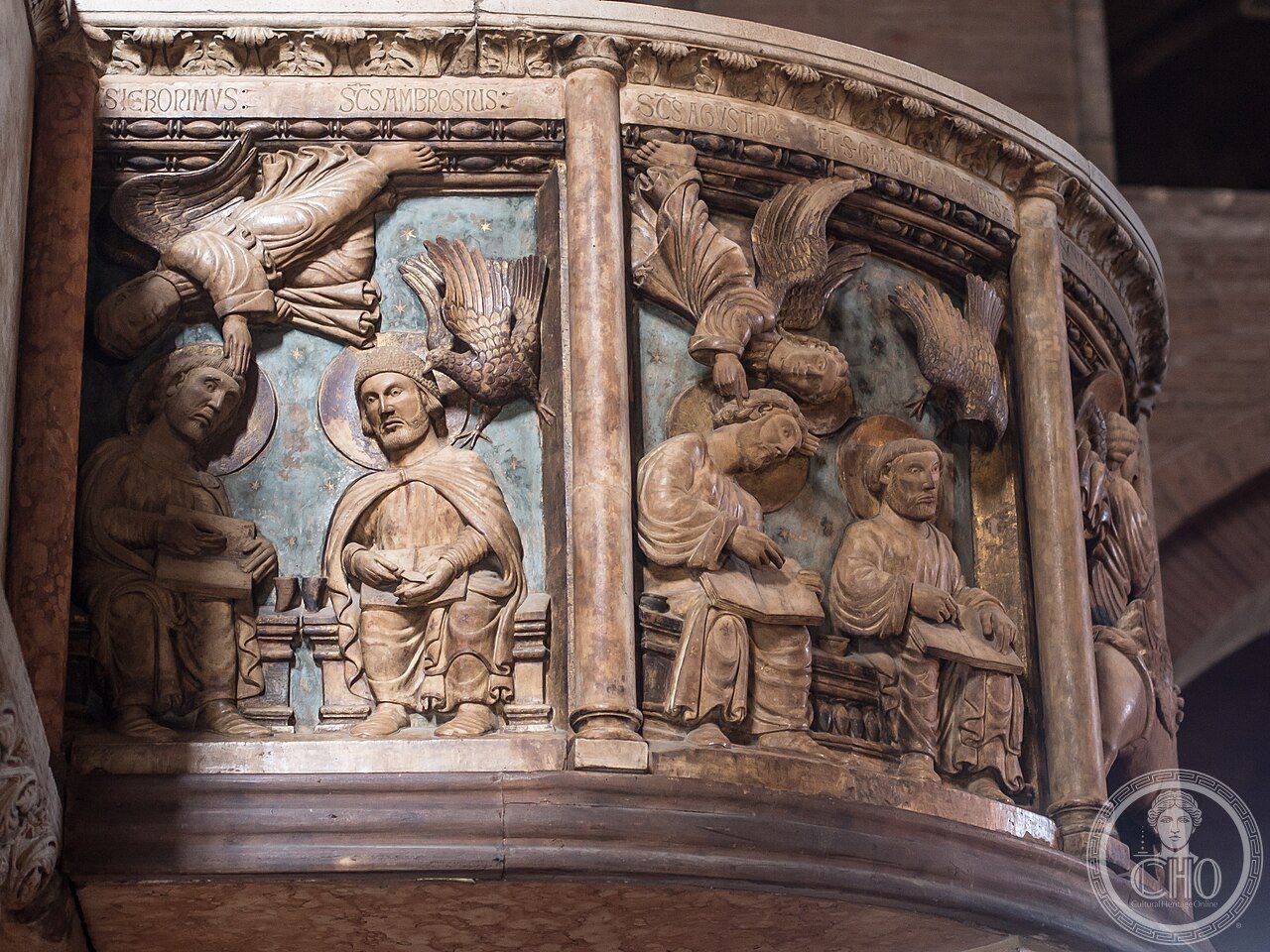
The west facade carries Wiligelmo’s four Genesis panels at close to eye level: the Creation of Adam, the Fall, the Expulsion from Eden, and Cain and Abel. The Expulsion panel shows Adam and Eve equipped with tools for agricultural labour, and the Cain and Abel scene is notable for suggesting depth by placing its two figures at slightly different heights. On the north side, the Porta della Pescheria carries one of the earliest known depictions of King Arthur in Italian art, with carved figures including Arthur himself in combat.
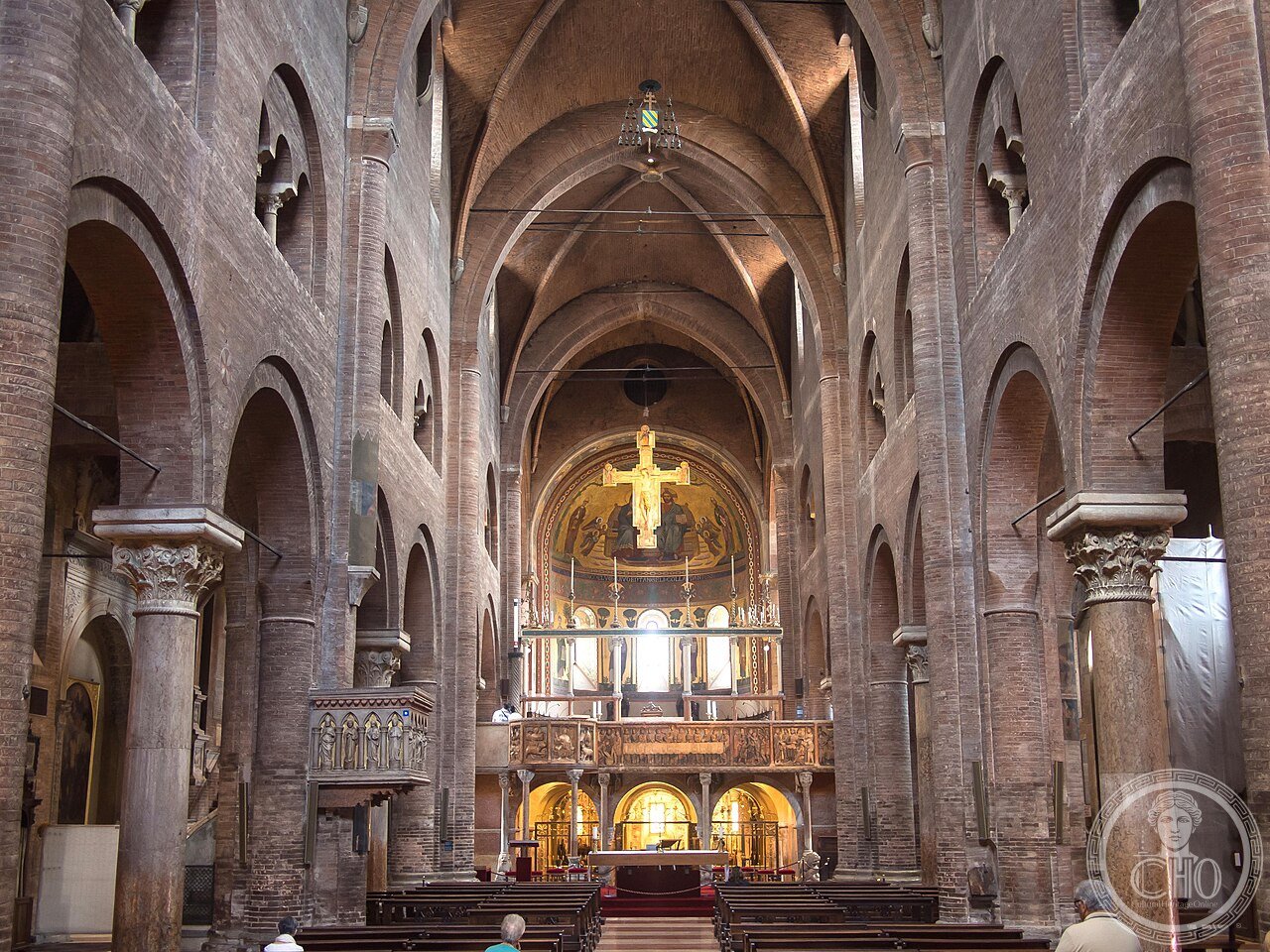
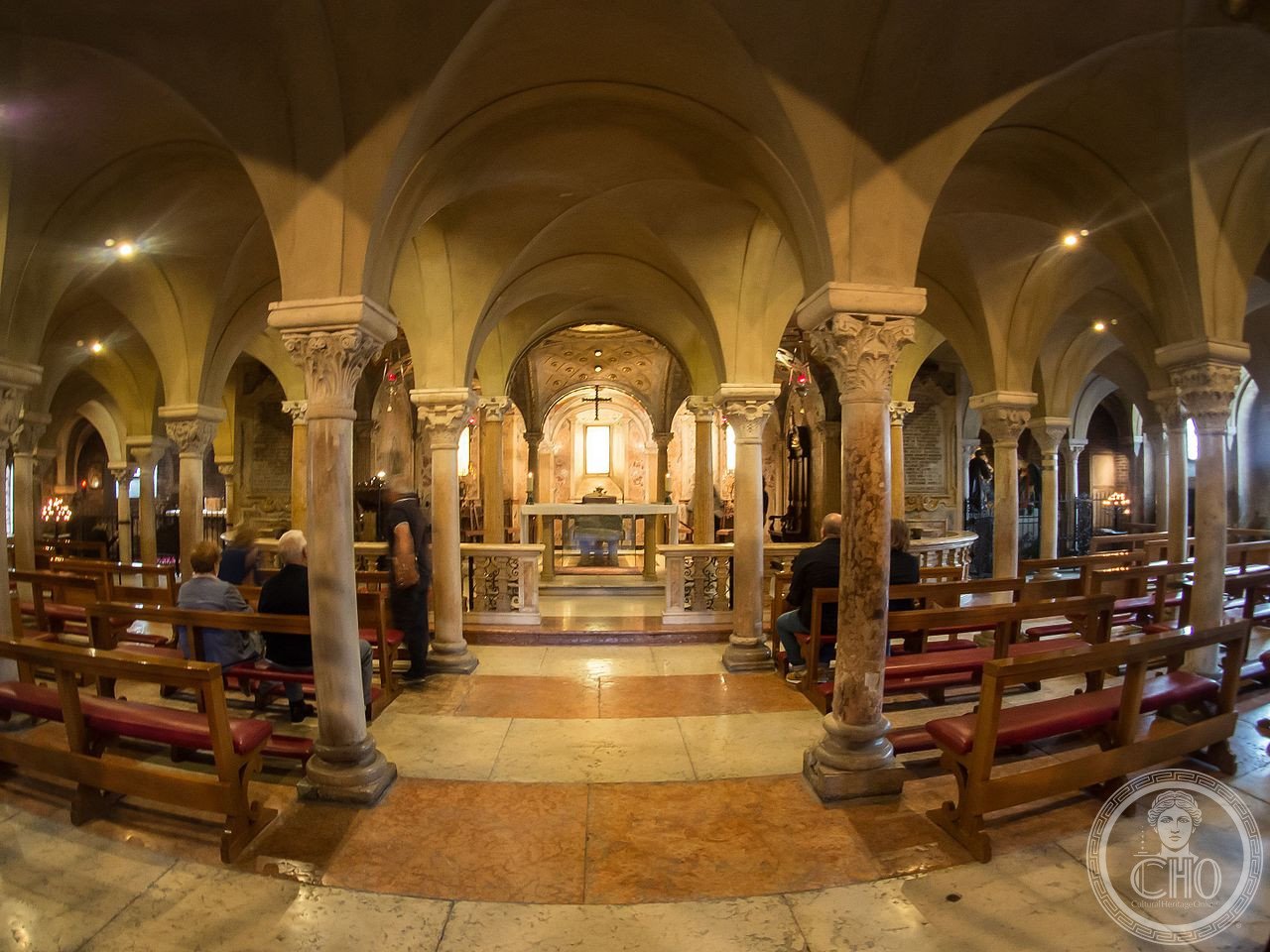
Inside, the crypt forms the oldest part of the building, its columns carrying capitals attributed to Wiligelmo, and the tomb of Saint Geminianus lies beneath the altar. The Museo Lapidario Estense, in the Palazzo dei Musei, holds original metopes removed from the cathedral’s exterior for conservation, allowing close study of Wiligelmo’s carving at eye level.
Climbing the Ghirlandina, visitors reach the level where the captured bucket from Bologna is kept in a cage, along with views over the piazza and the city.
Practical information
- Entry to the cathedral: free of charge; times of opening are best checked with the cathedral’s own information channels before visiting.
- Ghirlandina tower: the climb to the top requires a guided visit with limited numbers, so booking ahead is advisable.
- Museo Lapidario Estense: houses the original Wiligelmo metopes and is worth combining with the cathedral visit.
- Suggested pace: the cathedral, tower and museum together can occupy a good part of a morning or afternoon.
Getting there
Modena is served by regular train connections from Bologna, Milan and Florence, with Bologna the nearest major hub. The cathedral and Piazza Grande sit in the historic centre, within easy walking distance of the railway station.
Nearby
- Museo Lapidario Estense — in the Palazzo dei Musei, within the historic centre, holding Wiligelmo’s original metopes.
- Osteria Francescana — a short walk from the piazza, the restaurant of chef Massimo Bottura.
- Trattoria Bianca — a traditional trattoria in Modena serving tagliatelle al ragù, a dish the Accademia della Cucina Italiana associates with the city.
- Museo Ferrari, Maranello — around 15 kilometres from Modena, reachable by shuttle bus from Piazza Grande.
Sources
- UNESCO World Heritage List (reference 827)
- Museo Lapidario Estense
- Accademia della Cucina Italiana
Gallery
Find it on the map
See this place and what’s around it →📷 Become a Cultural Heritage Online photographer
Share your photos of places: they stay published under your name as the author. The more they're seen, the more you get noticed — and soon a contest will reward the most appreciated photos.
Log in or sign up free to add a photoIs this page about you?
This page is read by travellers and heritage enthusiasts who find it on Google. Tell us how you are connected to this place and we will take it from there.