Reggia di Caserta
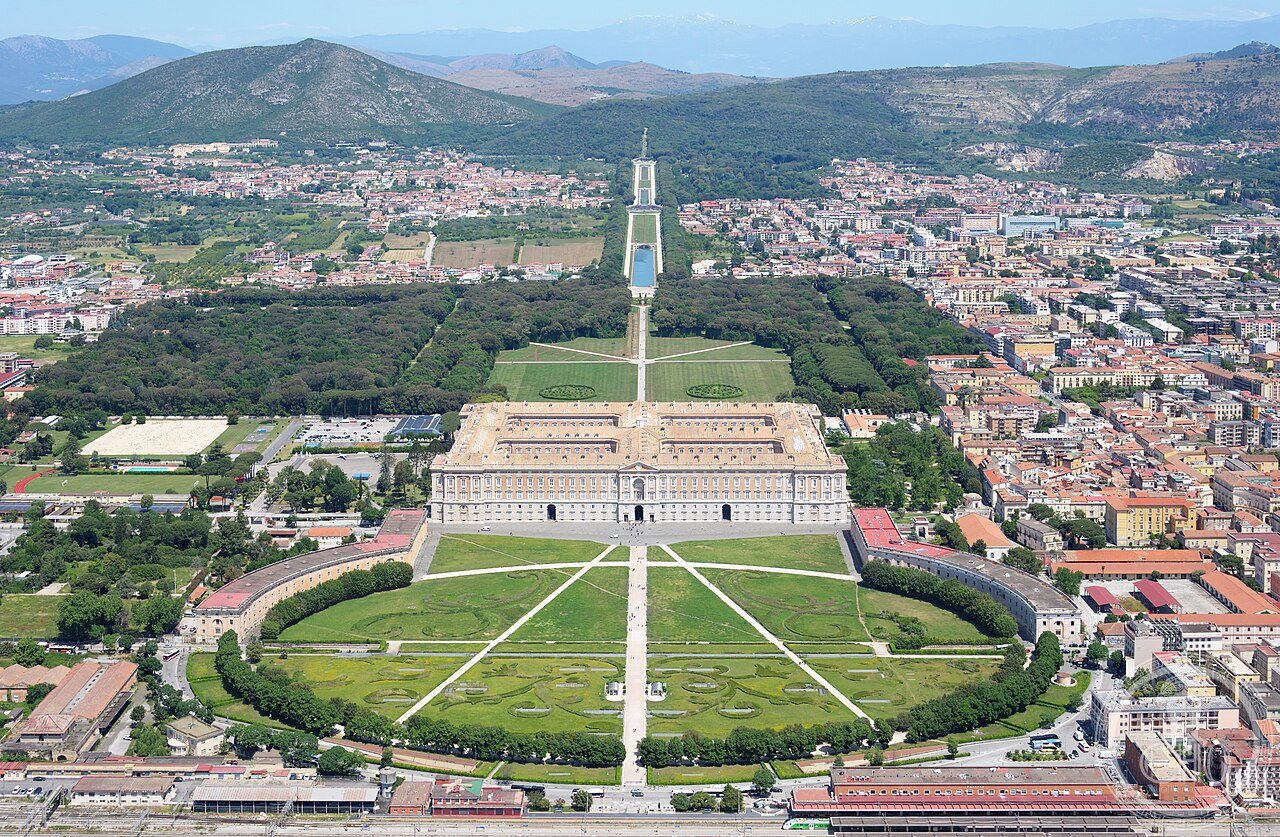
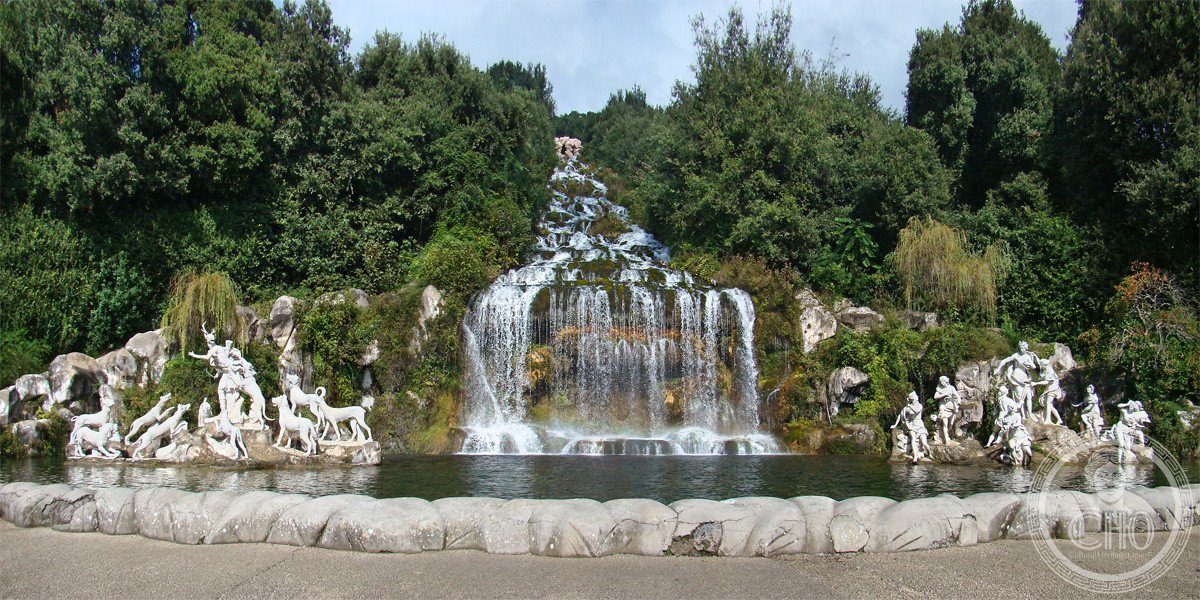
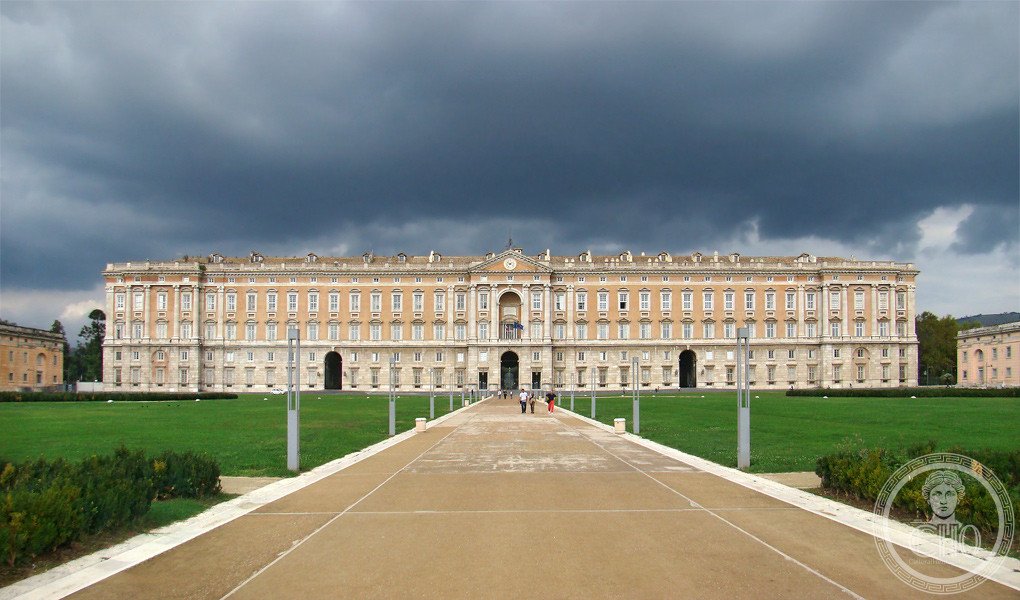
La Reggia di Caserta (UNESCO 1997, rif. 549) è la più grande residenza reale d’Europa per volume costruito — 1.200 stanze e 1.790 finestre disposti lungo un asse di 247 m, con un parco che si allunga per 3 km fino alla Cascata di Diana e Atteone (78 m), alimentata dall’acquedotto Carolino (38 km, completato 1762 CE).
At a glance
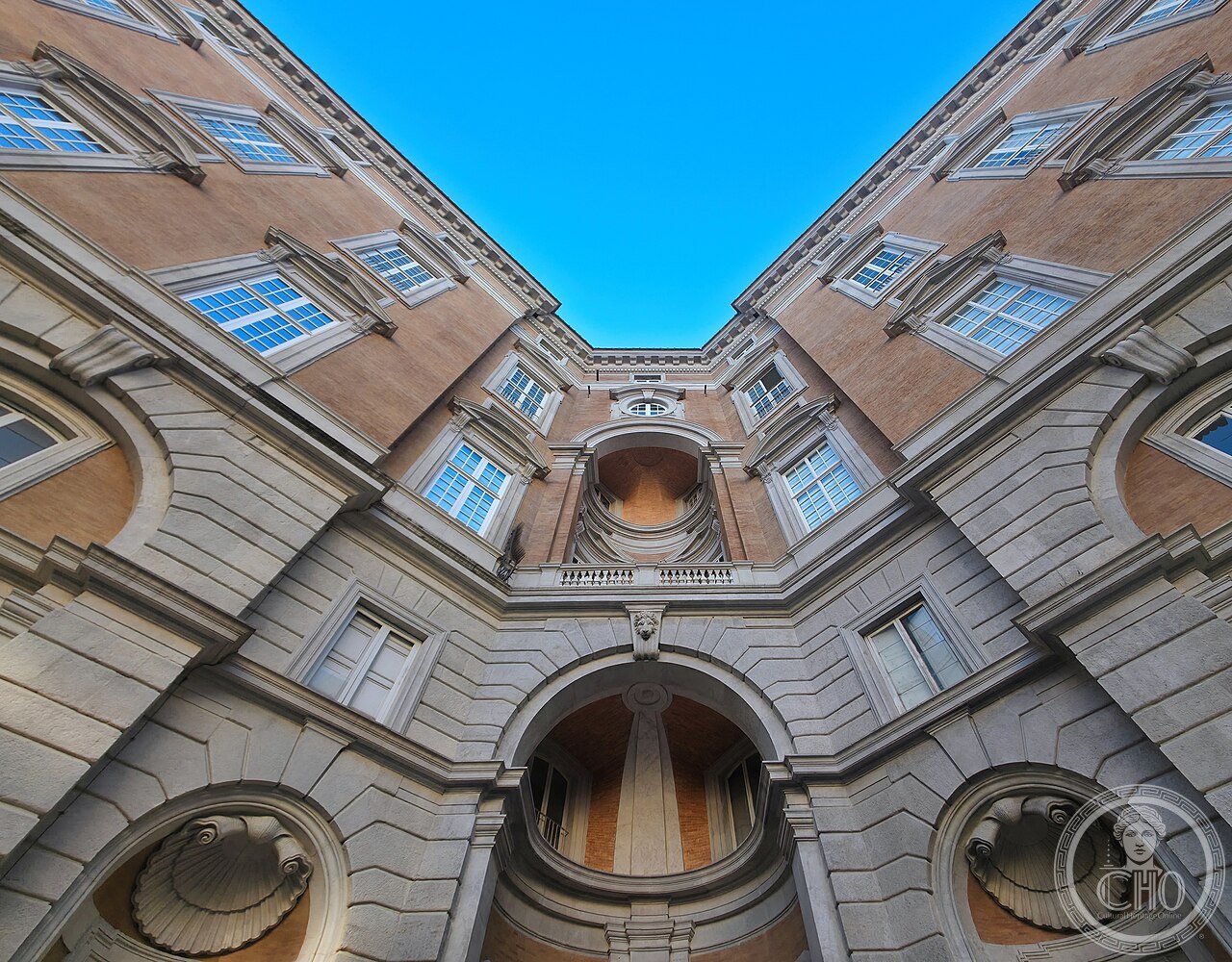
Reggia di Caserta Campania (the most precisely Reggia di Caserta zone Caserta Campania Italy 41.0739 N 14.3256 E UNESCO WHS 1997 reference 549 18th-Century Royal Palace at Caserta with the Park, the Aqueduct of Vanvitelli and the San Leucio Complex: the site (the UNESCO inscription covers 3 elements: (1) the Royal Palace (the dimensions: 247 m × 190 m footprint; 4 internal courtyards (each courtyard: 57 m × 47 m); 5 floors; 1,200 rooms; 1,790 windows; volume: 870,000 m³ (the comparison: the Palace of Versailles = 221,000 m³; the Royal Palace of Caserta = 4× the volume of Versailles; the largest royal palace in the world by volume (source: UNESCO inscription)); the architect (Luigi Vanvitelli (1700–1773 CE): Roman-born architect of Dutch origin (his father Gaspar van Wittel (1652–1736 CE) was the Dutch topographic painter who introduced the veduta tradition to Italy); the commission (King Charles VII of Naples (later Charles III of Spain: 1716–1788 CE) commissioned the palace on January 20, 1752 CE: the date of the foundation stone (the foundation stone ceremony: Vanvitelli placed the first stone in the presence of the king and queen on January 20, 1752 CE; the ceremony was delayed 3 times due to winter floods of the Volturno river; the final foundation trench required 2.5 m of fill because the water table was at 1.2 m depth in the original location)); the construction (the palace was built by Vanvitelli from 1752 to 1773 CE (Vanvitelli died before completion) and completed by his son Carlo Vanvitelli (1739–1821 CE) by 1780 CE; the workforce: 3,000 workers and soldiers in the peak years (1752–1760 CE); the cost: 8.7 million ducats (approximately €1.2 billion at 2024 CE purchasing power)); (2) the Park (the formal Italian garden (the garden axis: 3 km from the palace facade to the waterfall top): the fountains along the axis (from south to north: (1) the Fontana Margherita (the first basin; 250 m from the palace); (2) the Fontana dei Delfini (750 m); (3) the Fontana di Eolo (the wind god fountain; 1,400 m; 54 water jets); (4) the Fontana di Cerere (the goddess of harvest; 1,700 m; 52 water jets); (5) the Fontana di Venere e Adone (2,100 m); (6) the Fontana di Diana e Atteone (2,700 m: the main cascade; the myth: Diana (Artemis) bathing; the hunter Actaeon accidentally seeing the goddess naked; being turned into a stag and killed by his own hounds; the sculptural group: 19 figures of Diana and the nymphs + 30 hounds + Actaeon in the transformation); (7) the Cascata Reale (2,850 m: the waterfall: 78 m drop in 2 cascades); (3) the San Leucio Complex (5 km north of the palace: the silk production colony founded by Ferdinand IV in 1789 CE: a planned utopian community based on Enlightenment principles (the San Leucio constitution (1789 CE): the document establishing the social contract of the community: mandatory education for children including girls; prohibition of dowries; social security for widows and orphans; abolition of hereditary privilege within the community)); (2) the Aqueduct (the Acquedotto Carolino: 38.5 km of aqueduct built 1753–1762 CE by Vanvitelli to supply the palace and park fountains from the Tabburno springs near Airola; the most ambitious water engineering project in 18th-century Italy).
Key facts
- Perché la Reggia di Caserta è 4 volte più grande di Versailles in volume e come l’acquedotto Carolino (38 km) alimenta le fontane da una sorgente in Irpinia: the comparison (the Reggia di Caserta vs Versailles: the Versailles palace (main buildings only): 221,000 m³ total volume; the Reggia di Caserta: 870,000 m³ total volume (the measurement source: the 2001 CE survey by the Soprintendenza per i Beni Architettonici del Casertano); the Caserta volume = 3.94× the Versailles volume (approximately 4×); the floor area: Versailles 67,000 m² (floor area of the main chateau); Caserta: 47,000 m² footprint × 5 floors = 235,000 m² total floor area); the water supply (the problem: the site chosen by Charles VII was a plain below the Apennines with no natural water source within 10 km; the solution: Vanvitelli designed the Acquedotto Carolino (1753–1762 CE): a 38.5 km aqueduct from the springs of Fizzo near Airola (altitude 210 m above sea level) to the top of the cascade at Caserta (altitude 120 m above sea level: the aqueduct uses gravity and has a gradient of 0.23% over the full 38.5 km; the engineering challenge: crossing the Maddaloni valley (the Valle di Maddaloni: a valley 54 m deep and 529 m wide at the crossing point): Vanvitelli built the Ponte della Valle (the bridge at Maddaloni: 3 tiers of arches, 55 m maximum height, 529 m length, 43 arches on the lower tier, 21 on the middle, 19 on the upper; the longest 3-tier aqueduct bridge in the world; completed 1762 CE))
- GPS (ingresso principale Reggia di Caserta, Piazza Carlo III): 41.0739° N, 14.3256° E; Cascata Reale (cima): 41.1028° N, 14.3281° E
History
Da Carlo III Borbone 1752 CE al UNESCO 1997 (the most precisely Reggia di Caserta zone history: the commission (Charles VII of Naples, later Charles III of Spain (1716–1788 CE): the reason for Caserta (the strategic reason: Charles needed a palace that could not be threatened by naval bombardment; Naples was exposed to British and French naval power (the Neapolitan harbor was within cannon range of ships anchoring in the Bay of Naples); Caserta (30 km inland) was beyond the range of any contemporary naval gun); the alternative capital (Charles considered 3 sites: (1) the Camaldoli hills above Naples (rejected: too small a plateau); (2) Carditello (rejected: too close to the Volturno flood plain); (3) Caserta: chosen February 1751 CE; the land was purchased from the Acquaviva family (the Counts of Caserta) for 400,000 ducats); the Napoleon chapter (the palace during the Napoleonic period (1806–1815 CE): occupied by Joseph Bonaparte (1806–1808 CE) and then Joachim Murat (1808–1815 CE: the King of Naples married to Napoleon’s sister Caroline); Murat completed the English garden (the 22-hectare “Giardino Inglese” added to the east of the formal garden: the only element in the palace complex not by Vanvitelli: designed by the English landscape gardener John Andrew Graefer (1746–1802 CE) for Queen Maria Carolina of Austria, wife of Ferdinand IV); the WWII surrender (the Reggia di Caserta was the Allied Forces Headquarters (AFHQ) from 1943 to 1945 CE: the German surrender in Italy (the German unconditional surrender for all German forces in Italy was signed in the Throne Room of the Reggia di Caserta on May 2, 1945 CE, 4 days before the general German surrender at Reims)); the UNESCO inscription (1997 CE: reference 549).
What you see
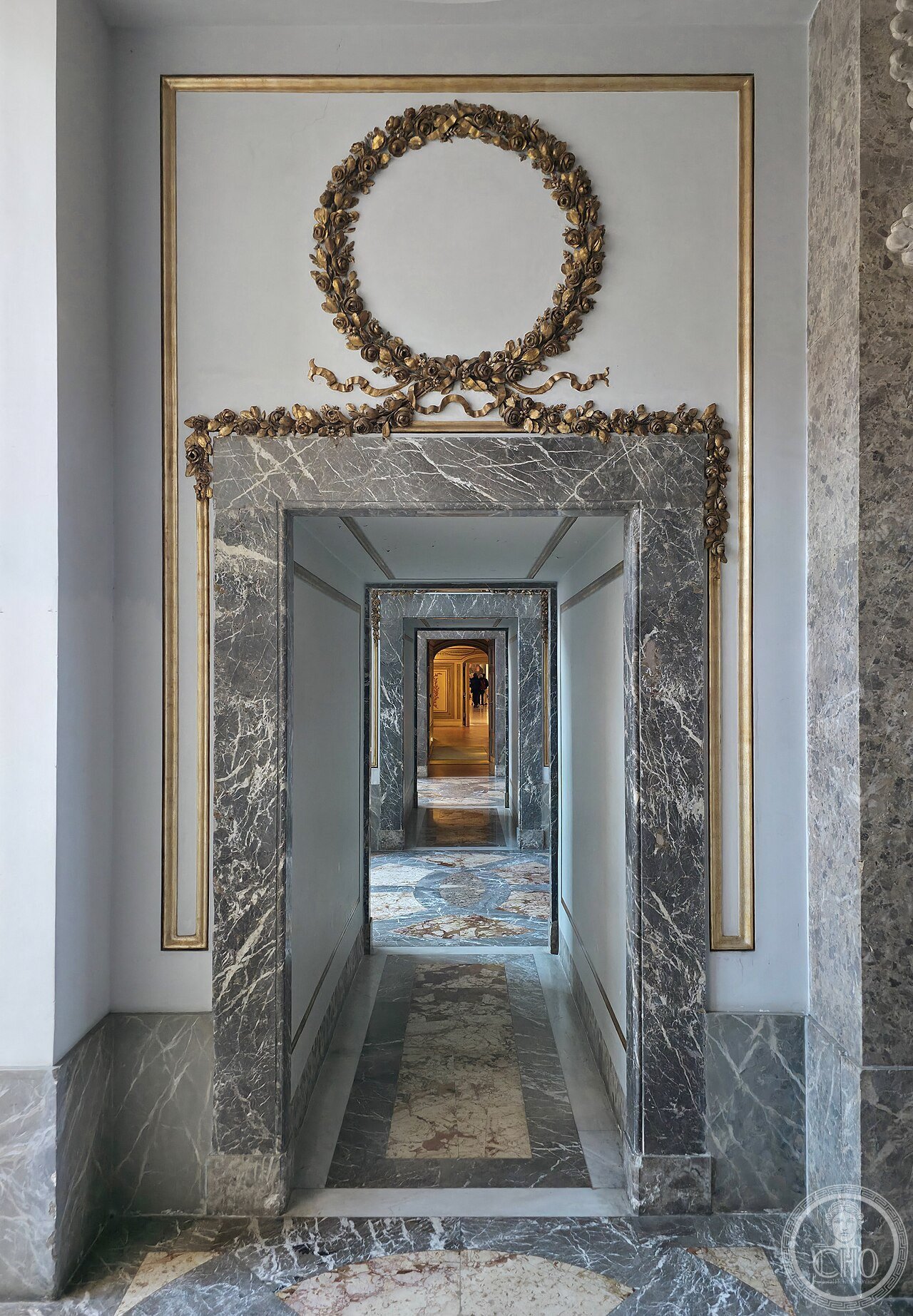
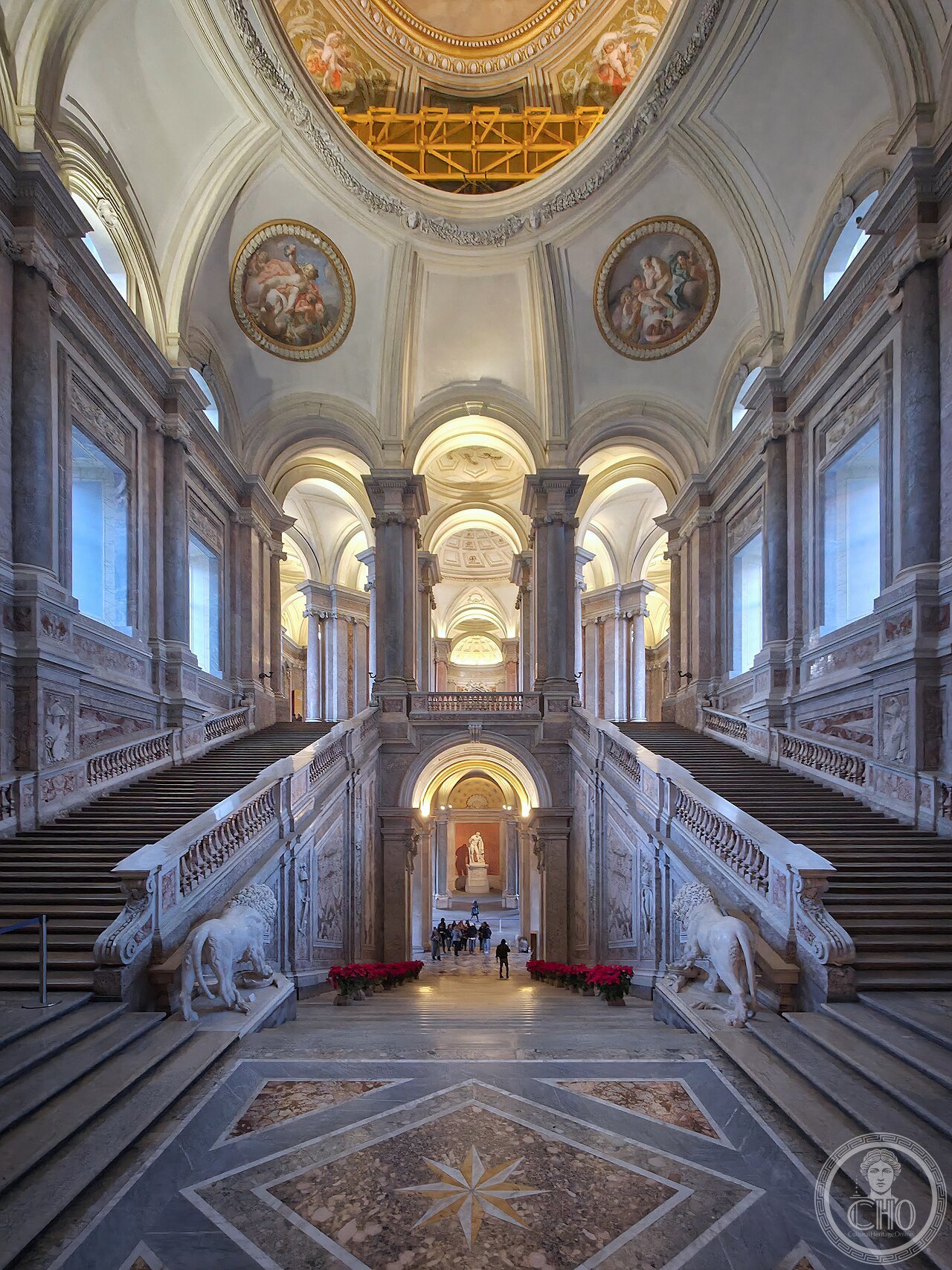
Appartamento Reale, Cappella Palatina, Biblioteca, Parco e Cascata (the most precisely Reggia di Caserta zone visit (3–4 hours for the palace + park): the ticket (€16 palace + park; €10 park only; free 18-; daily 8:30–19:30 (last entry 18:30); the royal apartments (the visit sequence in the palace: the “Scalone d’Onore” (the ceremonial staircase: the largest in Europe at the time of construction: 3 flights rising 27 m through an octagonal vestibule; the Vanvitelli innovation: the staircase is covered by a barrel vault but the landings are covered by shallow saucer domes that admit light from windows invisible from below) → the Palatine Chapel (the chapel: 40 m × 18 m; the marble floor; the ceiling fresco by Giuseppe Cammarano (1820 CE): the fresco is 800 m² and shows the Immaculate Conception; the chapel royal box (the royal box: the king and queen attended mass from a balcony 8 m above the chapel floor; invisible to the congregation; access via a private stair from the royal apartments)) → the Royal Apartments (the 5 suites of apartments: the Apartment of the Old King (the apartments of Charles III before the palace was completed: the oldest furnishings); the Apartment of 800 (the Napoleonic and Bourbon furniture); the Apartment of Francesco II (the last Bourbon king of Naples: 1861 CE); the Library (9,000 volumes; the presepe collection (the Royal Nativity Scene: 1,200 terracotta figurines; the most elaborate court presepe in Southern Italy))); the park (the park: 2.7 km on foot from the palace to the waterfall top (or electric cart: €4 one way; €8 return); the English Garden (the “Giardino Inglese”: 22 ha; free to enter; the “Cryptoportico”: the underground passage beneath the English Garden with bathing grottos and artificial ruins)).
Practical information
- Come raggiungere Caserta da Napoli in 35 minuti senza auto, e come gestire la visita al parco in 4 ore senza fare avanti e indietro a piedi: il trasporto (Napoli Centrale → Caserta: Trenitalia (35 min; €4.20; ogni 15 min; i treni regionali Napoli-Roma tutti fermano a Caserta); la Reggia è a 600 m dalla stazione (10 min a piedi via Piazza Carlo III)); il parco (la gestione del parco da 3 km: (1) opzione A: a piedi solo andata (verso la cascata: salire a piedi in 45 min fino alla cascata; tornare con il cart €4); (2) opzione B: cart andata (€4) + visita cascata a piedi (20 min) + a piedi in discesa fino al palazzo (45 min di discesa piana; il percorso in discesa verso il palazzo è sempre in leggera pendenza negativa e non è stancante)); il periodo migliore (aprile-maggio: le fontane sono attive (il calendario delle fontane in funzione: i giorni di attivazione delle fontane variano per anno; verificare su reggiadicaserta.beniculturali.it; in linea di massima: 1° e 3° domenica del mese + festivi; la Cascata Reale può essere vista sempre ma scorre solo nei giorni programmati)); il San Leucio (la Colonia di San Leucio: 5 km dalla Reggia in auto; la Reggia di San Leucio (€5; il Museo della Seta: le macchine tessili del XVIII sec. CE ancora funzionanti; visita guidata obbligatoria sabato-domenica))
Getting there
Trenitalia da Napoli (35 min, €4.20, ogni 15 min). 600m a piedi dalla stazione. GPS: 41.0739/14.3256. €16 (palazzo+parco). 8:30–19:30 (chiuso martedì).
Nearby
- Napoli centro storico (UNESCO 1995 rif. 726 — Spaccanapoli, Cappella Sansevero, Duomo di Napoli) — 35 km Trenitalia (35 min; €4.20; la Cappella Sansevero (Via Francesco De Sanctis 19/21; €8; il “Cristo Velato” di Giuseppe Sanmartino 1753 CE: il Cristo sotto un velo di marmo trasparente; il dettaglio più impressionante: il velo di marmo è scolpito dallo stesso blocco del Cristo e NON è posto dopo la scultura (confutazione di 2 leggende urbane)])
- Pompei ed Ercolano (UNESCO 1997 rif. 829 — Case romane 79 CE) — 30 km (Circumvesuviana da Napoli: 40 min; €2.80; Pompei Scavi stazione; €20; la Casa dei Vettii; la Villa dei Misteri; l’anfiteatro 80 BCE; Ercolano: 25 min da Napoli; €13; più ricca di Pompei per oggetti in legno e tessili conservati))
Gallery


Sources
- Wikipedia, Royal Palace of Caserta; Luigi Vanvitelli; Acquedotto Carolino; San Leucio, accessed June 2026
- UNESCO, 18th-Century Royal Palace at Caserta, WHS reference 549, inscribed 1997
- Venditti, Arnaldo. Architettura neoclassica a Napoli. Naples: ESI, 1961 (the standard Vanvitelli reference)
Find it on the map
See this place and what’s around it →📷 Diventa un fotografo di Cultural Heritage Online
Condividi le tue foto dei luoghi: restano pubblicate con la tua firma come autore. Più vengono viste, più ti fai conoscere — e presto un concorso premierà le foto più apprezzate.
Accedi o registrati gratis per aggiungere una foto