
Uxmal
The most purely beautiful Maya city in Mexico and the supreme example of the Puuc architectural style — Uxmal (Yucatán, Mexico; UNESCO WHS 1996) flourished ca. 700-1000 CE and contains the Governor’s Palace (described by John Lloyd Stephens as “the most elaborate and richly ornamented structure in all of America”), the unique elliptical Pyramid of the Magician, and the finest mosaic stone facades of the Classic Maya period.
At a glance
Uxmal (the most precisely UxmalMexico single Yucatan State Mexico 62 km south Merida capital Yucatan State flat Yucatan Peninsula limestone karst terrain no rivers no cenotes cenote Uxmal area no cenotes unlike Chichen Itza which has natural cenotes water supply chultunes stone-cut cisterns collecting rainwater Uxmal collected rainwater entire city only source of fresh water Puuc Hills low limestone hills southern Yucatan Puuc architectural style finest example Uxmal other Puuc sites Kabah Sayil Labna Xlapak all nearby Uxmal route Puuc Route tourism circuit Uxmal peak 700 1000 CE Classic Maya Late Classic Terminal Classic population 25000 30000 inhabitants peak major regional capital Lord Chac personal name several rulers Uxmal named after Rain God Chac Chaac multiple Chaac masks on buildings especially Governor Palace 150+ Chaac masks facade ornament Chac = rain important no cenotes no rivers rain was life Yucatan Maya UNESCO heritage in any UNESCO world heritage site)).
Key facts
- The Governor’s Palace (the single most admired building in pre-Columbian America): the Governor’s Palace at Uxmal (ca. 900-1000 CE; 100m long; 12m high; 24,000 individual mosaic stone pieces fitted into the upper facade; 150+ masks of the rain god Chaac along the cornice; the longest pre-Columbian building in the Americas; set on a massive artificial terrace 18m above the surrounding plain) was described by the American explorer John Lloyd Stephens in 1841 CE (the first published English description of Uxmal): “If it stood at this day on its grand artificial terrace in Hyde Park or the Garden of the Tuileries, it would form a new order, I do not say equal to, but not unworthy to stand side by side with the remains of ancient Egyptian, Grecian, and Roman art.”; the Governor’s Palace is considered the culmination of Puuc architectural achievement and the finest pre-Columbian building in Mexico (a claim that stands against the competition from Chichén Itzá and Palenque)
- GPS: 20.3596° N, -89.7715° W
History
From Late Preclassic settlement to Terminal Classic peak to mysterious abandonment (the most precisely UxmalMexico single 900 800 BCE earliest occupation 100 CE first monuments 600 700 CE early construction Pyramid Magician 700 1000 CE peak period Governor Palace Nunnery Quadrangle Ball Court House Turtles Great Pyramid Dovecote all major structures 800 900 CE Lord Chac rulers Lord Chac named multiple inscriptions Chan Chak K’ak’nal Ajaw the most recently identified ruler name 1000 1200 CE decline Uxmal abandoned reduced occupation 1200 CE area occupied Xiu lineage Xiu Maya lineage from western Mexico migrated established control Puuc Hills area 1441 CE Xiu Maya revolt against Cocom lineage controlling Chichen Itza 1541 CE Spanish conquest Yucatan Francisco de Montejo El Mozo conquered Yucatan Uxmal incorporated into encomienda Conqueror land grants 1830 1840 CE John Lloyd Stephens American explorer Frederick Catherwood illustrator first systematic exploration Stephens Catherwood illustrated record Maya sites bestselling book Incidents of Travel in Yucatan 1843 CE first major publication 1988 CE INAH Institut National Anthropology History Mexico ongoing excavation restoration 1996 CE UNESCO UNESCO heritage: John Lloyd Stephens and the rediscovery of the Maya (the most consequential travel book in American archaeology): John Lloyd Stephens (1805-1852 CE; American lawyer and diplomat; self-taught archaeologist) travelled through Mesoamerica in 1839-1842 CE with British illustrator Frederick Catherwood (1799-1854 CE); their two-volume book “Incidents of Travel in Yucatan” (1843 CE; published in New York; 20,000 copies sold in 3 months — the bestselling travel book of the 19th century) was the first illustrated systematic account of Maya ruins to reach a mass audience; Stephens argued (correctly, against the prevailing view) that the Maya cities were built by indigenous Americans, not by Egyptians or other Old World peoples; the book triggered the first serious wave of Maya archaeology; without Stephens and Catherwood, the academic recognition of Maya civilisation would have been delayed by decades)) — the most precisely UxmalMexico single 900 800 BCE earliest 700 1000 CE peak Governor Palace 900 1000 CE 100m 24000 mosaic pieces 150 Chaac masks longest pre-Columbian building 1200 CE abandoned Xiu lineage 1843 CE Stephens Catherwood Incidents of Travel in Yucatan bestselling 20000 copies 3 months 1996 UNESCO heritage in any UNESCO world heritage site)).
What you see
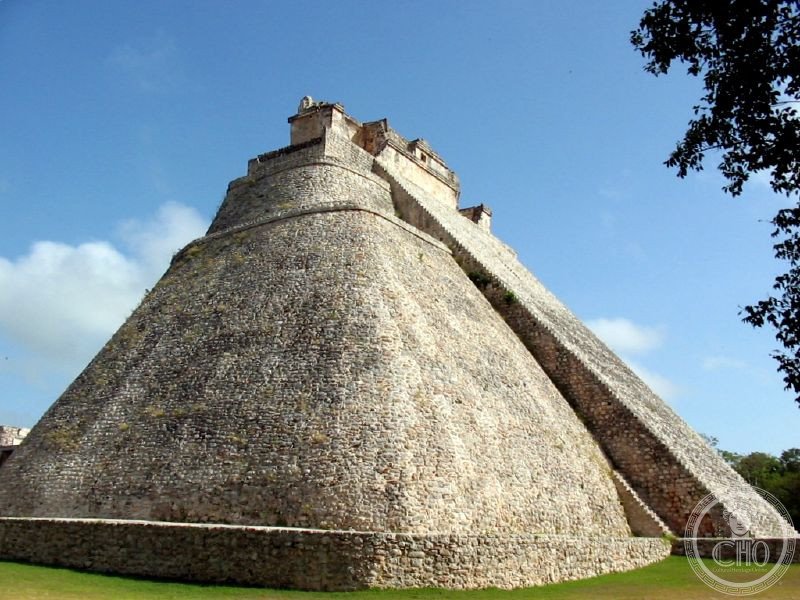
The Pyramid of the Magician, the Governor’s Palace, and the Nunnery Quadrangle (the most precisely UxmalMexico single Pyramid Magician Pirámide del Adivino 35m high elliptical footprint unique Maya pyramids most Maya pyramids square or rectangular this one elliptical 5 construction phases over 300 years each phase built over previous pyramid visible west face staircase flanked giant Chaac mask mouth forming doorway top Temple V best view Governor Palace from atop pyramid Governor Palace Palacio del Gobernador 100m long 12m high 3 rooms long axis 24000 mosaic stone upper facade 150 Chaac masks mosaic friezes rain-god masks throughout set on 18m artificial terrace longest pre-Columbian building Americas described Stephens not unworthy to stand side by side Egypt Greece Rome Nunnery Quadrangle Cuadrángulo de las Monjas Spanish misnamed after Spanish convents four ranges of rooms around central courtyard elaborate facade decoration mosaic stone each range different different regional Maya style within Puuc tradition Ball Court one of largest Maya ball courts Yucatan aligned with Governor Palace solar Venus events House of Turtles ornate turtles carved on cornice simpler less decorated than Governor Palace Great Pyramid Dovecote Structure of the Pigeons still largely unexcavated covered vegetation light-and-sound show famous Uxmal evening light-and-sound show oldest Mexico most spectacular ruins illuminated archaeologist commentary UNESCO heritage: the Puuc architectural style (what distinguishes Uxmal from Chichen Itza): the Puuc style (named after the Puuc Hills of southern Yucatan; ca. 600-1000 CE) is defined by: (1) smooth lower walls (entirely undecorated): the lower section of every building is finished in smooth limestone plaster — the decoration is concentrated entirely on the upper facade, creating a strong horizontal contrast; (2) mosaic stone upper facades: the upper section is covered by individually fitted stone mosaic pieces, each carved separately and fitted into the wall; the effect resembles a textile or embroidery in stone; (3) Chaac rain-god masks: the Puuc sites have a specific attachment to the rain god Chaac (long-nosed deity; curved snout; stacked vertically at the corners and along the cornice); (4) Puuc vault (the Maya corbelled vault ceiling: false arch made of successive projecting stone layers, without a true keystone arch — a vault that works without mortar between the vault stones); Uxmal is the purest and finest example of this style: no Toltec intrusion (unlike Chichén Itzá after 1000 CE))) — the most precisely UxmalMexico single Pyramid Magician elliptical 35m 5 phases 300 years Chaac mouth doorway top Governor Palace 100m 12m 18m terrace 24000 mosaic stones 150 Chaac masks longest pre-Columbian Americas Nunnery Quadrangle 4 ranges mosaic different regional styles Ball Court Venus alignment House Turtles Puuc style smooth lower walls mosaic upper facades Chaac masks corbelled vault no true keystone arch no Toltec intrusion unlike Chichen Itza UNESCO heritage in any UNESCO world heritage site)).
Practical information
- Getting there: from Mérida: ADO bus (1h30m; MXN 120/€6; from CAME bus terminal in Mérida; 3-4 buses/day direct); or colectivo + bus change at Muna (more complex); or rent a car from Mérida (62 km; 1h on the MEX-261 highway; the best option as it allows visiting the Puuc Route (Kabah, Sayil, Xlapak, Labná) in the same day); entry (MXN 571/€28 INAH entry + MXN 90/€4.50 state fee; total approximately MXN 661/€33); the light-and-sound show (nightly in Spanish or English; €15 extra; 45 min; begins at 8 PM in winter, 9 PM in summer; the oldest and most impressive light-and-sound show at any Mexican Maya site; the illumination of the Governor’s Palace 100m facade is extraordinary; attending the show after the daytime site visit is the recommended sequence); visiting time (minimum 3h for the main structures; 4-5h to see all structures and the museum); best time (November-March: cooler temperatures; site opens at 8 AM))
Getting there
From Mérida: bus 1h30m (MXN 120/€6) or car 62 km. Entry MXN 661/€33. Light-and-sound show nightly (€15 extra, 45 min, most impressive in Mexico). Allow 3-4h daytime + evening show. Best: November-March. GPS: 20.3596, -89.7715.
Nearby
- The Puuc Route — 20-50 km east (Kabah (the Codz Poop / Palace of Masks — a 50m facade covered entirely in 250+ repetitive Chaac masks, each one built up from 30 individual mosaic pieces; the most obsessively decorated facade in the Maya world); Sayil (the three-storey Governor’s Palace, 85m long); Xlapak (small site with fine Puuc detail); Labná (the Labná Arch — the finest Maya arch with elaborate stucco and mosaic ornament, and an intact corbelled roofcomb above the arch); all 4 sites accessible on a single ticket from Uxmal on a 50 km circuit)
- Mérida — 62 km north (the “White City”; the capital of Yucatán; the Plaza Grande (the main square with the Cathedral of Mérida (1598 CE; the oldest cathedral on the American continent still in use); the Palacio Municipal; the 17th century Paseo de Montejo boulevard with Belle Époque mansions; the Mercado Lucas de Gálvez (one of the best fresh markets in Mexico); the most important base for visiting both Uxmal and Chichén Itzá))
Sources
- Wikipedia, Uxmal; Governor’s Palace, Uxmal; Pyramid of the Magician; Puuc; John Lloyd Stephens, accessed June 2026
- UNESCO, Pre-Hispanic Town of Uxmal, WHS reference 791, inscribed 1996
Find it on the map
See this place and what’s around it →📷 Diventa un fotografo di Cultural Heritage Online
Condividi le tue foto dei luoghi: restano pubblicate con la tua firma come autore. Più vengono viste, più ti fai conoscere — e presto un concorso premierà le foto più apprezzate.
Accedi o registrati gratis per aggiungere una foto