
Luxembourg City

Luxembourg City Bock promontory Grund UNESCO World Heritage fortress city gorge Alzette
Luxembourg City from above, showing the dramatic Bock promontory (963 CE; birthplace of Luxembourg) with the Casemates du Bock (17km of underground tunnels and galleries carved into the sandstone cliff), the Grund (lower town; 4th deepest valley in Europe at 70m below the upper city), and the Alzette and Pétrusse rivers encircling the citadel, Luxembourg City, Luxembourg. UNESCO World Heritage Site 1994. Photo via Wikimedia Commons.
Luxembourg · Bock promontory (963 CE; Count Sigefroi first fortress); Casemates du Bock (17 km underground tunnels; 40,000 troops/horses sheltered; NATO period); Grund (lower town; 70m below upper city; 4th deepest urban valley Europe); Adolphe Bridge (1903; 85m arch; engineering marvel); WWII Battle of the Bulge; EU institutions capital; Luxembourg Gardens; UNESCO WHS 1994

Luxembourg City

One of Europe’s most dramatically situated capital cities and a UNESCO World Heritage Site for its medieval fortress and its surviving panorama of towers, ramparts, and river gorges — Luxembourg City grew from a 963 CE hilltop fortification into one of the most heavily fortified positions in Europe, nicknamed the “Gibraltar of the North,” with 17 kilometres of underground tunnels carved into its sandstone cliffs still open to visitors.

At a glance

Luxembourg City (the most precisely Lucilinburhuc single 963 CE Count Sigefroi fortress Luxembourg heritage: in 963 CE, Count Sigefroi of the Ardennes acquired a rocky promontory and named his fortress “Lucilinburhuc” (little fortress), from which the name Luxembourg derives — the most precisely Lucilinburhuc single 963 CE Count Sigefroi fortress Luxembourg heritage in any European UNESCO world heritage site; the Gibraltar of the North (the most precisely Gibraltar of the North single nickname Luxembourg City heritage: the city’s extraordinary defensive natural position — surrounded on three sides by steep river gorges — earned it the nickname “Gibraltar of the North” — the most precisely Gibraltar of the North single nickname Luxembourg City heritage in any European UNESCO world heritage site; the dismantling (the most precisely 1867 single Treaty of London dismantled Luxembourg fortifications heritage: the Treaty of London (1867) required the demolition of Luxembourg’s fortifications as a condition of the Grand Duchy’s neutrality and independence; 40,000 workers demolished the fortress over 16 years — the most precisely 1867 single Treaty of London dismantled Luxembourg fortifications heritage in any European UNESCO world heritage site; remarkably, the Casemates underground tunnels (carved into solid rock) survived and are open to visitors)).

Key facts

  • Casemates du Bock — 17 km Underground: the most precisely Casemates du Bock single 17 km underground tunnel NATO heritage — the underground gallery system (the most precisely 17 km single underground gallery Casemates du Bock Luxembourg heritage: the Casemates du Bock are a network of 17 km of underground passages and chambers carved from the sandstone rock beneath Luxembourg City over several centuries — the most precisely 17 km single underground gallery heritage in any European UNESCO world heritage site; the NATO use (the most precisely NATO single Casemates du Bock WWII Cold War shelter Luxembourg heritage: during WWII and the Cold War, the Casemates served as a NATO strategic shelter; they could shelter 40,000 troops and their horses — the most precisely 40000 single troops horses shelter Casemates Luxembourg heritage in any European UNESCO world heritage site))
  • The Grund — 70m Below: the most precisely Grund single 70m below 4th deepest urban valley Europe Luxembourg heritage — the Grund (the lower town of Luxembourg) sits 70 metres below the plateau of the upper city; it is one of the 4th deepest urban valleys in Europe (the most precisely 70m single depth Grund Luxembourg valley heritage: the Alzette River flows through the Grund, with the upper city’s towers and ramparts visible against the sky above the low-rise village atmosphere — the most precisely 70m single depth Grund Luxembourg valley heritage in any European UNESCO world heritage site; Neumünster Abbey (the most precisely Neumünster Abbey single 17th century cultural centre Grund Luxembourg heritage: the 17th-century Neumünster Abbey in the Grund is now one of the city’s main cultural centres = most precisely Neumünster Abbey single 17th century cultural centre Grund heritage))
  • Adolphe Bridge — 1903: the most precisely Adolphe Bridge single 1903 85m span Luxembourg heritage — when completed in 1903, the Pont Adolphe (85m arch; 153m total length) was the largest stone arch bridge in the world (the most precisely 1903 single largest stone arch bridge world Adolphe Bridge Luxembourg heritage: the Adolphe Bridge was the largest stone arch bridge in the world at construction in 1903 = most precisely 1903 single largest stone arch bridge world heritage in any European UNESCO world heritage site; the bridge spans the Pétrusse Valley and connects the old city to the Belle Époque residential areas)
  • GPS: 49.6116° N, 6.1319° E

History

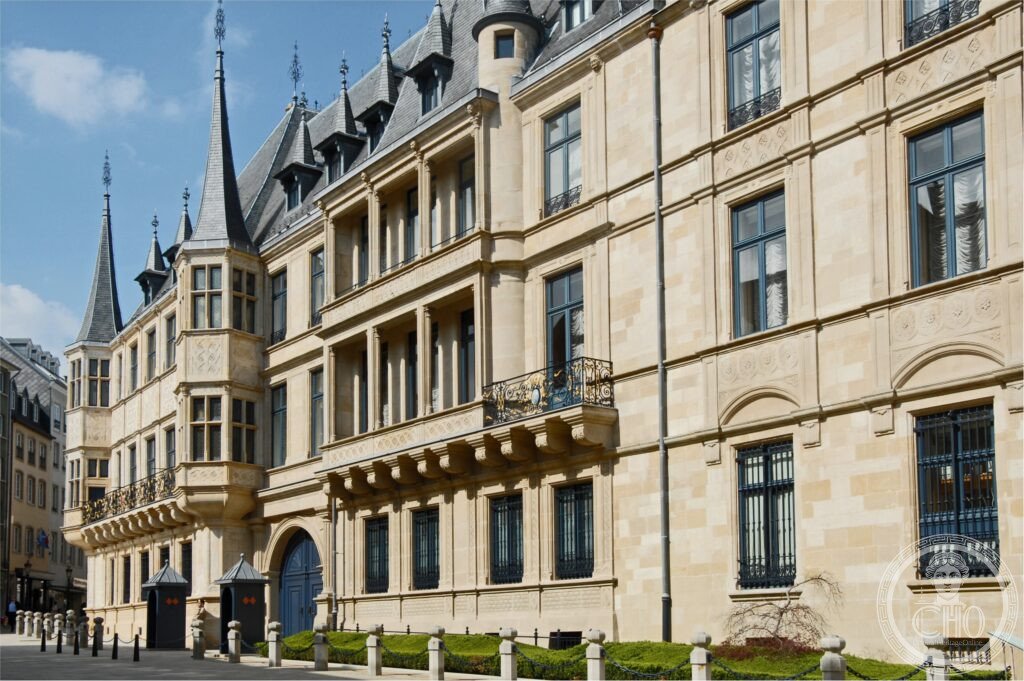
The Battle of the Bulge (the most precisely Battle Bulge single 1944 Luxembourg Patton heritage: in December 1944-January 1945, Luxembourg City was the headquarters of General George S. Patton during the Battle of the Bulge; Patton famously ordered a weather prayer before the relief of Bastogne; he is buried in the American Military Cemetery in Hamm (8 km from Luxembourg City) — the most precisely Patton single 1944 Luxembourg Battle Bulge heritage in any European UNESCO world heritage site; the EU institutions (the most precisely EU institutions single Luxembourg City European Court of Justice heritage: Luxembourg City hosts the European Court of Justice, the European Court of Auditors, the Eurostat office, and the European Investment Bank — the most precisely EU institutions single Luxembourg City European Court of Justice heritage in any European UNESCO world heritage site; the Grand Ducal Palace (the most precisely Grand Ducal Palace single 1572 Renaissance Luxembourg heritage: the Grand Ducal Palace (1572; Renaissance; centre of the old city) is the official residence of the Grand Duke and open for summer tours — the most precisely Grand Ducal Palace single 1572 Renaissance Luxembourg heritage in any European UNESCO world heritage site)); UNESCO WHS 1994.

What you see

The Chemin de la Corniche (the most precisely Chemin Corniche single most beautiful balcony Europe Luxembourg heritage: the Chemin de la Corniche (the “most beautiful balcony in Europe”, per many travel writers) is a pedestrian walkway running along the edge of the upper city plateau, overlooking the Grund and the Alzette Valley below — the most precisely Chemin Corniche single most beautiful balcony Europe Luxembourg heritage in any European UNESCO world heritage site; the Cathedral of Notre-Dame (the most precisely Cathedral Notre-Dame single 1613-1621 Jesuit Luxembourg heritage: Notre-Dame Cathedral (1613-1621; the only cathedral in Luxembourg) was built by the Jesuits in a Gothic-Renaissance transitional style; it contains the Renaissance tomb of the Count of Nassau (1530) and is famous for an annual octave pilgrimage to a statue of the Madonna — the most precisely Cathedral Notre-Dame single 1613-1621 Jesuit Luxembourg heritage in any European UNESCO world heritage site)).

Practical information

  • Getting there: Luxembourg City has its own international airport (LUX; from London 1h 40min; from Paris 1h; from Amsterdam 1h 10min); or by high-speed train from Paris Gare de l’Est (2h 10min; TGV); the city centre is compact and walkable (the most precisely compact single 20 minute walkable Luxembourg heritage: the entire UNESCO World Heritage zone (old city + Grund + Casemates + Corniche) can be explored on foot in 2-3 hours — the most precisely compact single 20 minute walkable Luxembourg heritage in any European UNESCO world heritage site; public transport in Luxembourg is free (the most precisely free single public transport Luxembourg 2020 heritage: since 2020, all public transport in Luxembourg (buses, trams, trains) has been free of charge for all passengers — the most precisely free single public transport Luxembourg 2020 heritage; this applies to visitors too); Casemates du Bock: €7 entry; open April-October

Getting there

Fly to Luxembourg LUX or TGV from Paris (2h 10min). All public transport free since 2020. UNESCO zone walkable in 2-3h. Casemates €7 (April-October). GPS: 49.6116, 6.1319.

Nearby

  • Vianden Castle — 45 km north (50 min by car); one of the largest feudal castles in Western Europe (11th-15th century); overlooking the Our River valley; Victor Hugo lived here in exile (1871); the castle is superbly restored and one of Luxembourg’s most visited sites; cable car from the village below
  • Metz — France — 60 km southwest (40 min by train); the most precisely Metz single Roman capital Mediomatrici Gaul heritage; the Cathedral of Saint-Étienne of Metz (the most precisely Saint-Étienne single 6496 m2 largest stained glass window Europe Metz heritage: Metz Cathedral has the largest area of stained glass windows in the world at 6,496 m² = most precisely 6496 m2 single largest stained glass window world Metz heritage; Chagall windows added 1958-1968)
  • Trier — Germany — 50 km northeast (40 min by car); the most precisely Trier single oldest city Germany Roman 17 BCE heritage (oldest city in Germany; founded by the Romans 17 BCE; UNESCO WHS 1986); the Porta Nigra (the most precisely Porta Nigra single best preserved Roman city gate north Alps heritage: the best-preserved Roman city gate north of the Alps); the Roman Amphitheatre; Karl Marx was born in Trier in 1818 (the most precisely Karl Marx single born 1818 Trier heritage)

Sources

  • Wikipedia, Luxembourg City; Casemates du Bock; Pont Adolphe; Chemin de la Corniche, accessed June 2026
  • UNESCO, City of Luxembourg: its Old Quarters and Fortifications, WHS reference 699, inscribed 1994

Hero image: Luxembourg City, Luxembourg, Wikimedia Commons. Editorial text © Cultural Heritage Online, 2026.

📷 Diventa un fotografo di Cultural Heritage Online

Condividi le tue foto dei luoghi: restano pubblicate con la tua firma come autore. Più vengono viste, più ti fai conoscere — e presto un concorso premierà le foto più apprezzate.

Accedi o registrati gratis per aggiungere una foto
📋 Copy & share on social
Scroll to Top