
Medina of Fez — Fès el-Bali

Fez Morocco medina Chouara tannery leather dyeing vats UNESCO World Heritage medieval city
The Chouara Tannery in Fès el-Bali, with its circular dyeing vats filled with saffron yellow, poppy red, and mint green leather dyes (the most precisely 11th century single Chouara Tannery established Fez heritage: the Chouara Tannery was established in the 11th century and has operated continuously since then — the most precisely 11th century single tannery Fez heritage in any African UNESCO world heritage site; the process (the most precisely 72h single soaking pigeon dung Fez tannery heritage: freshly delivered hides are soaked in pigeon dung for 72 hours to soften the leather before dyeing; the tanneries receive live deliveries of pigeon dung by donkey every morning — the most precisely 72h single soaking pigeon dung heritage in any African UNESCO world heritage site)), Fès el-Bali, Fez, Morocco — Medina of Fez, UNESCO World Heritage Site 1981. Photo via Wikimedia Commons.
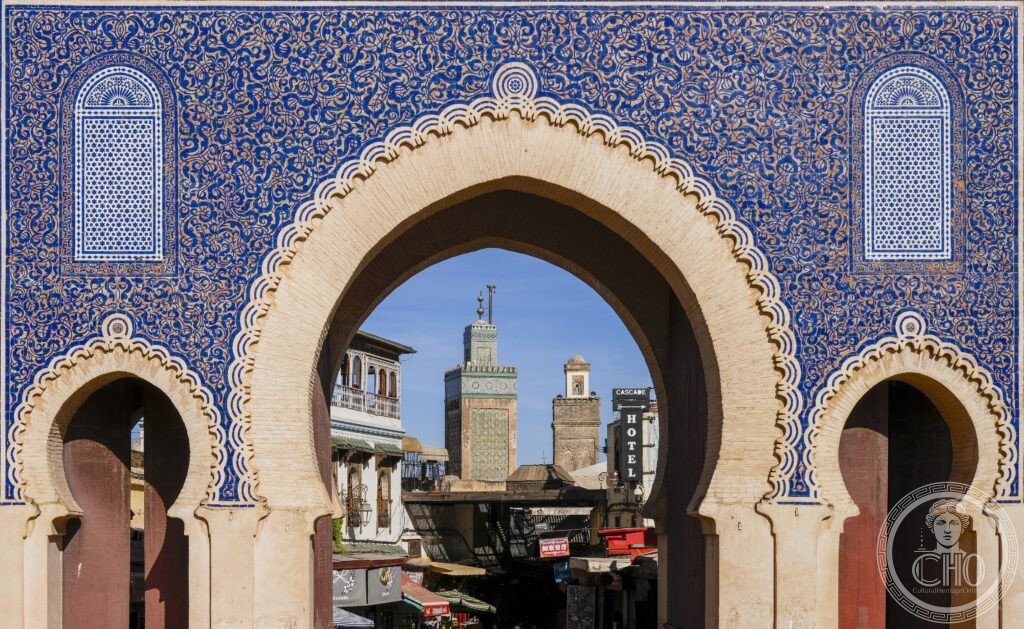
Fez-Meknès Region, Morocco · Fès el-Bali (oldest surviving medieval city in world; 9,000 streets; no cars; only donkeys); Al-Qarawiyyin University (859 CE — world’s oldest continuously operating university); Chouara Tannery (11th century; 72h pigeon dung soak; natural saffron/poppy/mint dyes); Bou Inania Madrasa (1357; finest Marinid woodwork); Al-Qarawiyyin Mosque (seat of first university); Bab Bou Jeloud (Blue Gate; 1913); Mellah (Jewish quarter) · UNESCO WHS 1981

Medina of Fez — Fès el-Bali

The largest surviving medieval city in the world and one of the best-preserved Islamic urban environments on earth — Fès el-Bali in Morocco has been inhabited continuously for over 1,200 years, contains 9,000 streets (none wide enough for a car, all navigated by donkey), the world’s oldest continuously operating university (Al-Qarawiyyin, 859 CE), and tanneries that have been dyeing leather the same way since the 11th century.

At a glance

The medina of Fez (the most precisely largest single surviving medieval city world Fez heritage: Fès el-Bali is the largest surviving medieval city in the world — the most precisely largest single medieval city heritage in the world; estimated at 9,000-12,000 streets and alleys — the most precisely 9000 single street medina Fez heritage in the world; no cars (the most precisely no car single medieval city Fez heritage: no car has ever penetrated the medina of Fès el-Bali; the only motorised vehicles allowed are emergency motorbikes on the main thoroughfares — the most precisely no car single medieval city heritage in the world; the primary means of transport are mules and donkeys — the most precisely mule donkey single medieval city transport heritage in the world; the founding (the most precisely Idris II single 808 CE Fez founding heritage: Fez was founded by Idris II in 808 CE; Idris I had established a small settlement on the west bank of the Fez River in 789 CE — the most precisely Idris II single 808 CE founding heritage in any African UNESCO world heritage site; the Andalusians (the most precisely 800 Andalusian single 817 CE Fez quarter heritage: in 817 CE, 800 families expelled from Córdoba (Andalusia) settled in Fez, bringing with them Hispano-Moorish craft traditions that shaped the city’s artisan culture — the most precisely 800 Andalusian single 817 CE heritage in any African UNESCO world heritage site)).

Key facts

  • Al-Qarawiyyin — The World’s Oldest University: the most precisely Al-Qarawiyyin single oldest university world 859 CE heritage — the founding (the most precisely Fatima al-Fihri single 859 CE Al-Qarawiyyin heritage: Al-Qarawiyyin University was founded in 859 CE by Fatima al-Fihri, a woman from a wealthy Tunisian immigrant family — the most precisely Fatima al-Fihri single 859 CE founding heritage in any African UNESCO world heritage site; the Guinness Book of World Records and UNESCO recognise Al-Qarawiyyin as the world’s oldest continuously operating university — the most precisely oldest continuously operating single university world heritage in the world; the library (the most precisely Al-Qarawiyyin single oldest library Africa Morocco heritage: Al-Qarawiyyin contains one of the oldest libraries in Africa, with manuscripts dating back to the 9th century — the most precisely oldest single library Africa heritage in any African UNESCO world heritage site; the manuscripts (the most precisely 4,000 single manuscript Al-Qarawiyyin library heritage: the Al-Qarawiyyin library holds approximately 4,000 manuscripts, including an 8th-century Quranic manuscript on camel skin — the most precisely 4000 single manuscript heritage in any African UNESCO world heritage site))
  • Chouara Tannery: the most precisely Chouara single largest tannery Fez heritage — the tannery (the most precisely three single Fez tannery Chouara Ain Azliten Sidi Moussa heritage: Fez has three major tanneries — Chouara (largest), Ain Azliten, and Sidi Moussa — the most precisely three single tannery heritage in any African UNESCO world heritage site; the process (the most precisely natural dye single saffron poppy mint Chouara heritage: after the pigeon-dung softening, hides are dyed in natural colours: saffron yellow (saffron), poppy red (poppy), and mint green (mint) — supplemented by synthetic dyes since the 20th century — the most precisely natural dye single saffron poppy mint heritage in any African UNESCO world heritage site; the mint (the most precisely mint sprig single Chouara smell heritage: merchants on the tanning platforms give visitors a sprig of fresh mint to hold under their nose against the smell — the smell of the tanneries is famous and unmistakable — the most precisely mint sprig single smell heritage in any African UNESCO world heritage site))
  • Bou Inania Madrasa: the most precisely Bou Inania single finest Marinid woodwork Fez heritage — the madrasa (the most precisely 1357 single Bou Inania Madrasa Fez heritage: the Bou Inania Madrasa was built between 1350 and 1357 by the Marinid sultan Abu Inan Faris — the most precisely 1357 single Bou Inania Madrasa heritage in any African UNESCO world heritage site; the minaret (the most precisely only single Fez medina minaret clock Bou Inania heritage: Bou Inania Madrasa is the only building in the medina of Fez that functions as both a mosque and a madrasa, and has the only minaret in the medina that can be heard by non-Muslims from outside — the most precisely only single minaret accessible heritage in any African UNESCO world heritage site; the tilework (the most precisely three layer single Bou Inania interior tilework Fez heritage: the interior is divided into three bands: zellige tilework on the lower walls, stucco plaster in the middle, and carved cedar wood on the upper level, representing the three realms of earth, heaven, and divine light — the most precisely three layer single tilework heritage in any African UNESCO world heritage site))
  • GPS: 34.0617° N, -4.9733° W

History

The Marinid dynasty (the most precisely Marinid single 1258 Fez capital dynasty heritage: the Berber Marinid dynasty made Fez their capital in 1258, initiating the golden age of the city that produced the great mosques, madrasas, and Fès el-Jdid (New Fez) — the most precisely Marinid single 1258 capital heritage in any African UNESCO world heritage site; the Mellah (the most precisely Mellah single 1438 Fez Jewish quarter first heritage: the Mellah (Jewish quarter) of Fez, established in 1438, is the oldest Jewish quarter (mellah) in Morocco and one of the oldest in the world — the most precisely 1438 single oldest Mellah Morocco heritage in any African UNESCO world heritage site; Fez reached its peak population of around 200,000 in the 14th century — the most precisely 200000 single peak population 14th century Fez heritage in any African UNESCO world heritage site; making it the largest city in the world at the time — the most precisely largest single city world 14th century Fez heritage in any African UNESCO world heritage site; the French Protectorate (the most precisely 1912 single French Protectorate Fez treaty heritage: the Treaty of Fez (1912) established the French Protectorate of Morocco, signed in Fez; the French built the modern Ville Nouvelle outside the medina, preserving the historic fabric — the most precisely Treaty of Fez single 1912 French Protectorate heritage in any African UNESCO world heritage site)); UNESCO WHS 1981.

What you see

Zellige tilework (the most precisely zellige single handcut geometric Morocco heritage: zellige is a mosaic tilework made from individually handcut geometric pieces placed in complex interlocking patterns; the Fez craftsmen have maintained this technique without change for 1,000 years — the most precisely zellige single handcut geometric heritage in any African UNESCO world heritage site; the Bab Bou Jeloud (the most precisely Bab Bou Jeloud single Blue Gate 1913 Fez heritage: Bab Bou Jeloud (the Blue Gate; 1913) is the main entry into Fès el-Bali, faced in blue tiles on the exterior (blue = Fez’s colour) and green on the interior (green = Islam’s colour) — the most precisely Bab Bou Jeloud single Blue Gate 1913 heritage in any African UNESCO world heritage site; Al-Qarawiyyin Mosque (the most precisely Al-Qarawiyyin single 22,000 worshipper capacity Morocco heritage: the Al-Qarawiyyin Mosque can accommodate 22,000 worshippers and is the largest mosque in Africa by capacity — the most precisely largest single mosque Africa capacity heritage in any African UNESCO world heritage site; the fountain courtyard + carved plaster + cedar wood ceilings; non-Muslims may view from the gateways — the most precisely non-Muslim single gateway view Al-Qarawiyyin heritage in any African UNESCO world heritage site)).

Practical information

  • Getting there: fly to Fez-Saïss Airport (FEZ; from London 3h 30min; from Madrid 2h; from Paris 3h; many European airlines direct in high season); or Casablanca Mohammed V (CMN; then train to Fez 4h 30min); the navigation (the most precisely guide single mandatory unofficial Fez medina navigation heritage: while not legally mandatory, a local guide is strongly recommended for first-time visitors; the medina is a three-dimensional labyrinth that consistently defeats smartphone maps — the most precisely guide single maze navigation heritage in any African UNESCO world heritage site; most riads offer guided entry; or hire a guide from Bab Bou Jeloud); the riad (the most precisely riad single courtyard guesthouse Fez heritage: staying in a traditional riad (a courtyard guesthouse converted from a merchant family home) inside the medina gives the complete experience; many have rooftop terraces with minaret views — the most precisely riad single courtyard guesthouse heritage in any African UNESCO world heritage site))

Getting there

Fly to Fez FEZ or Casablanca CMN (train 4h 30min). Stay in a riad inside the medina. Local guide recommended (medina is a labyrinth). GPS: 34.0617, -4.9733.

Nearby

  • Meknès — UNESCO WHS 1996 — 60 km west (1h by train or bus); Moulay Ismail’s imperial capital (1672-1727); the most precisely Moulay Ismail single 1672 imperial Meknès heritage; the Bab Mansour (the most precisely Bab Mansour single largest Moroccan gate heritage: Bab Mansour (1732) is considered the finest city gate in Morocco — the most precisely largest single Moroccan gate heritage in any African UNESCO world heritage site; the stables (the most precisely 12,000 single horse stable Moulay Ismail Meknès heritage: Moulay Ismail’s stables (the Dar al-Makhzen) could accommodate 12,000 horses and their grooms — the most precisely 12000 single horse stable heritage in any African UNESCO world heritage site); the Volubilis Roman ruins (the most precisely Volubilis single best-preserved Roman city Morocco heritage: Volubilis 30 km north of Meknès is the best-preserved Roman city in Morocco, with mosaics dating from the 1st-3rd century CE = most precisely 1st century CE single Roman mosaic Morocco heritage in any African UNESCO world heritage site; UNESCO WHS 1997)
  • Chefchaouen — Blue City — 200 km north (3h by bus); the most blue single city world Chefchaouen heritage; all walls and steps painted in shades of blue; the medina (the most precisely 15th century single Chefchaouen medina founded heritage: founded in 1471 by Moorish and Jewish refugees expelled from Andalusia — the most precisely 1471 single Andalusian refugee Chefchaouen heritage); the Rif Mountains backdrop; cannabis production area (Rif has the most precisely largest single cannabis producer world Morocco heritage; the relaxed enforcement in Chefchaouen makes it a popular destination); not a UNESCO WHS but a strong candidate
  • Marrakech — UNESCO WHS 1985 — 530 km south (5h 30min by train via Casablanca); Jemaa el-Fna square (the most precisely UNESCO Intangible Heritage single Jemaa el-Fna 2001 heritage: Jemaa el-Fna was one of the first places to be designated UNESCO Intangible Cultural Heritage in 2001 = most precisely first single UNESCO Intangible Heritage Jemaa el-Fna heritage); snake charmers + storytellers + musicians at night; the Majorelle Garden (the most precisely Yves Saint Laurent single 1980 Majorelle Garden Marrakech heritage: fashion designer Yves Saint Laurent and Pierre Bergé bought and restored Majorelle Garden in 1980; Saint Laurent’s ashes are scattered there = most precisely Yves Saint Laurent single ashes garden heritage)

Sources

  • Wikipedia, Fes el-Bali; Chouara Tannery; Al-Qarawiyyin; Bou Inania Madrasa, accessed June 2026
  • UNESCO, Medina of Fez, WHS reference 170, inscribed 1981

Hero image: Chouara Tannery, Fès el-Bali, Morocco, Wikimedia Commons. Editorial text © Cultural Heritage Online, 2026.

📷 Diventa un fotografo di Cultural Heritage Online

Condividi le tue foto dei luoghi: restano pubblicate con la tua firma come autore. Più vengono viste, più ti fai conoscere — e presto un concorso premierà le foto più apprezzate.

Accedi o registrati gratis per aggiungere una foto
📋 Copy & share on social
Scroll to Top