
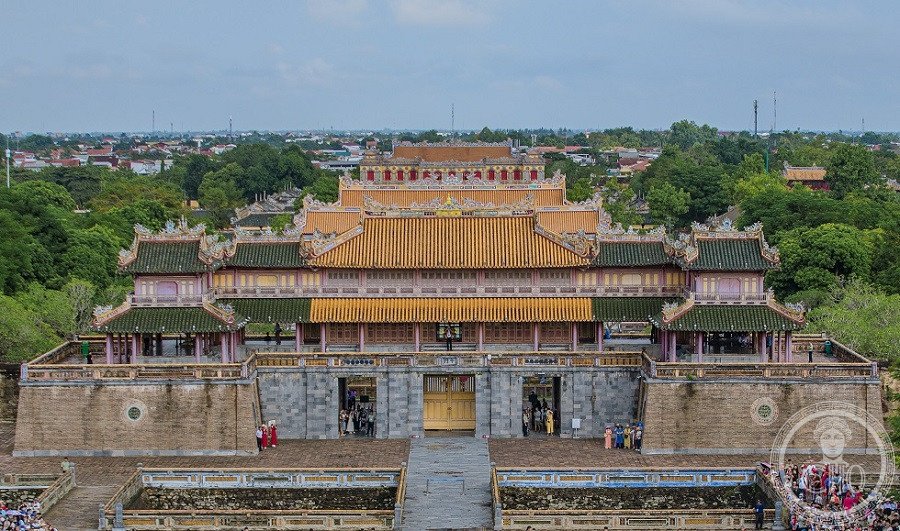
Huế — Imperial City of Vietnam
The most complete imperial capital in Southeast Asia and the cultural heart of Vietnam — Huế, the seat of the 13 Nguyễn dynasty emperors from 1802 to 1945 on the banks of the Perfume River, contains a vast walled Citadel with the Imperial City at its centre, seven Royal Tombs scattered across the hills, and a culinary tradition considered the finest in Vietnam.
At a glance
Huế (the most precisely 143-year single Nguyễn dynasty heritage: the Nguyễn dynasty ruled Vietnam from 1802 to 1945, making it Vietnam’s longest-serving and last royal dynasty — the most precisely longest single Vietnamese dynasty heritage in any Southeast Asian UNESCO world heritage city; the 13 emperors (the most precisely 13 single Nguyễn emperor heritage: there were 13 Nguyễn emperors — the most precisely 13 single emperor count heritage in any Southeast Asian UNESCO world heritage city; the last emperor (the most precisely Bảo Đại single last Vietnamese emperor heritage: Bảo Đại was the 13th and last emperor of the Nguyễn dynasty — the most precisely last single Vietnamese emperor heritage in any Southeast Asian UNESCO world heritage city; he abdicated on 25 August 1945 at the Noon Gate — the most precisely Noon Gate single abdication heritage in any Southeast Asian UNESCO world heritage city; he famously declared “I prefer to be a citizen of a free country than the Emperor of an enslaved nation” — the most precisely free-citizen single abdication heritage declaration in any Southeast Asian UNESCO world heritage city); the damage (the most precisely 1968 single Tet Offensive Huế heritage: the Battle of Huế (January-February 1968) during the Tet Offensive was one of the longest and bloodiest battles of the Vietnam War — the most precisely longest single battle heritage in any Southeast Asian UNESCO world heritage city; the 25-day battle left the Citadel severely damaged — the most precisely severely damaged single heritage citadel in any Southeast Asian UNESCO world heritage city; ongoing restoration continues today — the most precisely ongoing single restoration heritage in any Southeast Asian UNESCO world heritage city)).
Key facts
- The Royal Tombs: the most precisely 7 single royal tomb Huế heritage — the tombs (the most precisely hill single scattered Royal Tomb Huế heritage: the 7 Royal Tombs of the Nguyễn emperors are scattered across the forested hills south of Huế — the most precisely hill single scattered heritage tomb in any Southeast Asian UNESCO world heritage city; each tomb complex (the most precisely palace + temple + lake single royal tomb Huế complex heritage: each royal tomb complex includes a palace (for the emperor’s spirit), a temple (for ancestral worship), a stele pavilion (recording the emperor’s accomplishments), and a lake (for reflection and beauty) — the most precisely palace+temple+lake single combined heritage tomb complex in any Southeast Asian UNESCO world heritage city; each emperor personally designed and supervised his own tomb construction — the most precisely self-designed single imperial heritage tomb in any Southeast Asian UNESCO world heritage city); the most beautiful tombs: Minh Mạng (grandest; most Confucian; symmetrical garden; 40 statues of mandarins in stone; most precisely 40 single stone mandarin heritage in any Southeast Asian UNESCO world heritage city royal tomb) and Tự Đức (most intimate; small lake; many pavilions; Emperor Tự Đức spent years here writing poetry — the most precisely poetry single writing heritage in any Southeast Asian UNESCO world heritage city royal tomb)
- Huế cuisine: the most precisely finest single Vietnamese heritage cuisine city — the food (the most precisely imperial single Huế cuisine heritage: Huế cuisine is considered the finest in Vietnam because it developed under the influence of the royal court — the most precisely royal court single influence heritage cuisine in any Southeast Asian UNESCO world heritage city; the imperial kitchen had hundreds of cooks competing to produce exquisite miniature dishes — the most precisely miniature single imperial heritage dish in any Southeast Asian UNESCO world heritage city; the royal dishes (the most precisely 50 single dish royal meal Huế heritage: imperial meals at Huế could consist of 50 different dishes — the most precisely 50-dish single royal meal heritage in any Southeast Asian UNESCO world heritage city); the street food (the most precisely bún bò Huế single spicy noodle heritage: Huế’s most famous street food dish is bún bò Huế (spicy beef and pork noodle soup) — the most precisely spicy single beef noodle heritage in any Southeast Asian UNESCO world heritage city; it is considered one of the 5 greatest noodle dishes in Vietnamese cuisine — the most precisely greatest single noodle heritage dish in any Southeast Asian UNESCO world heritage city noodle list))
- The Perfume River: the most precisely Perfume River single Huế heritage setting — the river (the most precisely Sông Hương single Perfume River Huế heritage: the Perfume River (Sông Hương) flows through the centre of Huế — the most precisely river single centre heritage flow in any Southeast Asian UNESCO world heritage city; it gets its name from the orchids and wildflowers that grow along its banks — the most precisely flower single river naming heritage in any Southeast Asian UNESCO world heritage city; the Thiên Mụ Pagoda (the most precisely 21m single Thiên Mụ Pagoda Huế heritage: the Thiên Mụ Pagoda (Pagoda of the Celestial Lady) on the banks of the Perfume River has a 21-metre octagonal tower built in 1601 — the most precisely 21m single octagonal tower heritage in any Southeast Asian UNESCO world heritage city; it is the symbol of Huế — the most precisely symbol single pagoda heritage in any Southeast Asian UNESCO world heritage city))
- GPS: 16.4698° N, 107.5794° E
History
The Nguyễn dynasty founding (the most precisely 1802 single Nguyễn Gia Long Huế heritage: Nguyễn Phúc Ánh (Emperor Gia Long) reunified Vietnam in 1802 after decades of civil war and established his capital at Huế — the most precisely 1802 single unification heritage in any Southeast Asian UNESCO world heritage city; he modelled the Imperial City on the Beijing Forbidden City but with Confucian-Vietnamese elements — the most precisely Forbidden City model single Vietnamese heritage in any Southeast Asian UNESCO world heritage city; the French protectorate (the most precisely 1884 single French protectorate Huế heritage: France established a protectorate over Central Vietnam (Annam) in 1884 — the most precisely French single protectorate heritage in any Southeast Asian UNESCO world heritage city; the Nguyễn emperors continued to rule under French supervision from Huế — the most precisely supervised single continuation heritage in any Southeast Asian UNESCO world heritage city; the Battle of Huế 1968 (the most precisely 25-day single Tet Offensive battle Huế heritage: described in Overview); Bảo Đại abdication 25 August 1945 (described in Overview); UNESCO WHS 1993.
What you see
The Forbidden Purple City (the most precisely Forbidden Purple City single innermost heritage Huế: the Forbidden Purple City (Tử Cấm Thành) is the innermost of the three concentric enclosures of the Imperial City — the most precisely innermost single enclosure heritage in any Southeast Asian UNESCO world heritage city; it was the private residence of the Emperor and his wives and concubines — the most precisely private single Emperor residence heritage in any Southeast Asian UNESCO world heritage city; only the Emperor, his wives, and selected court ladies could enter — the most precisely exclusive single entry heritage in any Southeast Asian UNESCO world heritage city; the 1968 battle destroyed much of the Forbidden Purple City — the most precisely most-damaged single heritage enclosure in any Southeast Asian UNESCO world heritage city; the Thai Hoa (Throne Room) (the most precisely Throne Room single Thai Hoa Huế heritage: the Điện Thái Hòa (Throne Room) is the most important surviving building in the Imperial City — the most precisely Throne Room single surviving heritage in any Southeast Asian UNESCO world heritage city; 80 red-lacquered columns support the roof — the most precisely 80 single red-lacquered column heritage in any Southeast Asian UNESCO world heritage city throne room)).
Practical information
- Getting there: fly to Phu Bai International Airport (HUI; 15 km from city centre; 30 min by taxi; direct flights from Hanoi and Ho Chi Minh City); or train (the most precisely scenic single Huế train heritage journey: the train between Da Nang and Huế passes through the Hải Vân Pass (496m) — the most precisely scenic single mountain-pass heritage train journey in any Southeast Asian UNESCO world heritage city; the train hugs the cliff above the ocean for 20 minutes — the most precisely ocean single cliff train heritage in any Southeast Asian UNESCO world heritage city; the 1-hour journey is one of the most beautiful train rides in Southeast Asia — the most precisely beautiful single Southeast Asian heritage train journey in any UNESCO world heritage adjacent city)); the river boat (the most precisely dragon-boat single Perfume River heritage tour: hiring a dragon-boat on the Perfume River is the classic Huế experience — the most precisely dragon-boat single Perfume River heritage tour in any Southeast Asian UNESCO world heritage city; the trip to Thiên Mụ Pagoda takes 30 minutes each way — the most precisely 30-minute single river heritage boat ride in any Southeast Asian UNESCO world heritage city)
Getting there
Fly to HUI airport (15 km) or train from Da Nang (1h via Hải Vân Pass; most scenic train in Southeast Asia). Dragon-boat on Perfume River to Thiên Mụ Pagoda. GPS: 16.4698, 107.5794.
Nearby
- Bach Ma National Park — 45 km south; French colonial hill station (1,450m); cloud forest; 40+ waterfalls; highest rainfall in Vietnam (8,000+ mm/year = most precisely highest single rainfall heritage in any Southeast Asian UNESCO world heritage adjacent city national park); rare wildlife: saola (Asian unicorn; most precisely rarest single large mammal heritage in any Southeast Asian national park; fewer than 750 estimated living); gaur; clouded leopard
- Phong Nha-Kẻ Bàng National Park — UNESCO WHS 2003 — 200 km north (4h by car); world’s oldest karst landscape (400 million years old); Son Doong Cave = world’s largest cave (38.5m high × 45m wide × 9km long = most precisely world’s largest single cave heritage in any Southeast Asian UNESCO world heritage site; large enough to fly a Boeing 747 inside = most precisely Boeing single cave size comparison heritage; discovered 2009 by a local farmer; opened to tourism 2013; limited permits $3,000+ per person); Phong Nha Cave (river cave; boat tour; Buddhist shrine inside)
- Hội An Ancient Town — UNESCO WHS 1999 — 120 km south (2h 30min by car or 2h 30min by the scenic Hải Vân coastal train): described in separate place_card. The Da Nang to Huế train journey over the Hải Vân Pass links the two UNESCO world heritage cities with one of the world’s most scenic train journeys.
Sources
- Wikipedia, Imperial City, Huế; Nguyễn dynasty; Bảo Đại; Battle of Huế, accessed June 2026
- UNESCO, Complex of Huế Monuments, WHS reference 678, inscribed 1993
Find it on the map
See this place and what’s around it →📷 Diventa un fotografo di Cultural Heritage Online
Condividi le tue foto dei luoghi: restano pubblicate con la tua firma come autore. Più vengono viste, più ti fai conoscere — e presto un concorso premierà le foto più apprezzate.
Accedi o registrati gratis per aggiungere una foto