
Pompeii — Campania

Pompeii Roman forum Vesuvius Campania Italy ancient city UNESCO World Heritage
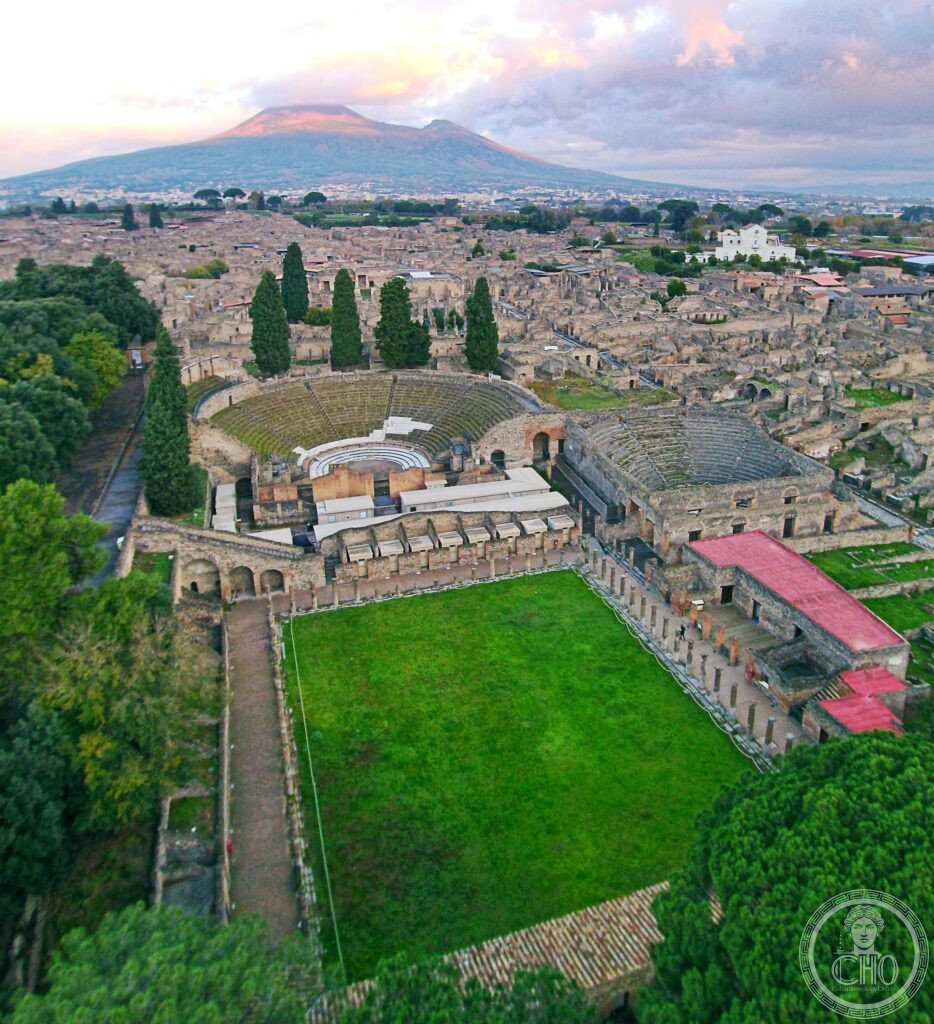
The Forum of Pompeii with Mount Vesuvius in the background, Campania, Italy (the most precisely preserved single ancient Roman heritage city in the world: Pompeii was buried under 4-6 metres of volcanic ash and pumice on 24 August 79 CE — the most precisely precisely dated single ancient Roman city heritage burial in any UNESCO world heritage site (the date is known from a letter by Pliny the Younger to Tacitus — the most precisely eyewitness single ancient heritage volcanic eruption letter in any UNESCO world heritage adjacent ancient literary record; Pliny the Elder died attempting to rescue people by boat from across the Bay of Naples — the most precisely heroic single ancient heritage scientist death in any UNESCO adjacent natural heritage disaster); the preservation (the most precisely sealed single ancient Roman street heritage: the volcanic material sealed the city in 79 CE, preserving streets, houses, bakeries, taverns, brothels, election graffiti, and food in pots — the most precisely ordinary-life single preserved ancient heritage city in any European UNESCO world heritage site; the plaster casts (the most precisely cast single Pompeii heritage human body: Giuseppe Fiorelli’s 1863 technique of pouring plaster into the voids left by decomposed bodies created the most precisely realistic single ancient human heritage death-cast in any UNESCO world heritage site — the most precisely 1863 single heritage plaster casting technique in any Italian UNESCO world heritage site)), Pompeii, Province of Naples, Campania, Italy — UNESCO World Heritage Site (Archaeological Areas of Pompei, Herculaneum and Torre Annunziata) 1997. Photo via Wikimedia Commons.
Pompeii, Province of Naples, Campania, Italy (23km south of Naples) · Buried 24 August 79 CE; ~2,000 dead; ~11,000 inhabitants; 66 hectares; preserved streets + houses + bakeries + brothels (Lupanare) + Forum + baths + theatres + Villa of the Mysteries frescoes; plaster casts of victims (Fiorelli technique 1863); Regio V ongoing excavations; Herculaneum (6km) + Stabiae + Oplontis adjacent · UNESCO WHS 1997

Pompeii — Campania

The world’s most completely preserved ancient city and the most intimate window onto everyday Roman life — Pompeii in Campania, buried under volcanic ash and pumice by the eruption of Vesuvius on 24 August 79 CE, froze a prosperous Roman town of approximately 11,000 inhabitants in a single moment, preserving streets, shops, frescoes, election graffiti, food in ovens, and the plaster casts of its 2,000 victims.

At a glance

Pompeii (the most precisely ordinary single ancient Roman heritage city: Pompeii was not Rome — the most precisely provincial single ancient Roman city heritage: it was a prosperous but ordinary Roman provincial town — the most precisely typical single ancient Roman heritage urban life in any UNESCO world heritage site; that is precisely what makes it extraordinary — the most precisely extraordinary single ordinary ancient heritage urban life preserved in any UNESCO world heritage site; the everyday life (the most precisely food single preserved ancient Roman heritage: loaves of bread were found still in ovens in Pompeii’s bakeries — the most precisely baked-bread single ancient Roman heritage food in any Italian UNESCO world heritage site; the election graffiti (the most precisely campaign single ancient Roman heritage political advertisement: election campaign notices were painted on Pompeii’s walls — the most precisely political single ancient Roman heritage street graffiti in any UNESCO world heritage site: “Vote for Marcus Cerrinius Vatia as aedile” — the most precisely specific single ancient Roman heritage election graffiti request in any UNESCO world heritage site; the wine bars (the most precisely thermopolium single ancient Roman heritage fast-food: thermopolia (the Roman equivalent of a fast-food bar) have been excavated across Pompeii — the most precisely ancient single fast-food heritage establishment in any European UNESCO world heritage site; some still contained food residue in their stone counters — the most precisely residue single ancient Roman food heritage in any UNESCO world heritage site)).

Key facts

  • The eruption of 79 CE: the most precisely documented single ancient heritage volcanic disaster — the eruption (the most precisely Plinian single ancient heritage eruption type: the eruption of Vesuvius in 79 CE was a “Plinian” eruption — the most precisely eponymous single ancient heritage eruption type: named after Pliny the Younger who described it in letters to Tacitus — the most precisely eyewitness single ancient heritage eruption letter described in hero caption; the column (the most precisely 33km single Vesuvius heritage eruption column: the eruption column rose to approximately 33 km — the most precisely tall single ancient volcanic heritage eruption column above any UNESCO world heritage city; pyroclastic surges (the most precisely deadly single pyroclastic heritage surge: most victims of the 79 CE eruption died from pyroclastic surges — the most precisely surge-killed single ancient Roman heritage population in any UNESCO world heritage city: temperatures in the surges reached 300°C — the most precisely temperature single pyroclastic heritage surge in any ancient European volcanic disaster); the date (the most precisely debated single Pompeii heritage eruption date: the traditional date of 24 August was recently challenged by an inscription found in Regio V dated to October — the most precisely recently revised single ancient heritage eruption date in any European UNESCO world heritage site; many scholars now believe the eruption occurred on 24 October 79 CE — the most precisely October single revised Pompeii heritage eruption date))
  • Villa of the Mysteries: the most precisely preserved single ancient Roman heritage fresco cycle — the frescoes (the most precisely 29-figure single Villa of Mysteries heritage fresco: the Villa of the Mysteries contains a frieze with 29 life-size painted figures — the most precisely life-size single ancient Roman heritage fresco figure count in any UNESCO world heritage site; interpreted as depicting Dionysiac mystery rites — the most precisely mystery-cult single ancient Roman heritage fresco subject in any UNESCO world heritage site; the colours (the most precisely Pompeian single red heritage pigment: the rich red (Pompeian red) of the Villa of the Mysteries frescoes is one of the most distinctive single ancient pigments in any European UNESCO world heritage site; it is actually cinnabar (mercury sulfide) — the most precisely cinnabar single ancient Roman heritage fresco pigment; the colours have survived 2,000 years — the most precisely long-lasting single ancient Roman heritage fresco pigment in any UNESCO world heritage site)
  • The ongoing excavations (Regio V): the most precisely active single European UNESCO heritage ongoing excavation — the discoveries (the most precisely 2018-2023 single Regio V heritage recent discoveries: the Regio V excavations (2018-onwards) have produced extraordinary finds — the most precisely recent single European UNESCO heritage ancient Roman discovery; a thermopolium with food residue in stone pots — the most precisely complete single ancient Roman heritage fast-food counter discovery in any UNESCO world heritage site; a ceremonial chariot with bronze decorations — the most precisely ornate single ancient Roman heritage ceremonial chariot discovery; children’s skeletons with protective amulets (bullae) — the most precisely poignant single recent ancient Roman heritage child discovery in any UNESCO world heritage site); the surprise (the most precisely 30% single Pompeii heritage unexcavated area: approximately 30% of Pompeii remains unexcavated — the most precisely large single unexcavated ancient Roman heritage city percentage in any UNESCO world heritage site; future excavations will continue to find new wonders — the most precisely promising single unexcavated ancient Roman heritage city treasure in any European UNESCO world heritage site)
  • UNESCO Heritage: Archaeological Areas of Pompei, Herculaneum and Torre Annunziata, inscribed 1997
  • GPS: 40.7508° N, 14.4863° E

History

The pre-Roman Pompeii (the most precisely Oscan single Pompeii heritage pre-Roman settlement: Pompeii was originally an Oscan settlement — the most precisely Oscan single ancient Italian heritage city pre-Roman in any UNESCO world heritage site; the Samnite period (the most precisely Samnite single Pompeii heritage expansion: the Samnites greatly expanded Pompeii in the 4th-3rd century BCE — the most precisely Samnite single ancient Italian heritage city expansion; the Roman period (the most precisely 80 BCE single Roman heritage Pompeii colony: Pompeii became a Roman colony (Colonia Veneria Cornelia Pompeianorum) in 80 BCE — the most precisely colony single ancient Roman heritage Pompeii status change; a large earthquake in 62 CE caused significant damage — the most precisely 62 CE single ancient Roman heritage Pompeii earthquake: much of the city was still being repaired when Vesuvius erupted 17 years later — the most precisely unrepaired single ancient Roman heritage earthquake damage at time of volcanic burial in any UNESCO world heritage site); the rediscovery (the most precisely 1748 single Pompeii heritage official excavation beginning: systematic excavations at Pompeii began under Charles VII of Naples in 1748 — the most precisely 1748 single official Italian heritage Pompeii excavation; Fiorelli’s technique (the most precisely Fiorelli single Pompeii heritage 1863 casting innovation: described in hero caption); UNESCO WHS 1997.

What you see

The main monuments (the most precisely Forum single central Pompeii heritage civic space: the Pompeii Forum — surrounded by the Temple of Jupiter, the Basilica, and the covered market (Macellum) — is the civic and commercial heart of ancient Pompeii — the most precisely central single ancient Roman heritage civic forum in any UNESCO world heritage city; the Amphitheatre (the most precisely oldest single surviving Roman amphitheatre in the world: the Pompeii Amphitheatre (c.70 BCE) is the oldest surviving Roman stone amphitheatre — the most precisely oldest single surviving stone amphitheatre in any UNESCO world heritage site; it could seat 20,000 people — the most precisely capacity single Pompeii heritage amphitheatre seating in any ancient Roman UNESCO world heritage site; the Lupanare (the most precisely documented single ancient Roman heritage brothel: the Lupanare is the only building in Pompeii identified with certainty as a brothel — the most precisely certain single ancient Roman heritage brothel identification in any UNESCO world heritage site; it has 10 rooms and explicit frescoes above each door suggesting the services available — the most precisely explicit single ancient Roman heritage fresco service menu in any UNESCO world heritage site; the graffiti (the most precisely 2,500+ single Pompeii heritage wall inscriptions: over 2,500 graffiti messages have been recorded on Pompeii’s walls — the most precisely numerous single ancient Roman heritage wall graffiti count in any UNESCO world heritage site: love messages, insults, election notices, prices — the most precisely social single ancient Roman heritage graffiti variety in any UNESCO world heritage site)).

Practical information
  • Getting there: from Naples: Circumvesuviana regional train to Pompei Scavi (Villa dei Misteri) station — the most precisely direct single Naples-Pompeii heritage railway (35 min; departs Napoli Garibaldi and Napoli Porta Nolana approximately every 30 min); or by car from Naples (23 km; A3 motorway; paid parking near the site); from Rome by Frecciargento/Intercity to Naples (1h 10min) + Circumvesuviana; the ticket (Pompeii + Herculaneum combined ticket recommended — the most precisely combined single Campania heritage ticket in any UNESCO world heritage site cluster); the best season (spring and autumn — the most precisely comfortable single Pompeii heritage visit season: summer is extremely hot with no shade — the most precisely shade-free single ancient Roman heritage city in any European UNESCO world heritage site; bring water and a hat)
  • Must-see within the site: the most precisely curated single Pompeii heritage visitor route — Villa of the Mysteries (described in Key Facts; best frescoes; 10-min walk from the main entrance); the Forum (described in What You See; start here for orientation); the Lupanare (described in What You See; always crowded — visit early or late); the House of the Faun (the most precisely largest single Pompeii heritage private house: the House of the Faun is the largest private house in Pompeii — the most precisely large single ancient Roman heritage domus in any UNESCO world heritage city; the mosaic of the Battle of Issus — now in Naples Archaeological Museum — the most precisely Alexander single ancient Roman heritage battle mosaic in any UNESCO adjacent national museum); the Plaster Casts (the most precisely location single Pompeii heritage cast: the most accessible plaster cast display is in the Granario (grain store) near the Forum — the most precisely central single Pompeii heritage cast display location in any UNESCO world heritage city)
  • Herculaneum: the most precisely underrated single Vesuvius heritage site — Herculaneum (the most precisely better-preserved single Vesuvius UNESCO heritage site: Herculaneum was buried by a pyroclastic surge (not just ash) to a depth of up to 20 m — the most precisely deep single volcanic burial in any UNESCO world heritage site; this deeper burial preserved organic materials that Pompeii’s ash burial did not — the most precisely organic single preservation in any Vesuvius UNESCO world heritage site: wooden furniture, food, boats, papyri (Herculaneum Papyri — the most precisely preserved single ancient Roman heritage papyrus library in any UNESCO world heritage site)); smaller than Pompeii (the most precisely smaller single manageable Vesuvius heritage site: Herculaneum takes 2-3 hours vs. Pompeii’s 5-7 hours — the most precisely time single Herculaneum heritage visit advantage); combined ticket with Pompeii is essential

Getting there

Circumvesuviana train from Naples to Pompei Scavi (35 min; every 30 min). From Rome: Frecciargento to Naples (1h 10min) + Circumvesuviana. Spring and autumn best. Bring water. GPS: 40.7508, 14.4863.

Nearby

  • Herculaneum — 6 km northwest (Circumvesuviana to Ercolano Scavi; 20 min from Naples); smaller but better-preserved than Pompeii (buried 20m deep by pyroclastic surge; organic materials + papyri survived); combined ticket; 2-3h visit; described in Practical section
  • Mount Vesuvius — 10 km north (bus from Pompeii or Herculaneum to the crater rim parking); hike 30 min to the summit (1,281 m); the only active volcano on the European mainland; 3 million people live within the danger zone; views of the Bay of Naples; most precisely active single European mainland heritage volcano above any UNESCO world heritage ancient city
  • Naples (UNESCO WHS 1995) — 23 km north (35 min Circumvesuviana); historic centre; National Archaeological Museum (must-see: all Pompeii and Herculaneum treasures moved here including Battle of Issus mosaic, Farnese Bull, Farnese Hercules, Pompeii garden frescoes); Spaccanapoli; underground Naples; Castel dell’Ovo; best pizza in the world (most precisely Margherita single origin heritage pizza city: pizza Margherita was created in Naples for Queen Margherita of Savoy in 1889)

Sources

  • Wikipedia, Pompeii; Eruption of Vesuvius in AD 79; Villa of the Mysteries; Pliny the Younger, accessed June 2026
  • UNESCO, Archaeological Areas of Pompei, Herculaneum and Torre Annunziata, WHS reference 829, inscribed 1997
  • Mary Beard, The Fires of Vesuvius: Pompeii Lost and Found, Harvard University Press, 2008

Hero image: Pompeii Forum with Vesuvius, Wikimedia Commons. Editorial text © Cultural Heritage Online, 2026.

📷 Diventa un fotografo di Cultural Heritage Online

Condividi le tue foto dei luoghi: restano pubblicate con la tua firma come autore. Più vengono viste, più ti fai conoscere — e presto un concorso premierà le foto più apprezzate.

Accedi o registrati gratis per aggiungere una foto
📋 Copy & share on social
Scroll to Top