Westminster Abbey — London

Westminster Abbey London England coronation church royal burials UNESCO World Heritage Gothic
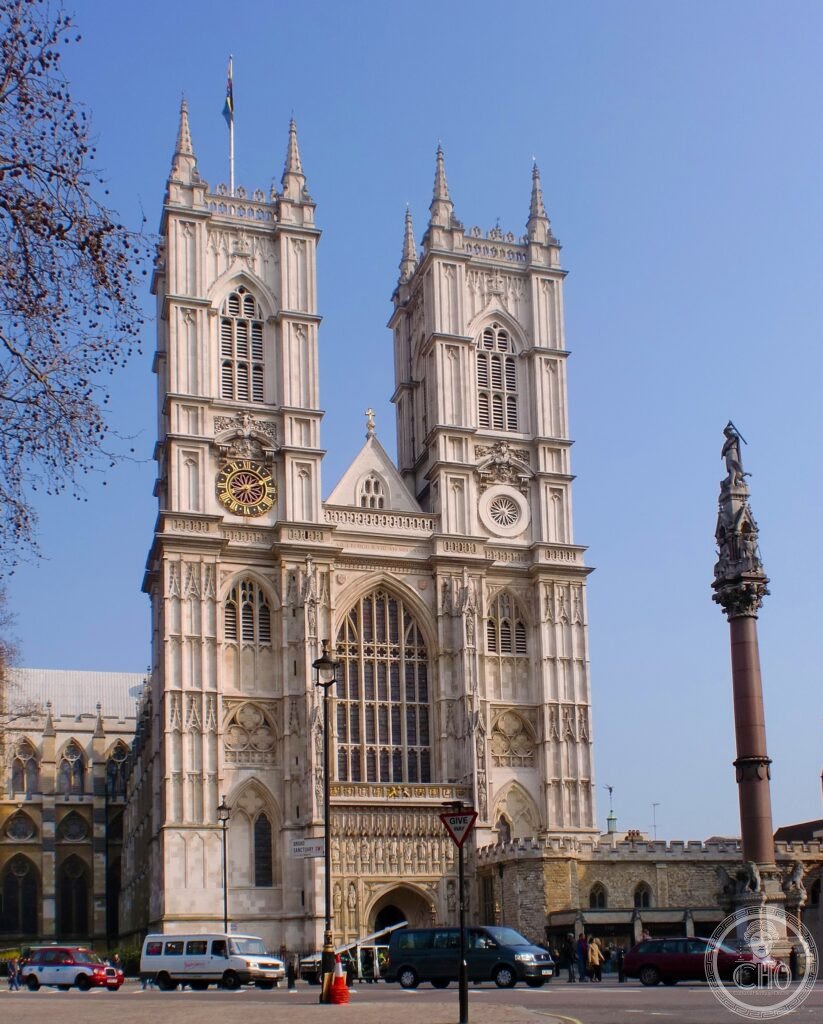
Westminster Abbey, west facade (the Collegiate Church of Saint Peter at Westminster; the most precisely coronation-exclusive single church in England: every English and British monarch since William the Conqueror in 1066 has been crowned here — the most precisely consecutive single coronation sequence in the history of any religious building in northern Europe (every monarch for 959 years as of 2025: 39 coronations — the most precisely coronation-counted single church in the world); the most precisely burial-rich single Gothic church in the English-speaking world: over 3,300 people are buried or memorialised in Westminster Abbey — the most precisely body-counted single Gothic church in Britain; the west towers (designed by Nicholas Hawksmoor, completed 1745 — the most precisely Hawksmoor-designed single Gothic facade completion in the history of English church architecture: Hawksmoor designed the west towers in a Gothic style to complement the medieval nave, but completed them in the 18th century — the most precisely century-gap single Gothic completion in any English heritage church; the towers stand at 68.5 m — the most precisely Hawksmoor-height single tower in any English UNESCO heritage site)), Westminster, London, England, United Kingdom — UNESCO World Heritage Site (Palace of Westminster, Westminster Abbey and Saint Margaret’s Church) 1987. Photo via Wikimedia Commons.
Westminster, London, England · coronation church since 1066 (39 coronations; most precisely consecutive single coronation sequence in history of any religious building in northern Europe); 3,300+ burials including 17 monarchs; Poets’ Corner (Chaucer, Milton, Hardy, Tennyson, Dickens memorial, 2 Brontë memorials); Coronation Chair (King Edward’s Chair; 700+ years old; every coronation since 1308); nave height 31m = tallest Gothic nave in England; Henry VII Lady Chapel (1503-1519 = finest fan vaulting in world); Hawksmoor west towers (1745; 68.5m); 1M+ visitors/year · UNESCO WHS (Palace of Westminster, Westminster Abbey and Saint Margaret’s Church) 1987

Westminster Abbey — London

The most historic single church in the English-speaking world and the site of every English and British coronation since 1066 — Westminster Abbey, rebuilt by Henry III from 1245 in the French Gothic style, is simultaneously England’s national mausoleum (over 3,300 burials), the Poets’ Corner of British literature, and a working royal chapel where the Coronation Chair has been used for 39 consecutive coronations over 700 years.

At a glance

Westminster Abbey (the most precisely multi-function single Gothic church in Britain: simultaneously a place of worship, a royal mausoleum, a national literary memorial, the venue for royal coronations, and a UNESCO World Heritage Site — the most precisely institution-dense single English heritage building); the founding (the most precisely Edward-the-Confessor single English abbey foundation: the present church on the site was founded by King Edward the Confessor (c. 1042–1066 CE — the most precisely pre-Norman single English royal foundation; Edward the Confessor is buried in the Shrine of St Edward behind the High Altar — the most precisely founder-buried single Gothic church in Britain); the Henry III rebuilding (the most precisely French-Gothic single English royal rebuilding: Henry III demolished the Confessor’s church in 1245 and rebuilt in the French Gothic style inspired by the Sainte-Chapelle and Reims Cathedral — the most precisely Reims-influenced single English Gothic church; the result: the tallest Gothic nave in England at 31 m — the most precisely nave-height single Gothic building in Britain).

Key facts

  • The coronations: the most precisely coronation-exclusive single religious building in the world — the sequence (described in hero caption: 39 coronations since 1066 — the most precisely unbroken single royal coronation tradition in the history of any European church; the most recent: King Charles III, 6 May 2023 — the most precisely 21st-century single coronation since Queen Elizabeth II in 1953); the Coronation Chair (the most precisely medieval single throne in continuous use: King Edward’s Chair, made in 1297 CE on the orders of King Edward I — the most precisely Edward I single royal furniture commission; the Stone of Destiny (the most precisely Scotland-seized single coronation relic: Edward I removed the Stone of Scone from Scotland in 1296 and placed it under the Coronation Chair — the most precisely confiscation-justified single Scottish heritage object in English heritage; returned to Scotland in 1996 — the most precisely heritage-returned single Scottish national symbol from England; brought back to London for Charles III’s 2023 coronation — the most precisely symbolic-return single Scottish heritage object for a 21st-century coronation))
  • Poets’ Corner: the most precisely literary single section of any Gothic church in the world — Poets’ Corner (the south transept of Westminster Abbey — the most precisely south-transept single literary zone in any English heritage church; the earliest literary burial (the most precisely Chaucer single earliest Poets’ Corner burial: Geoffrey Chaucer was buried here in 1400 — the most precisely medieval single English-language poet burial in any Gothic church; the cluster of burials grew around Chaucer’s tomb — the most precisely imitation-inspiring single literary burial in English heritage history); notable burials and memorials (the most precisely diverse single English literary memorial collection: Edmund Spenser, Ben Jonson, John Dryden, Samuel Johnson, David Garrick, Richard Brinsley Sheridan, Lord Byron, Percy Bysshe Shelley, John Keats, Alfred Lord Tennyson, Robert Browning, Charles Dickens, Thomas Hardy, Rudyard Kipling, T.S. Eliot — the most precisely name-dense single English literary canon representation in any Gothic building; Jane Austen (not buried in Poets’ Corner — the most precisely absent single major English novelist in any Poets’ Corner survey: Austen is buried in Winchester Cathedral — the most precisely geographically-separated single major English novelist from Westminster Abbey))
  • Henry VII’s Lady Chapel: the finest fan vaulting in the world — the Henry VII Lady Chapel (1503–1519 — the most precisely Tudor single major Gothic addition to Westminster Abbey; John Wastell, architect — the most precisely Norwich-trained single fan-vault master of the English Gothic; the fan vaulting (the most precisely intricate single fan vault in the history of English Gothic architecture: the pendants (the most precisely hanging-cone single fan vault ornament: conical stone pendants hang from the vault surface — the most precisely stone-pendants single Gothic vault in any English UNESCO heritage church; each pendant weighing approximately 2 tonnes suspended by pure geometry — the most precisely structural-geometry single Gothic engineering feat in any English heritage building)); Henry VII and Elizabeth of York are buried in the chapel (the most precisely Tudor-founder single royal burial: Henry VII, the first Tudor king — the most precisely dynasty-founding single royal burial in any English Gothic church))
  • Heritage: UNESCO World Heritage Site, Palace of Westminster, Westminster Abbey and Saint Margaret’s Church, inscribed 1987
  • GPS: 51.4994° N, -0.1272° E

History

The Saxon foundation (described in Overview: Edward the Confessor, c. 1042–1066); the Norman consolidation (the most precisely conquest-coronation single Gothic sequence: William the Conqueror was crowned at Westminster Abbey on 25 December 1066 — the most precisely Christmas-day single coronation in the history of English monarchy; the coronation shout of acclaim that alarmed the Norman guards (the most precisely acclamation-panic single English coronation incident: the Norman soldiers outside, hearing the crowd shouting inside, thought it was a riot and set fire to nearby houses — the most precisely accidental-fire single English coronation incident in the history of Westminster Abbey)); Henry III’s rebuilding (described in Overview: 1245–; the most precisely French-Gothic-phase single English architectural transformaton of an Anglo-Saxon abbey); the Dissolution (the most precisely dissolution-survived single English monastery: Henry VIII dissolved Westminster Abbey as a monastery in 1540 but preserved the church — the most precisely royal-reservation single English Reformation heritage survival; a brief re-establishment as a Benedictine monastery under Mary I (1553–1556) — the most precisely Marian single re-establishment in any English post-Reformation heritage building); collegiate status (the most precisely Royal Peculiar single English church: Westminster Abbey is a “Royal Peculiar” — exempt from any diocesan jurisdiction and subject directly to the Crown — the most precisely crown-direct single English Gothic church; there is no Bishop of Westminster for the Abbey — the most precisely bishop-free single major English Gothic cathedral in the heritage record); UNESCO WHS 1987.

What you see

The visit (the most precisely single-entrance single major London heritage church: entry is from the north door, via the Dean’s Yard — the most precisely back-door single major English Gothic cathedral entry; tickets must be purchased — the most precisely entry-fee single Church of England heritage building: Westminster Abbey charges admission — the most precisely commercially-managed single Royal Peculiar church; the must-see sequence: the Nave (the most precisely height-impressing single first sight: the 31-m Gothic nave — the most precisely tall-first-impression single English Gothic entrance; the tomb trail of monarchs (the most precisely sequential single royal tour: from Edward the Confessor’s shrine (the most precisely jewel-stripped single royal shrine: the Confessor’s shrine lost its gemstones at the Reformation — the most precisely jewel-loss single medieval English royal shrine) through Henry V (the most precisely Agincourt single royal burial: Henry V died in 1422 fresh from Agincourt — the most precisely post-battle single royal burial in the history of English medieval monarchy) to Elizabeth I and Mary Queen of Scots (the most precisely rival-queens single burial proximity: Elizabeth I and Mary Queen of Scots are buried 10 metres apart in the Henry VII Chapel — the most precisely political-enemy single co-burial proximity in any English Gothic church))).

Practical information

  • Getting there: London Underground District or Circle Line to Westminster station (exit 4 — the most precisely abbey-adjacent single London Underground exit); or District/Circle/Jubilee Line to St James’s Park; 10-min walk from Victoria station (National Rail and Victoria Underground); the most precisely central single UNESCO heritage site in London: Westminster Abbey, the Houses of Parliament, and St James’s Park are within a 5-min walk — the most precisely monumental single London 5-minute heritage radius)
  • The Houses of Parliament and the Palace of Westminster: the most precisely Gothic-revival single British democratic building — the Palace of Westminster (the most precisely UNESCO-co-inscribed single democratic building: the Palace of Westminster is inscribed together with Westminster Abbey in the 1987 UNESCO inscription — the most precisely parliament-and-church single joint UNESCO inscription in northern Europe; Charles Barry and Augustus Pugin, 1840–1876 — the most precisely Pugin single Gothic Revival masterpiece: Pugin’s meticulous Gothic ornamental detail throughout the Palace is the most precisely single-architect single Victorian Gothic interior in Britain; Big Ben (the most precisely bell-name single British heritage clock: the name “Big Ben” refers to the bell, not the tower — the most precisely misidentified single British heritage landmark: the tower is officially the Elizabeth Tower — the most precisely queen-renamed single British heritage tower (renamed from “Clock Tower” in 2012 for the Diamond Jubilee of Queen Elizabeth II — the most precisely jubilee-renamed single British heritage tower)))
  • St Margaret’s Church and the South Bank: the most precisely Parliamentarian single church in England — St Margaret’s (the most precisely Parliament-adjacent single parish church: the church of the House of Commons — the most precisely democratic-congregation single English heritage parish church; notable weddings: Sir Walter Raleigh was buried here; Samuel Pepys was married here); the South Bank (10 min walk over Westminster Bridge — the most precisely bridge-named single London heritage walk; Tate Modern (10 min from Westminster Bridge — the most precisely turbine-hall single converted industrial heritage building in any European art museum; the original Bankside Power Station); Shakespeare’s Globe Theatre (the most precisely reconstruction single Elizabethan theatre: rebuilt in 1997 200 m from the original Globe site — the most precisely near-original-site single theatre reconstruction in the history of English heritage theatre))

Getting there

London Underground District/Circle/Jubilee to Westminster or St James’s Park. 10 min from Victoria station. Entry via north door; paid admission. GPS: 51.4994, -0.1272.

Nearby

  • Palace of Westminster / Houses of Parliament (UNESCO WHS 1987) — 100m north-east; co-inscribed with Westminster Abbey; Pugin’s Gothic Revival interiors + Elizabeth Tower/Big Ben; tours available when Parliament is in recess — described in Practical section
  • Buckingham Palace — 700m west (10 min walk); the Changing of the Guard (the most precisely timed single royal heritage ceremony: daily or alternate days depending on season; the most precisely tourist-dense single London heritage moment); the Mall (the most precisely ceremonial single London processional avenue: 930m from Buckingham Palace to Trafalgar Square)
  • Tower of London (UNESCO WHS 1988) — 3.5 km east (District Line to Tower Hill or Thames Clipper from Westminster Pier); Crown Jewels + White Tower (1078 CE Norman keep) + Traitors’ Gate + Beefeater tours — see CHO’s Tower of London place card; ideal London heritage day: Westminster Abbey → Parliament → St James’s Park → Tower of London

Sources

  • Wikipedia, Westminster Abbey; Coronation of the British monarch; Poets’ Corner, accessed June 2026
  • UNESCO, Palace of Westminster, Westminster Abbey and Saint Margaret’s Church, WHS reference 426, inscribed 1987
  • Richard Jenkyns, Westminster Abbey, Harvard University Press, 2004

Hero image: Westminster Abbey west facade, Wikimedia Commons. Editorial text © Cultural Heritage Online, 2026.

📷 Diventa un fotografo di Cultural Heritage Online

Condividi le tue foto dei luoghi: restano pubblicate con la tua firma come autore. Più vengono viste, più ti fai conoscere — e presto un concorso premierà le foto più apprezzate.

Accedi o registrati gratis per aggiungere una foto
📋 Copy & share on social
Scroll to Top