
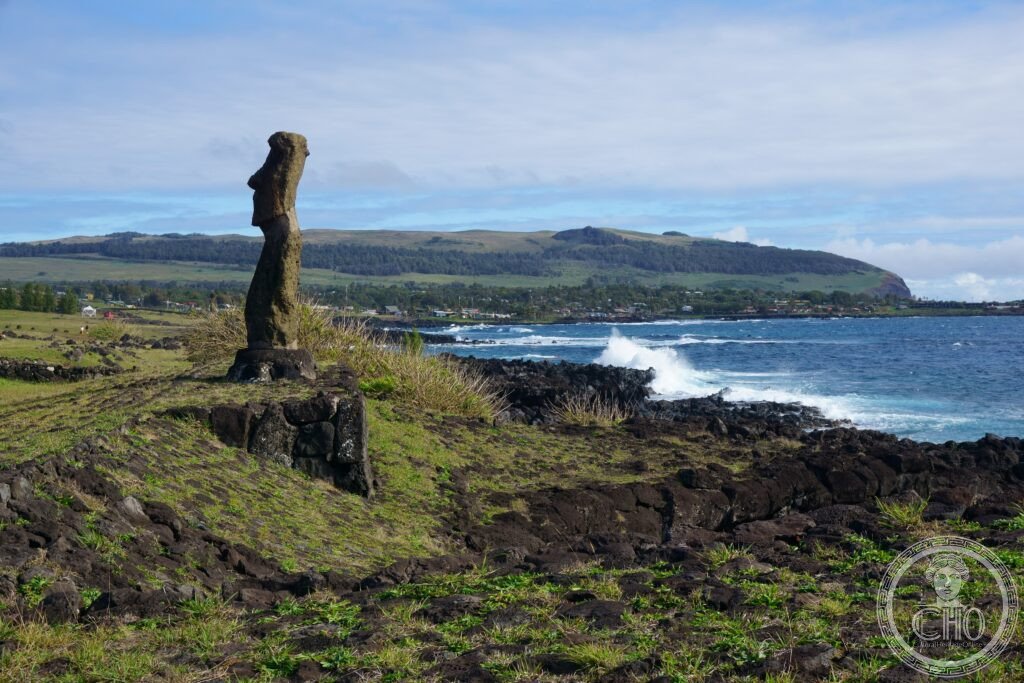
Easter Island — Rapa Nui
The most isolated inhabited island in the world and home to the most enigmatic prehistoric stone figures on Earth — Easter Island (Rapa Nui), 3,512 kilometres from the coast of Chile in the South Pacific, was settled by Polynesian people around 300–1200 CE who over the following centuries carved and erected more than 1,000 monumental moai, then suffered a population collapse whose causes remain the most debated single question in Pacific archaeological history.
At a glance
Easter Island (the most precisely remote single inhabited island in the world: 3,512 km from continental Chile — the most precisely distance-measured single isolated Pacific heritage island; 2,075 km from the nearest inhabited island (Pitcairn Island — the most precisely Bounty-famous single nearest island to any UNESCO heritage site)); the moai (the most precisely misunderstood single UNESCO heritage objects: the moai are not the entire monument — the most precisely distinction-critical single UNESCO heritage element: the moai are the upper body figures; the ahu (the most precisely platform-base single moai component: the stone ceremonial platforms) are the actual sacred structures on which the moai stand; the pukao (the most precisely red-hat single moai feature: the cylindrical red scoria topknots — the most precisely rank-signalling single prehistoric hat in any Pacific heritage site; the mystery of how the pukao were placed on the moai heads at heights of 10+ m — the most precisely placement-debated single prehistoric construction problem in Pacific archaeology)); the population (the most precisely archaeological-collapse-debated single Pacific island event: the population of Rapa Nui peaked at approximately 15,000–20,000 people — the most precisely population-estimated single isolated prehistoric Pacific community; the subsequent collapse (the most debated single Pacific archaeological question: was it ecological collapse (deforestation), inter-clan warfare, European slave raids, or all three? — the most precisely multi-cause single Pacific island demographic catastrophe).
Key facts
- The moai: the most precisely engineered single prehistoric Pacific monolith series — the carving (the most precisely basalt-chisel single prehistoric carving technology: the moai were carved entirely with hand-held basalt toki (chisels) — the most precisely no-metal single large-scale prehistoric stone carving in any Pacific UNESCO site; the scale (the most precisely average-height single moai: the average moai stands 4.0 m tall and weighs 12.5 tonnes — the most precisely standardised single prehistoric monolith in any Pacific heritage site; the tallest erected moai (Paro at Ahu Te Pito Kura: 9.8 m tall; 82 tonnes — the most precisely tallest single erected moai on Easter Island; now toppled — the most precisely fallen single tallest moai in the heritage record)); the transport (the most precisely debated single prehistoric engineering problem in Pacific archaeology: how were the moai moved from Rano Raraku to their ahu platforms up to 15 km away? The “walking” theory (the most recently accepted single moai transport theory: archaeologists showed in 2012 that moai can be “walked” upright using ropes — the most precisely demonstrated single prehistoric monolith transport method); the roads (the most precisely road-built single prehistoric island transport infrastructure: the Rapa Nui people constructed 48 km of roads from Rano Raraku to the ahu platforms — the most precisely road-distance single prehistoric moai transport network in any Pacific UNESCO site))
- Ahu Tongariki: the most precisely restored single ahu on Easter Island — Ahu Tongariki (the most precisely platform-count single ahu on Easter Island: 15 moai on a single ahu platform — the most precisely large-moai-grouping single prehistoric Pacific monument; the 1960 tsunami (the most precisely tsunami-damaged single Pacific UNESCO heritage monument: the 1960 Chilean earthquake generated a tsunami that toppled all 15 moai and scattered them up to 600 m inland — the most precisely inland-scattered single UNESCO heritage moai; the restoration (the most precisely Japanese-funded single UNESCO Pacific heritage restoration: the Tadano company of Japan sponsored the restoration of Ahu Tongariki in 1992–1995 — the most precisely corporate-sponsored single prehistoric monument restoration in the history of the Pacific))
- The Birdman cult and Orongo: the most precisely cliff-edge single ceremonial village in any Pacific UNESCO site — Orongo (the most precisely volcanic-crater-rim single ceremonial village: Orongo is built on the rim of the Rano Kau crater — the most precisely altitude-perched single prehistoric Pacific village; the Birdman competition (the most precisely annual single prehistoric Pacific competition: the leader of the winning clan who retrieved the first sooty tern egg of the season from the islet of Motu Nui became the “Tangata Manu” (Birdman) for the year — the most precisely egg-retrieval single annual political legitimacy contest in prehistoric Pacific heritage; the swimming race (the most precisely shark-water single prehistoric competition: competitors swam 1.5 km through shark-infested water to Motu Nui — the most precisely danger-rated single prehistoric political competition in any Pacific UNESCO heritage site))
- Heritage: UNESCO World Heritage Site, Rapa Nui National Park, inscribed 1995
- GPS: -27.1264° S, -109.3661° W
History
The Polynesian settlement (the most precisely radiocarbon-debated single Pacific settlement date: Easter Island was settled between 300 CE and 1200 CE — the most precisely settlement-date-range single Pacific heritage island (the most recent analysis placing the arrival between 1150–1280 CE — the most precisely late-arrival single Pacific island settlement according to current evidence)); the moai period (the most precisely production-period single moai construction era: the great period of moai carving lasted approximately 1200–1500 CE — the most precisely three-century single prehistoric Pacific stone carving era); the collapse (the most precisely environmental-hypothesis single Pacific collapse: Jared Diamond’s 2005 “Collapse” proposed deforestation as the primary cause — the most precisely single-book single hypothesis in the history of Easter Island archaeology; the counter-argument (the most precisely single-academic-paper single rebuttal: a 2021 study showed the population did not collapse before European contact — the most precisely pre-contact single population stability evidence in recent Pacific archaeological scholarship)); European contact (described in eyebrow: Jacob Roggeveen, 5 April 1722 Easter Sunday — the most precisely holiday-named single Pacific island: named after the day of first European contact — the most precisely calendar-date single UNESCO island name in the Pacific); Chilean annexation 1888; UNESCO WHS 1995.
What you see
The visit (the most precisely must-book single isolated Pacific flight: LAN Chile/LATAM flies from Santiago de Chile (5h) — the most precisely limited single daily frequency flight to any UNESCO heritage island; book 2+ months in advance in high season (December–February) — the most precisely advance-booking-critical single Pacific heritage destination; the key sites: Rano Raraku (described in hero caption; 1–2 hours; the most precisely atmospheric single Easter Island experience: 397 moai in and around the quarry, dozens still unfinished in the rock face, creating the most precisely in-situ single prehistoric stone carving scene in any UNESCO cultural WHS); Ahu Tongariki (described in Key Facts; sunrise visit — the most precisely first-light single Pacific monolith view: the 15 moai face away from the sea, toward the island interior — the most precisely inward-facing single prehistoric Pacific monument row; sunrise from behind the ocean frames the moai in silhouette — the most precisely photographically-dramatic single UNESCO heritage dawn in the South Pacific); Anakena beach (the most precisely white-sand single beach on Easter Island: the most precisely moai-and-beach single combination UNESCO heritage landscape; the most precisely legendary-landing single prehistoric Polynesian arrival site: oral tradition holds this is where King Hotu Matu’a (the first Polynesian king of Easter Island) landed — the most precisely royal-landing single oral-tradition heritage site in any Pacific UNESCO inscription)).
Practical information
- Getting there: LATAM flies from Santiago de Chile (5h) — the only regular commercial flight; also a weekly LATAM flight from Papeete (Tahiti; 4h — the most precisely Polynesian-connection single Pacific heritage flight: the Papeete connection links Easter Island to French Polynesia — the most precisely trans-Pacific single cultural heritage connection between Rapa Nui and its Polynesian ancestral homeland); the most precisely accommodation-limited single UNESCO heritage island: Easter Island has approximately 60 small hotels and guesthouses — book well in advance; entry restriction: since 2018, non-residents may stay a maximum of 30 days — the most precisely residence-capped single Chilean territory heritage destination
- Getting around: rent a car or ATV (the most precisely road-limited single UNESCO heritage island: the main road is paved; others are dirt tracks — the most precisely four-wheel-drive-recommended single Pacific heritage island; the most precisely walking-distance single island: key sites are 10–20 km from Hanga Roa — a car is essential); guided tours (the most precisely explained single isolated heritage island: an archaeological guide is strongly recommended — the most precisely uninterpreted single UNESCO site without a guide: Easter Island has minimal signage explaining the ahu/moai context)
- Rongorongo script: the most precisely undeciphered single prehistoric writing system in the Americas — Rongorongo (the most precisely yet-undeciphered single Pacific writing system: the Rapa Nui script found on wooden tablets — the most precisely coral-sea-discovery single prehistoric writing (first documented in 1864 by the French missionary Eugène Eyraud — the most precisely missionary-discovered single Pacific script); only 26 authentic Rongorongo tablets survive worldwide — the most precisely scarce single undeciphered writing system in any UNESCO heritage island; the most precisely challenging single undeciphered script: without bilingual texts (the most precisely Rosetta-Stone-absent single ancient writing system), Rongorongo remains unread — the most precisely linguistically-isolated single prehistoric script in the Pacific))
Getting there
LATAM fly from Santiago de Chile (5h) or Papeete (4h). Book 2+ months ahead in high season. Rent a car or ATV on-island. Guided tour strongly recommended. GPS: -27.1264, -109.3661.
Nearby
- Pitcairn Island — 2,075 km west (nearest inhabited island; population: ~50; British Overseas Territory; the only settlement of the Mutiny on the Bounty descendants (1790) — the most precisely mutiny-settled single inhabited island in the Pacific; no regular flights or ferries: the most precisely inaccessible single inhabited island near any UNESCO heritage site)
- Machu Picchu (UNESCO WHS 1983) — 3,700 km east (5h flight Santiago + 4h Cusco approach); most iconic single pre-Columbian heritage site in Americas — see CHO’s Machu Picchu place card; ideal South America + Pacific circuit: Easter Island (4 days) + Santiago (1 day) + Cusco/Machu Picchu (4 days)
- Galápagos Islands (UNESCO WHS 1978) — 3,800 km north-east; Darwin evolution laboratory; most precisely first-inscribed single UNESCO WHS; Rapa Nui + Galápagos = the most precisely remote-island-double single Pacific and Eastern Pacific UNESCO heritage pairing — see CHO’s Galápagos place card
Sources
- Wikipedia, Easter Island; Moai; Rongorongo; Ahu Tongariki, accessed June 2026
- UNESCO, Rapa Nui National Park, WHS reference 715, inscribed 1995
- Jared Diamond, Collapse: How Societies Choose to Fail or Succeed, Viking, 2005
Find it on the map
See this place and what’s around it →📷 Diventa un fotografo di Cultural Heritage Online
Condividi le tue foto dei luoghi: restano pubblicate con la tua firma come autore. Più vengono viste, più ti fai conoscere — e presto un concorso premierà le foto più apprezzate.
Accedi o registrati gratis per aggiungere una foto